
From driving social change to making luxury affordable — Lessons from The Body Shop India
Updated
January 16, 2026 12:00 PM
.jpg)
The Body Shop's storefront. PHOTO: ADOBE STOCK
The Body Shop, known worldwide for its ethical values and cruelty-free beauty products, has had very different results in two of its major markets. In the United States, challenges such as shifting retail trends and tougher competition led to the closure of most physical stores in early 2024. Meanwhile, in India, The Body Shop has risen to become one of its top five global markets. After reaching customers in more than 1,500 Indian cities through its omnichannel network, the company now plans to double its 200-store footprint over the next three to five years.
So what did The Body Shop do in India that proved harder to pull off in the U.S.? Below, we break down why The Body Shop struggled in the U.S., what’s driving The Body Shop India’s growth and what startup founders can learn from the contrast.
In March 2024, The Body Shop’s U.S. unit filed for Chapter 7 bankruptcy and stopped operating its roughly 50 stores. That move effectively ended its brick-and-mortar presence in the country.
A big part of the story is that the U.S. beauty market moved faster than The Body Shop did. Prestige beauty kept growing, and shoppers increasingly gravitated to retailers and brands that feel current and have a strong online presence. Paul Dodd, Chief Innovation Officer at e-commerce fulfilment partner Huboo, have pointed to The Body Shop’s slow approach to digital growth as a major factor behind its decline. With U.S. prestige beauty sales reaching about US$33.9 billion in 2024 and growing at 7% year over year, the demand is clearly there. The brands that stand out and get rewarded were the ones that matched how people now discover products and buy them.
The company also leaned too heavily on stores at a time when stores were getting harder to run. When foot traffic drops and rents rise, the pressure shows up quickly. Shoppers also had more places to go, including Sephora, Ulta, Amazon and direct-to-consumer sites. A similar pattern played out in Canada, where restructuring included store closures and halted e-commerce. It was another sign that North America had become an operational headache, not just a marketing challenge.
Then there’s the branding issue: its “ethical pioneer” position simply stopped being a moat in the U.S. market. Today, cruelty-free and vegan claims are now table stakes across many newer brands, and “clean beauty” messaging is everywhere. “Initially, the purpose-driven brand was revolutionary, so much so that competitors like Drunk Elephant have adopted a similar ethos,” says Dan Hocking, Chief Operating Officer at advertising agency TroubleMaker. “It was a concept that rightly earned success in the 80s and 90s, but The Body Shop didn’t adapt to changing consumer habits and preferences”. Meanwhile, competitors like Lush have kept people talking through stronger creator/influencer marketing, faster product cycles and more immersive in-store experiences.
Internal disruption likely made the turnaround even harder. Reporting on the U.S. bankruptcy points to instability, including the U.S. unit saying it did not have advance notice of decisions tied to the U.K. parent’s restructuring. When leadership decisions land without warning, it becomes harder to plan inventory, fund marketing and commit to a clear digital roadmap.
1. Expansion into tier 2 and 3 cities
For years, India’s beauty industry focused mainly on metropolitan cities. Today, however, increasing internet penetration, rising disposable incomes, exposure to global beauty trends and an appetite for ethical, sustainable brands have fuelled demand in smaller towns. That tailwind matters because India’s beauty and personal care market is expected to reach a gross merchandise value (GMV) of US$30 billion by 2027 and is projected to grow at roughly an 10% CAGR. There’s plenty of room for both premium and “affordable luxury” players that can meet consumer where they are.
The Body Shop has leaned into this shift. Harmeet Singh, Chief Brand Officer of The Body Shop Asia South, has said the brand is expanding into Tier 2 and Tier 3 cities with a focus on central and Northeast India. Reports also point to a clear advantage here: more than 200 stores across dozens of cities, plus online reach into over 1,500 cities. That foundation makes non-metro expansion feel like the next move, not a risky leap.
2. Omni-channel retail strategy for beauty shoppers
Unlike its U.S. front, The Body Shop India has put effort into digital and distribution. Besides its own online store, customers can find the brand on big beauty and retail platforms like Nykaa, Amazon, Flipkart, Tatacliq and Myntra. It has also built more direct routes to purchase through WhatsApp, social commerce, expert chats and live video consultations. For even faster access, it’s on quick-commerce apps like Blinkit and Swiggy.
This strategy is already showing up in the numbers. Nearly 30% of The Body Shop India’s business came from digital channels as of June 2025. Rahul Shanker, Chief Executive of The Body Shop India, has said the brand wants to lift online revenue to 45–50% of total sales by 2030.
This approach lines up with what’s happening in the market. NielsenIQ data found beauty e-commerce and quick-commerce sales in India rose 39% in value between June and November 2024, with offline growth over the same period being just 3%. The logic is simple: if the market is moving online, you want to be easy to buy online.
3. Inclusivity, accessibility and social impact
The Body Shop’s people-first approach shows up not just in its marketing, but in how it runs the business day to day. Inside the company, it has pushed gender sensitivity across teams. Out of 600 employees, it has 10 staff members who are part of the LGBTQA+ spectrum.
In stores, the brand has worked on improving accessibility. In 2024, The Body Shop India launched a Braille initiative for visually impaired customers. The programme introduced Braille category callouts in select locations so shoppers can navigate more independently.
On the sustainability side, the brand ties its message to its supply chain. An example is its long-term partnership with Plastics for Change, a Bengaluru-based social enterprise, to source “Community Fair Trade” recycled plastic for packaging. The collaboration has resulted in more predictable income, safer work and better access to social services and housing and education projects for the waste picker communities, which often include marginalized groups and women.
The same intent can also be seen in its physical retail. The Body Shop India has been converting stores into its “Activist Workshop” format, where everything is made from recycled materials, including store fixtures and interiors. By mid-2024, it had around 20 Activist Workshop stores in India.
4. Pricing that fits the Indian beauty market
In April 2025, The Body Shop India launched its “More Love for Less” campaign to make products more accessible. Through the campaign, the company lowered the prices of more than 60 best-sellers by 28–30%. The goal was to remove a clear barrier for many shoppers while maintaining the same quality.
The company has also positioned this as a pricing reset, not a short-term discount push. It’s meant to widen the funnel, especially among younger consumers aged 18–25, where price has been a major hurdle. That matters even more as the brand expands deeper into Tier 2 and Tier 3 cities, where value is often front and centre.
5. Local marketing that feels made for India
The Body Shop India has leaned into localized marketing in a way that feels specific, not generic. In late 2024, it launched “The India Edit”, a collection inspired by native ingredients like lotus, hibiscus, pomegranate and black grape. The tagline, “Only in India, for You,” makes the intent clear: India is not a copy-paste market. This approach matters because India is one of the most competitive beauty battlegrounds right now, with ongoing entry from global beauty brands. When everyone is fighting for attention, local storytelling helps The Body Shop stand out and feel closer to the customer.
The Body Shop’s story in the U.S. and India shows how differently a global beauty brand can perform depending on local strategy. In the U.S., it ran into a tough mix of fast-changing consumer habits, heavy competition and a liquidation process that left little room to rebuild. In India, the brand is riding big tailwinds in beauty retail growth, plus the shift to e-commerce and quick commerce. It has also put real effort into localization, pricing and omnichannel distribution.
If you’re trying to scale a consumer brand, there’s a clear takeaway here. Understand how your market shops, build strong digital distribution and make the brand feel local. The Body Shop India’s playbook is a useful example of how to do it.
Keep Reading
At under US$1,000, Hypernova isn’t just eyewear—it’s Meta’s push to make AR feel ordinary.
Updated
January 8, 2026 6:34 PM
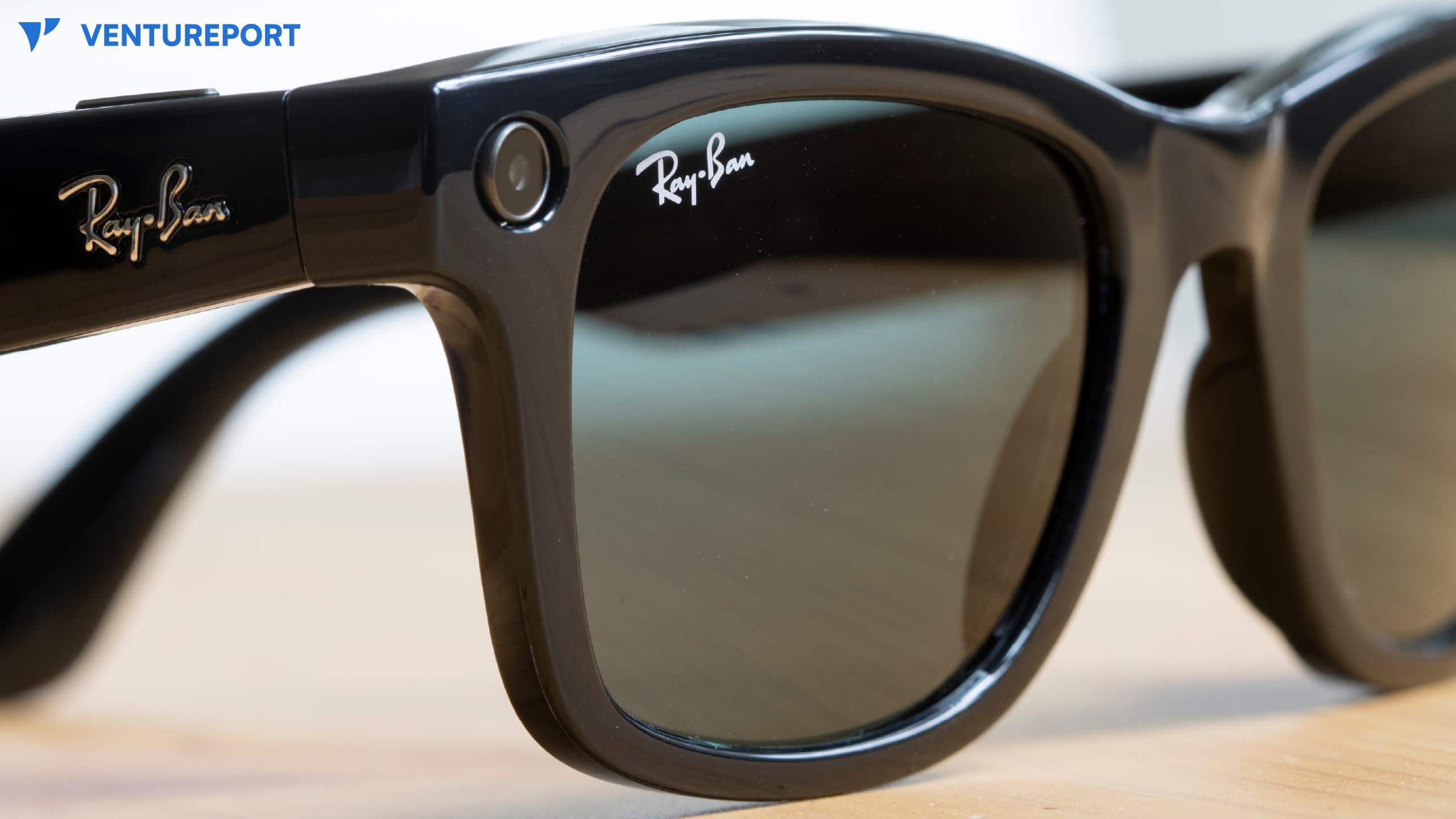
Closeup of the Ray-Ban logo and the built-in ultra-wide 12 MP camera on a pair of new Ray-Ban Meta Wayfarer smart glasses. PHOTO: ADOBE STOCK
Meta is preparing to launch its next big wearable: the Hypernova smart glasses. Unlike earlier experiments like the Ray-Ban Stories, these new glasses promise more advanced features at a price point under US$1,000. With a launch set for September 17 at Meta’s annual Connect conference, the Hypernova is already drawing attention for blending design, technology and accessibility.
In this article, let’s take a closer look at Hypernova’s design, features, pricing and the challenges Meta faces as it tries to bring smart glasses into everyday life.
Meta’s earlier Ray-Ban glasses offered cameras and audio but no display. Hypernova changes that: The glasses will ship with a built-in micro-display, giving wearers quick access to maps, messages, notifications and even Meta’s AI assistant. It’s a step toward everyday AR that feels useful and natural, not experimental.
Perhaps most importantly, the price makes them attainable. While early estimates placed the cost above US$1,000, Meta has committed to a launch price of around US$800. That’s still premium, but it moves AR smart glasses into reach for more consumers.
Hypernova weighs about 70 grams, roughly 20 grams heavier than the Ray-Ban Meta models. The added weight likely comes from added components like the new display and extra sensors.
To keep the glasses stylish, Meta continues its partnership with EssilorLuxottica, the company behind Ray-Ban and Prada eyewear. Thicker frames—especially Prada’s designs—help hide the hardware like chips, microphones and batteries without making the glasses look oversized.
The glasses stick close to the classic Ray-Ban silhouette but feature slightly bulkier arms. On the left side, a touch-sensitive bar lets users control functions with taps and swipes. For example, a two-finger tap can trigger a photo or start video recording.
Hypernova introduces something the earlier Ray-Ban glasses never had: a display built right into the lens. In the bottom-right corner of the right lens, a small micro-screen uses waveguide optics to project a digital overlay with about a 20° field of view. This means you can glance at turn-by-turn directions, check a notification or quickly consult Meta’s AI assistant without pulling out your phone. It’s discreet, practical and a major step up from the older models, which were limited to capturing photos and videos, handling calls and playing music via speakers.
Alongside the glasses comes the Ceres wristband, a companion device powered by electromyography (EMG). The band picks up the tiny electrical signals in your wrist and fingers, translating them into commands. A pinch might let you select something, a wrist flick could scroll a page, and a swipe could move between screens. The idea is to avoid clunky buttons or having to talk to your glasses in public. Meta has also been experimenting with handwriting recognition through the band, though it’s not clear if that feature will be ready in time for launch.
Meta doesn’t just want Hypernova to be useful—it wants it to be fun. Code found in leaked firmware revealed a small game called Hypertrail. It looks to borrow ideas from the 1981 arcade shooter Galaga, letting wearers play a simple, retro-inspired game right through their glasses. It’s not the main attraction, but it shows Meta is trying to make Hypernova feel more like a playful everyday gadget rather than just a piece of serious tech.
Hypernova runs on a customized version of Android and pairs with smartphones through the Meta View app. Out of the box, it should support the basics: calls, music and message notifications. Leaks suggest several apps will come preinstalled, including Camera, Gallery, Maps, WhatsApp, Messenger and Meta AI. A Qualcomm processor powers the whole setup, helping it run smoothly while keeping energy demands reasonable.
Meta is also trying to bring in outside developers. In August 2025, CNBC reported that the company invited third-party developers—especially in generative AI—to build experimental apps for Hypernova and the Ceres wristband. The Meta Connect 2025 agenda even highlights sessions on a new smart glasses SDK and toolkit. The push shows Meta’s interest in making Hypernova more than just a device; it wants a broader platform with apps that go beyond its own first-party software.
During development, Hypernova was rumored to cost as much as US$1,400. By pricing it around US$800, Meta signals that it wants adoption more than profit. The company is keeping production limited (around 150,000 units), showing it sees this as a market test rather than a mass rollout. Still, the sub-US$1,000 price tag makes advanced AR far more accessible than before.
Despite its promise, Hypernova may still face hurdles. The Ceres wristband can struggle if worn loosely, and some testers have reported issues based on which arm it’s worn on or even when wearing long sleeves. In short, getting EMG input right for everyone will be critical.
Privacy is another major concern. In past experiments, researchers hacked Ray-Ban Meta glasses to run facial recognition, instantly identifying strangers and pulling personal info. Meta has added guidelines, like a recording indicator light, but critics argue these measures are too easy to ignore. Moreover, data captured by smart glasses can feed into AI training, raising questions about consent and surveillance.
The Meta Hypernova smart glasses mark a turning point in wearable tech. They’re lighter and more stylish than bulky AR headsets, while offering real-world features like navigation, messaging and hands-free control. At under US$1,000, they aim to make AR glasses more than a luxury gadget—they’re a step toward everyday use.
Whether Hypernova succeeds will depend on how well it balances style, usability and privacy. But one thing is clear: Meta is betting that always-on, glanceable AR can move from science fiction to daily life.