
The collaboration between Oversonic Robotics and STMicroelectronics highlights how robotics is beginning to fill gaps traditional automation cannot.
Updated
January 23, 2026 10:41 AM
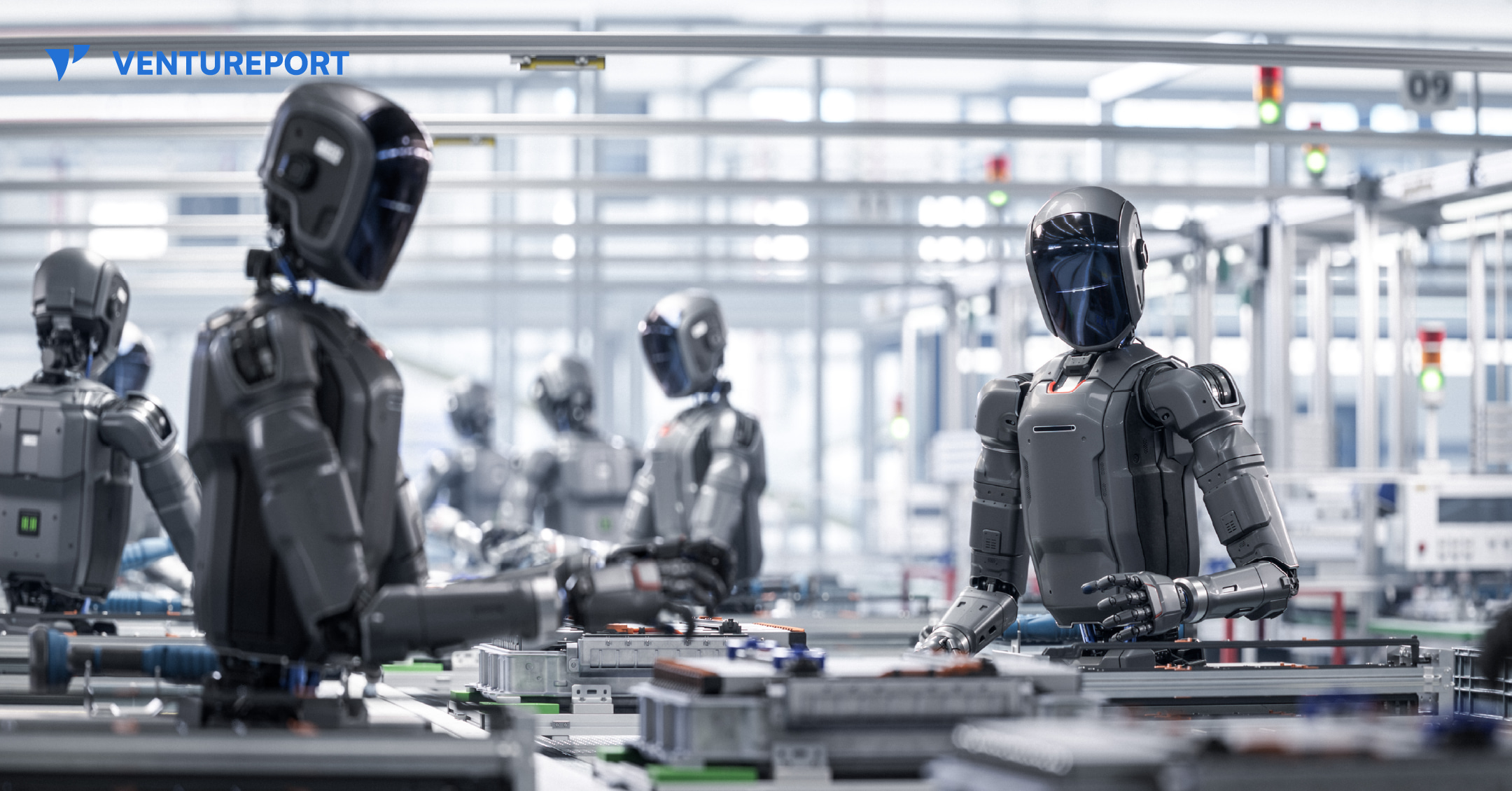
3D render of humanoid robots working in a factory assembly line. PHOTO: ADOBE STOCK
Oversonic Robotics, an Italian company known for building cognitive humanoid robots, has signed an agreement with STMicroelectronics, one of the world’s largest semiconductor manufacturers, to deploy humanoid robots inside semiconductor plants.
According to the companies, this is the first time cognitive humanoid robots will be used operationally inside semiconductor manufacturing facilities. And the first deployment has already taken place at ST’s advanced packaging and test plant in Malta.
At the center of the collaboration is RoBee, Oversonic’s humanoid robot. RoBee is designed to carry out support tasks within industrial environments, particularly where flexibility and interaction with human workers are required. In ST’s factories, the robots will assist with complex manufacturing and logistics flows linked to new semiconductor products. They are intended to work alongside existing automation systems, not replace them.
RoBee is notable for its ability to operate in environments shared with people. It is currently the only humanoid robot certified for use in both industrial and healthcare settings and is already in operation within several Italian companies. The robot is also being used in experimental hospital programs. That background helped position RoBee for deployment in tightly controlled manufacturing environments such as semiconductor plants.
Fabio Puglia, President of Oversonic Robotics, described the agreement as a milestone for deploying humanoid robots in complex industrial settings: “The partnership with STMicroelectronics is a great source of pride for us because it embodies the vision of cognitive robotics that Oversonic has brought to the industrial and healthcare markets. Being the first to introduce cognitive humanoid robots in a sophisticated production context such as semiconductors means measuring ourselves against the highest standards in terms of reliability, safety and operational continuity. This agreement represents a fundamental milestone for Oversonic and, more generally, for the industrial challenges these new machines are called to face in innovative and highly complex environments, alongside people and supporting their quality of work”.
From STMicroelectronics’ side, the use of humanoid robots is framed as part of a broader effort to manage growing manufacturing complexity. he company said RoBee will support complex tasks and help manage the intricate production flows required by newer semiconductor products. It is also expected to contribute to improved product quality and shorter manufacturing cycle times. The robots are designed to integrate with existing automation and software systems, helping improve safety and operational continuity.
In semiconductor manufacturing, precision and reliability leave little room for experimentation. Therefore, introducing humanoid robots into this environment signals a practical shift. It shows how robotics is starting to fill gaps that traditional automation has struggled to address.
Keep Reading
A closer look at how reading, conversation, and AI are being combined
Updated
February 7, 2026 2:18 PM

Assorted plush character toys piled inside a glass claw machine. PHOTO: ADOBE STOCK
In the past, “educational toys” usually meant flashcards, prerecorded stories or apps that asked children to tap a screen. ChooChoo takes a different approach. It is designed not to instruct children at them, but to talk with them.
ChooChoo is an AI-powered interactive reading companion built for children aged three to six. Instead of playing stories passively, it engages kids in conversation while reading. It asks questions, reacts to answers, introduces new words in context and adjusts the story flow based on how the child responds. The goal is not entertainment alone, but language development through dialogue.
That idea is rooted in research, not novelty. ChooChoo is inspired by dialogic reading methods from Yale’s early childhood language development work, which show that children learn language faster when stories become two-way conversations rather than one-way narration. Used consistently, this approach has been shown to improve vocabulary, comprehension and confidence within weeks.
The project was created by Dr. Diana Zhu, who holds a PhD from Yale and focused her work on how children acquire language. Her aim with ChooChoo was to turn academic insight into something practical and warm enough to live in a child’s room. The result is a device that listens, responds and adapts instead of simply playing content on command.
What makes this possible is not just AI, but where that AI runs.
Unlike many smart toys that rely heavily on the cloud, ChooChoo is built on RiseLink’s edge AI platform. That means much of the intelligence happens directly on the device itself rather than being sent back and forth to remote servers. This design choice has three major implications.
First, it reduces delay. Conversations feel natural because the toy can respond almost instantly. Second, it lowers power consumption, allowing the device to stay “always on” without draining the battery quickly. Third, it improves privacy. Sensitive interactions are processed locally instead of being continuously streamed online.
RiseLink’s hardware, including its ultra-low-power AI system-on-chip designs, is already used at large scale in consumer electronics. The company ships hundreds of millions of connected chips every year and works with global brands like LG, Samsung, Midea and Hisense. In ChooChoo’s case, that same industrial-grade reliability is being applied to a child’s learning environment.
The result is a toy that behaves less like a gadget and more like a conversational partner. It engages children in back-and-forth discussion during stories, introduces new vocabulary in natural context, pays attention to comprehension and emotional language and adjusts its pace and tone based on each child’s interests and progress. Parents can also view progress through an optional app that shows what words their child has learned and how the system is adjusting over time.
What matters here is not that ChooChoo is “smart,” but that it reflects a shift in how technology enters early education. Instead of replacing teachers or parents, tools like this are designed to support human interaction by modeling it. The emphasis is on listening, responding and encouraging curiosity rather than testing or drilling.
That same philosophy is starting to shape the future of companion robots more broadly. As edge AI improves and hardware becomes smaller and more energy efficient, we are likely to see more devices that live alongside people instead of in front of them. Not just toys, but helpers, tutors and assistants that operate quietly in the background, responding when needed and staying out of the way when not.
In that sense, ChooChoo is less about novelty and more about direction. It shows what happens when AI is designed not for spectacle, but for presence. Not for control, but for conversation.
If companion robots become part of daily life in the coming years, their success may depend less on how powerful they are and more on how well they understand when to speak, when to listen and how to grow with the people who use them.