
The collaboration between Oversonic Robotics and STMicroelectronics highlights how robotics is beginning to fill gaps traditional automation cannot.
Updated
January 23, 2026 10:41 AM
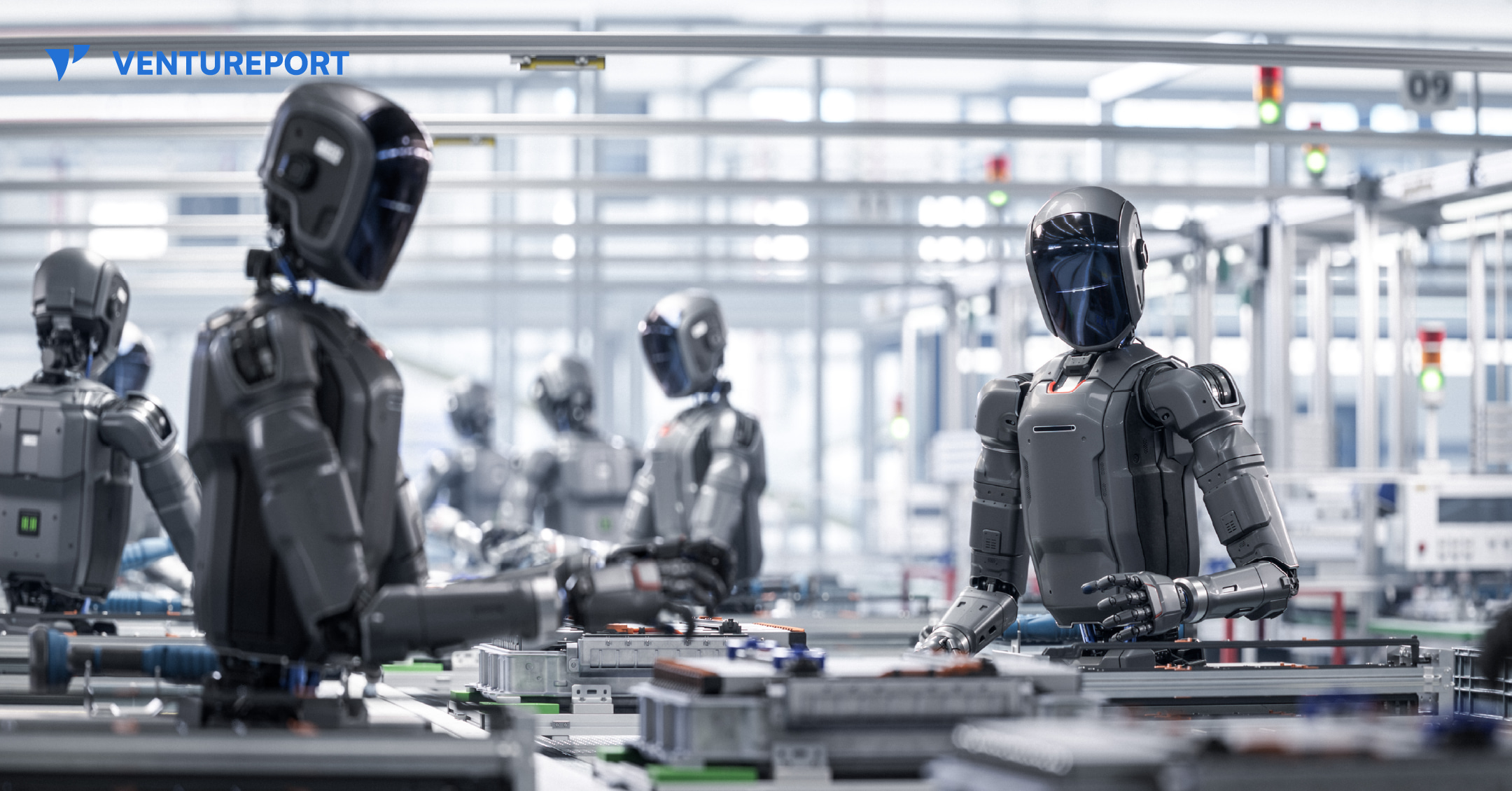
3D render of humanoid robots working in a factory assembly line. PHOTO: ADOBE STOCK
Oversonic Robotics, an Italian company known for building cognitive humanoid robots, has signed an agreement with STMicroelectronics, one of the world’s largest semiconductor manufacturers, to deploy humanoid robots inside semiconductor plants.
According to the companies, this is the first time cognitive humanoid robots will be used operationally inside semiconductor manufacturing facilities. And the first deployment has already taken place at ST’s advanced packaging and test plant in Malta.
At the center of the collaboration is RoBee, Oversonic’s humanoid robot. RoBee is designed to carry out support tasks within industrial environments, particularly where flexibility and interaction with human workers are required. In ST’s factories, the robots will assist with complex manufacturing and logistics flows linked to new semiconductor products. They are intended to work alongside existing automation systems, not replace them.
RoBee is notable for its ability to operate in environments shared with people. It is currently the only humanoid robot certified for use in both industrial and healthcare settings and is already in operation within several Italian companies. The robot is also being used in experimental hospital programs. That background helped position RoBee for deployment in tightly controlled manufacturing environments such as semiconductor plants.
Fabio Puglia, President of Oversonic Robotics, described the agreement as a milestone for deploying humanoid robots in complex industrial settings: “The partnership with STMicroelectronics is a great source of pride for us because it embodies the vision of cognitive robotics that Oversonic has brought to the industrial and healthcare markets. Being the first to introduce cognitive humanoid robots in a sophisticated production context such as semiconductors means measuring ourselves against the highest standards in terms of reliability, safety and operational continuity. This agreement represents a fundamental milestone for Oversonic and, more generally, for the industrial challenges these new machines are called to face in innovative and highly complex environments, alongside people and supporting their quality of work”.
From STMicroelectronics’ side, the use of humanoid robots is framed as part of a broader effort to manage growing manufacturing complexity. he company said RoBee will support complex tasks and help manage the intricate production flows required by newer semiconductor products. It is also expected to contribute to improved product quality and shorter manufacturing cycle times. The robots are designed to integrate with existing automation and software systems, helping improve safety and operational continuity.
In semiconductor manufacturing, precision and reliability leave little room for experimentation. Therefore, introducing humanoid robots into this environment signals a practical shift. It shows how robotics is starting to fill gaps that traditional automation has struggled to address.
Keep Reading
A look at how motivation, not metrics, is becoming the real frontier in fitness tech
Updated
February 7, 2026 2:18 PM

A group of people running together. PHOTO: FREEPIK
Most running apps focus on measurement. Distance, pace, heart rate, badges. They record activity well, but struggle to help users maintain consistency over time. As a result, many people track diligently at first, then gradually disengage.
That drop-off has pushed developers to rethink what fitness technology is actually for. Instead of just documenting activity, some platforms are now trying to influence behaviour itself. Paceful, an AI-powered running platform developed by SportsTech startup xCREW, is part of that shift — not by adding more metrics, but by focusing on how people stay consistent. The platform is built on a simple behavioural insight: most people don’t stop exercising because they don’t care about health. They stop because routines are fragile. Miss a few days and the habit collapses. Technology that focuses only on performance metrics doesn’t solve that. Systems that reinforce consistency, belonging and feedback loops might.
Instead of treating running as a solo, data-driven task, Paceful is built around two ideas: behavioural incentives and social alignment. The system turns real-world running activity into tangible rewards and it uses AI to connect runners to people, clubs and challenges that fit how and where they actually run.
At the technical level, Paceful connects with existing fitness ecosystems. Users can import workout data from platforms like Apple Health and Strava rather than starting from scratch. Once inside the system, AI models analyse pace, frequency, location and participation patterns. That data is used to recommend running partners, clubs and group challenges that match each runner’s habits and context.
What makes this approach different is not the tracking itself, but what the platform does with the data it collects. Running distance and consistency become inputs for a reward system that offers physical-world incentives, such as gear, race entries or gift cards. The idea is to link effort to something concrete, rather than abstract. The company also built the system around community logic rather than individual competition. Even solo runners are placed into challenge formats designed to simulate the motivation of a group. In practice, that means users feel part of a shared structure even when running alone.
During a six-month beta phase in the US, xCREW tested Paceful with more than 4,000 running clubs and around 50,000 runners. According to the company, users increased their running frequency significantly and weekly retention remained unusually high for a fitness platform. One beta tester summed it up this way: “Strava just logs records, but Paceful rewards you for every run, which is a completely different motivation”.
The company has raised seed funding and plans to expand the platform beyond running, walking, trekking, cycling and swimming. Instead of asking how accurately technology can measure the body, platforms like Paceful are asking a different question: how technology might influence everyday behaviour. Not by adding more data, but by shaping the conditions around effort, feedback and social connection.
As AI becomes more common in consumer products, its real impact may depend less on how advanced the models are and more on what they are applied to. In this case, the focus isn’t speed or performance — it’s consistency. And whether systems like this can meaningfully support it over time.