
A wearable ring, conversational AI and US$23M in funding. Sandbar wants to rethink how we interact with technology
Updated
March 12, 2026 5:59 PM

Sandbar's Stream ring. PHOTO: SANDBAR
Sandbar, a New York–based interface startup, has raised US$23 million in Series A funding to develop a wearable device that lets people interact with artificial intelligence via voice rather than screens.
Adjacent and Kindred Ventures led the round; both venture firms focused on early-stage technology startups. The investment brings Sandbar’s total funding to us$36 million. Earlier backing included a US$10 million seed round led by True Ventures, a venture capital firm, as well as a US$3 million pre-seed round supported by Upfront Ventures, a venture firm and Betaworks, a startup studio and investment firm.
Sandbar was founded by Mina Fahmi and Kirak Hong, who previously worked together at CTRL-labs, a neural interface startup acquired by Meta in 2019. Their earlier work explored how computers could respond more directly to human intent — an idea that continues to shape Sandbar’s approach to AI interfaces.
The new funding will help the company expand its team across machine learning, interaction design and software engineering as it prepares to launch its first product. That product, called Stream, combines a wearable ring with a conversational AI interface. The system allows users to speak to an AI assistant without unlocking a phone or opening an app.
The concept is simple. Instead of typing into a screen, users press a button on the ring and talk. The system can capture notes, organize ideas, retrieve information from the web or trigger actions through connected applications.
The ring includes a microphone, a touchpad and subtle haptic feedback. These elements allow the device to respond through gentle vibrations rather than visual alerts. According to the company, the ring only listens when the user presses the button — a design meant to address common concerns around always-on microphones.
That design reflects a larger shift Sandbar believes is underway. As AI assistants become more capable, many startups are experimenting with new ways to interact with them. The focus is moving away from screens and keyboards toward interfaces that feel more natural and immediate.
Stream uses multiple AI models working together to process requests, search the web and structure information in real time. The company says users remain in control of their data and can choose whether to share information with other apps.
Sandbar is also developing a feature called Inner Voice, which responds using a voice customized to the user. The feature will debut during a closed beta planned for this spring, giving the company time to refine how the software behaves in everyday use.
The startup currently employs a team of 15 people. Many have worked on well-known consumer devices including the iPhone, Fitbit, Kindle and Vision Pro. Recent hires include Sam Bowen, formerly of Amazon and Fitbit, who joined as vice president of hardware and Brooke Travis, previously at Equinox, Dior and Gap, who now leads marketing.
Sandbar plans to begin shipping Stream in summer 2026 after completing early testing. As artificial intelligence tools become more integrated into daily life, the company is betting that the next shift in computing will not come from another app — but from new ways for people to interact with AI itself.
Keep Reading
The collaboration between Oversonic Robotics and STMicroelectronics highlights how robotics is beginning to fill gaps traditional automation cannot.
Updated
January 23, 2026 10:41 AM
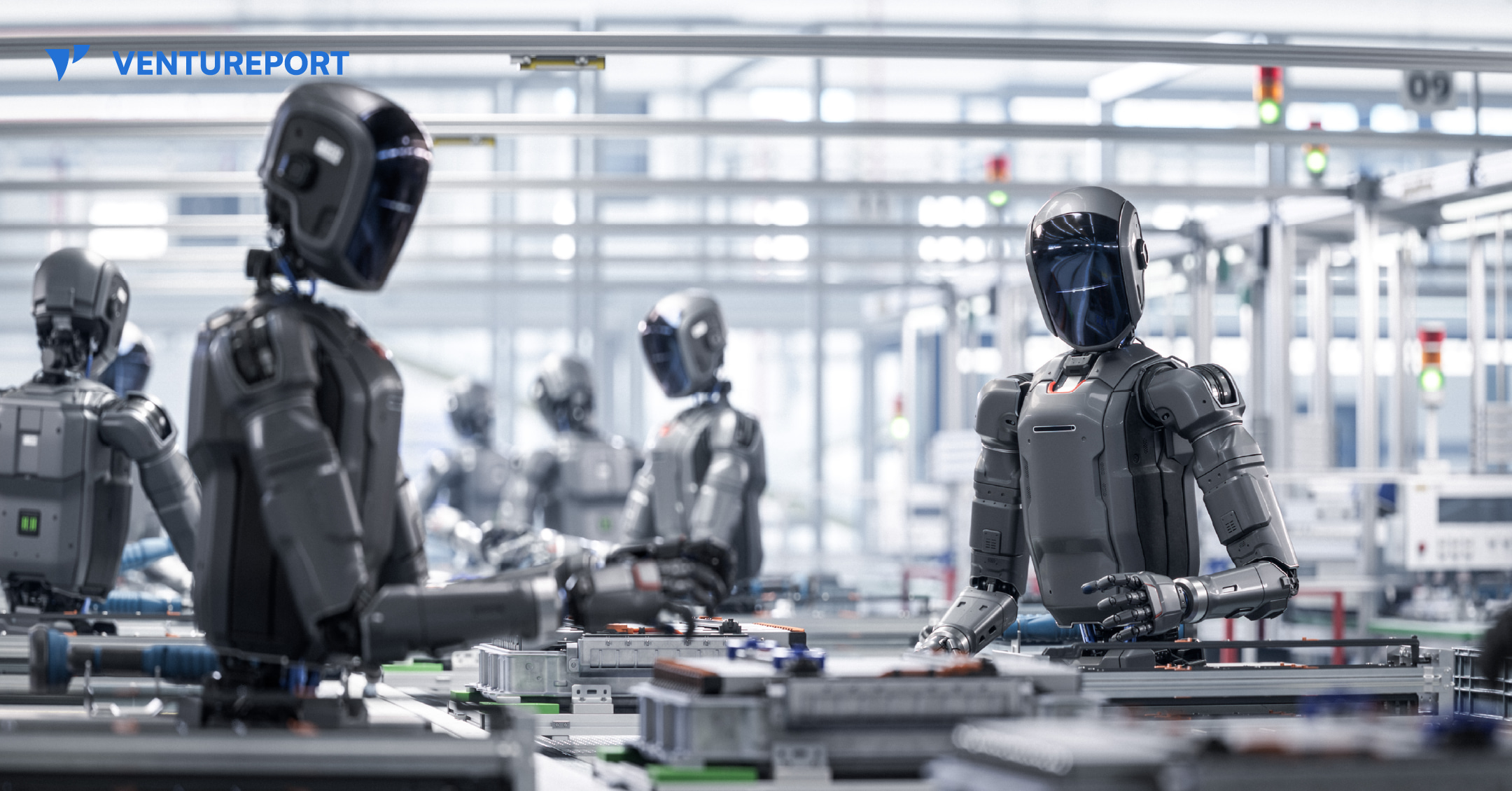
3D render of humanoid robots working in a factory assembly line. PHOTO: ADOBE STOCK
Oversonic Robotics, an Italian company known for building cognitive humanoid robots, has signed an agreement with STMicroelectronics, one of the world’s largest semiconductor manufacturers, to deploy humanoid robots inside semiconductor plants.
According to the companies, this is the first time cognitive humanoid robots will be used operationally inside semiconductor manufacturing facilities. And the first deployment has already taken place at ST’s advanced packaging and test plant in Malta.
At the center of the collaboration is RoBee, Oversonic’s humanoid robot. RoBee is designed to carry out support tasks within industrial environments, particularly where flexibility and interaction with human workers are required. In ST’s factories, the robots will assist with complex manufacturing and logistics flows linked to new semiconductor products. They are intended to work alongside existing automation systems, not replace them.
RoBee is notable for its ability to operate in environments shared with people. It is currently the only humanoid robot certified for use in both industrial and healthcare settings and is already in operation within several Italian companies. The robot is also being used in experimental hospital programs. That background helped position RoBee for deployment in tightly controlled manufacturing environments such as semiconductor plants.
Fabio Puglia, President of Oversonic Robotics, described the agreement as a milestone for deploying humanoid robots in complex industrial settings: “The partnership with STMicroelectronics is a great source of pride for us because it embodies the vision of cognitive robotics that Oversonic has brought to the industrial and healthcare markets. Being the first to introduce cognitive humanoid robots in a sophisticated production context such as semiconductors means measuring ourselves against the highest standards in terms of reliability, safety and operational continuity. This agreement represents a fundamental milestone for Oversonic and, more generally, for the industrial challenges these new machines are called to face in innovative and highly complex environments, alongside people and supporting their quality of work”.
From STMicroelectronics’ side, the use of humanoid robots is framed as part of a broader effort to manage growing manufacturing complexity. he company said RoBee will support complex tasks and help manage the intricate production flows required by newer semiconductor products. It is also expected to contribute to improved product quality and shorter manufacturing cycle times. The robots are designed to integrate with existing automation and software systems, helping improve safety and operational continuity.
In semiconductor manufacturing, precision and reliability leave little room for experimentation. Therefore, introducing humanoid robots into this environment signals a practical shift. It shows how robotics is starting to fill gaps that traditional automation has struggled to address.