
The hidden cost of scaling AI: infrastructure, energy, and the push for liquid cooling.
Updated
January 8, 2026 6:31 PM
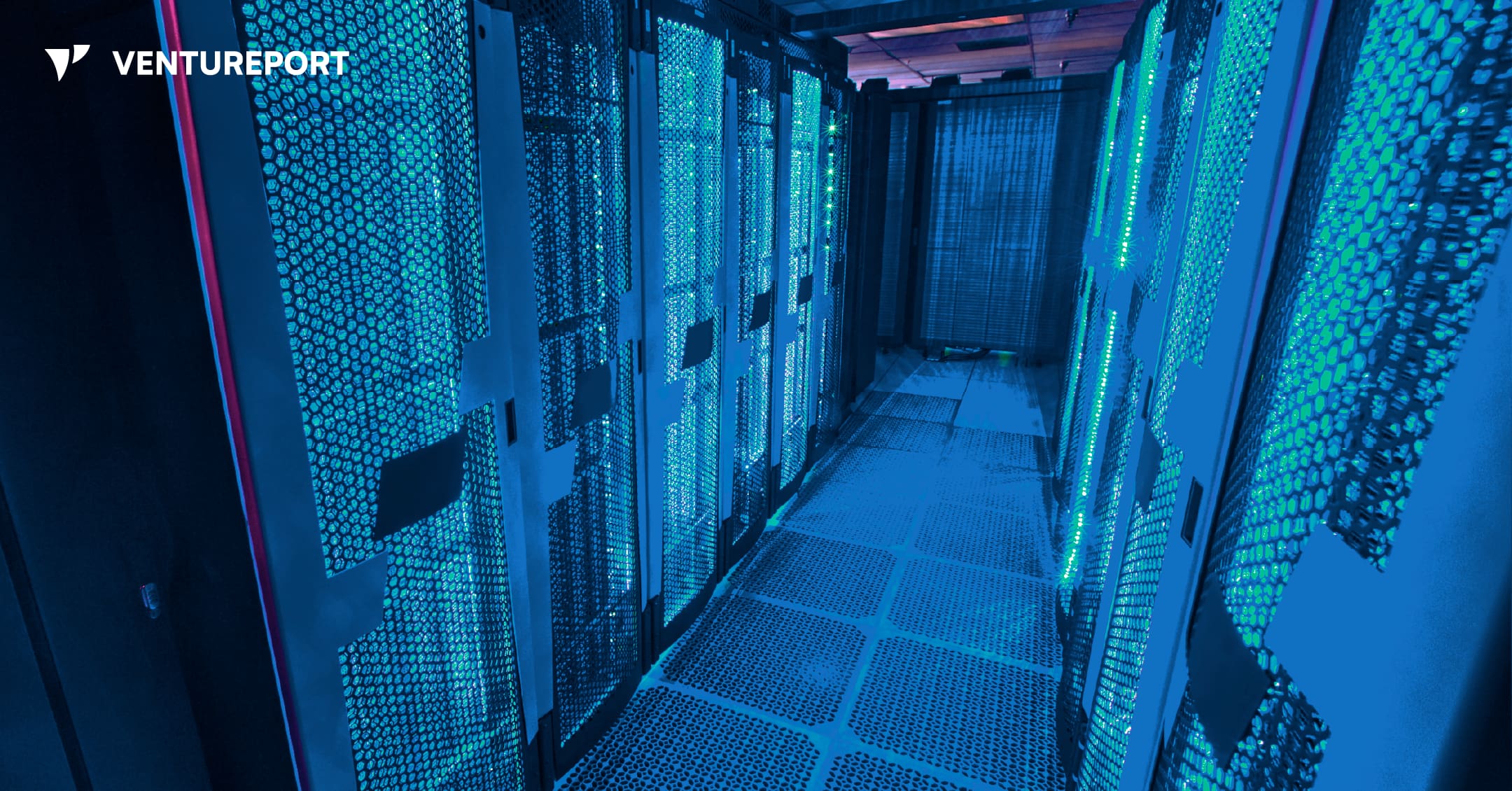
The inside of a data centre, with rows of server racks. PHOTO: FREEPIK
As artificial intelligence models grow larger and more demanding, the quiet pressure point isn’t the algorithms themselves—it’s the AI infrastructure that has to run them. Training and deploying modern AI models now requires enormous amounts of computing power, which creates a different kind of challenge: heat, energy use and space inside data centers. This is the context in which Supermicro and NVIDIA’s collaboration on AI infrastructure begins to matter.
Supermicro designs and builds large-scale computing systems for data centers. It has now expanded its support for NVIDIA’s Blackwell generation of AI chips with new liquid-cooled server platforms built around the NVIDIA HGX B300. The announcement isn’t just about faster hardware. It reflects a broader effort to rethink how AI data center infrastructure is built as facilities strain under rising power and cooling demands.
At a basic level, the systems are designed to pack more AI chips into less space while using less energy to keep them running. Instead of relying mainly on air cooling—fans, chillers and large amounts of electricity, these liquid-cooled AI servers circulate liquid directly across critical components. That approach removes heat more efficiently, allowing servers to run denser AI workloads without overheating or wasting energy.
Why does that matter outside a data center? Because AI doesn’t scale in isolation. As models become more complex, the cost of running them rises quickly, not just in hardware budgets, but in electricity use, water consumption and physical footprint. Traditional air-cooling methods are increasingly becoming a bottleneck, limiting how far AI systems can grow before energy and infrastructure costs spiral.
This is where the Supermicro–NVIDIA partnership fits in. NVIDIA supplies the computing engines—the Blackwell-based GPUs designed to handle massive AI workloads. Supermicro focuses on how those chips are deployed in the real world: how many GPUs can fit in a rack, how they are cooled, how quickly systems can be assembled and how reliably they can operate at scale in modern data centers. Together, the goal is to make high-density AI computing more practical, not just more powerful.
The new liquid-cooled designs are aimed at hyperscale data centers and so-called AI factories—facilities built specifically to train and run large AI models continuously. By increasing GPU density per rack and removing most of the heat through liquid cooling, these systems aim to ease a growing tension in the AI boom: the need for more computers without an equally dramatic rise in energy waste.
Just as important is speed. Large organizations don’t want to spend months stitching together custom AI infrastructure. Supermicro’s approach packages compute, networking and cooling into pre-validated data center building blocks that can be deployed faster. In a world where AI capabilities are advancing rapidly, time to deployment can matter as much as raw performance.
Stepping back, this development says less about one product launch and more about a shift in priorities across the AI industry. The next phase of AI growth isn’t only about smarter models—it’s about whether the physical infrastructure powering AI can scale responsibly. Efficiency, power use and sustainability are becoming as critical as speed.
Keep Reading
AI’s expansion into the physical world is reshaping what investors choose to back
Updated
February 12, 2026 1:21 PM

Exterior view of the Exchange Square in Central, Hong Kong. PHOTO: UNSPLASH
Artificial intelligence is often discussed in terms of large models trained in distant data centres. Less visible, but increasingly consequential, is the layer of computing that enables machines to interpret and respond to the physical world in real-time. As AI systems move from abstract software into vehicles, cameras and factory equipment, the chips that power on-device decision-making are becoming strategic assets in their own right.
It is within this shift that Axera, a Shanghai-based semiconductor company, began trading on the Hong Kong Stock Exchange on February 10 under the ticker symbol 00600.HK. The company priced its shares at HK$28.2, debuting with a market capitalization of approximately HK$16.6 billion. Its listing marks the first time a Chinese company focused primarily on AI perception and edge inference chips has gone public in the city — a milestone that underscores growing investor interest in the hardware layer of artificial intelligence.
The listing comes at a time when demand for flexible, on-device intelligence is expanding. As manufacturers, automakers and infrastructure operators integrate AI into physical systems, the need for specialized processors capable of handling visual and sensor data efficiently has grown. At the same time, China’s domestic semiconductor industry has faced increasing pressure to build local capabilities across the chip value chain. Companies such as Axera sit at the intersection of these dynamics, serving both commercial markets and broader industrial policy priorities.
For Hong Kong, the debut adds to a cohort of technology companies seeking public capital to scale hardware-intensive businesses. Unlike software firms, semiconductor designers operate in a capital-intensive environment shaped by supply chains, fabrication partnerships and rapid product cycles. Their presence on the exchange reflects a maturing investor appetite for AI infrastructure, not just consumer-facing applications.
Axera’s early backer, Qiming Venture Partners, led the company’s pre-A financing round in 2020 and continued to participate in subsequent rounds. Prior to the IPO, it held more than 6 percent of the company, making it the second-largest institutional investor. The public offering provides liquidity for early investors and new funding for a company operating in a highly competitive and technologically demanding sector.
Axera’s market debut does not resolve the competitive challenges of the semiconductor industry, where innovation cycles are short and global competition is intense. But it does signal that investors are placing tangible value on the hardware, enabling AI’s expansion beyond the cloud. In that sense, the listing represents more than a corporate milestone; it reflects a broader transition in how artificial intelligence is built, deployed and financed — moving steadily from software abstraction toward the silicon that makes real-world autonomy possible.