
From pre-orders to market entry, Rokid’s Taiwan campaign reflects how AI hardware is being introduced to consumers today.
Updated
January 8, 2026 6:30 PM
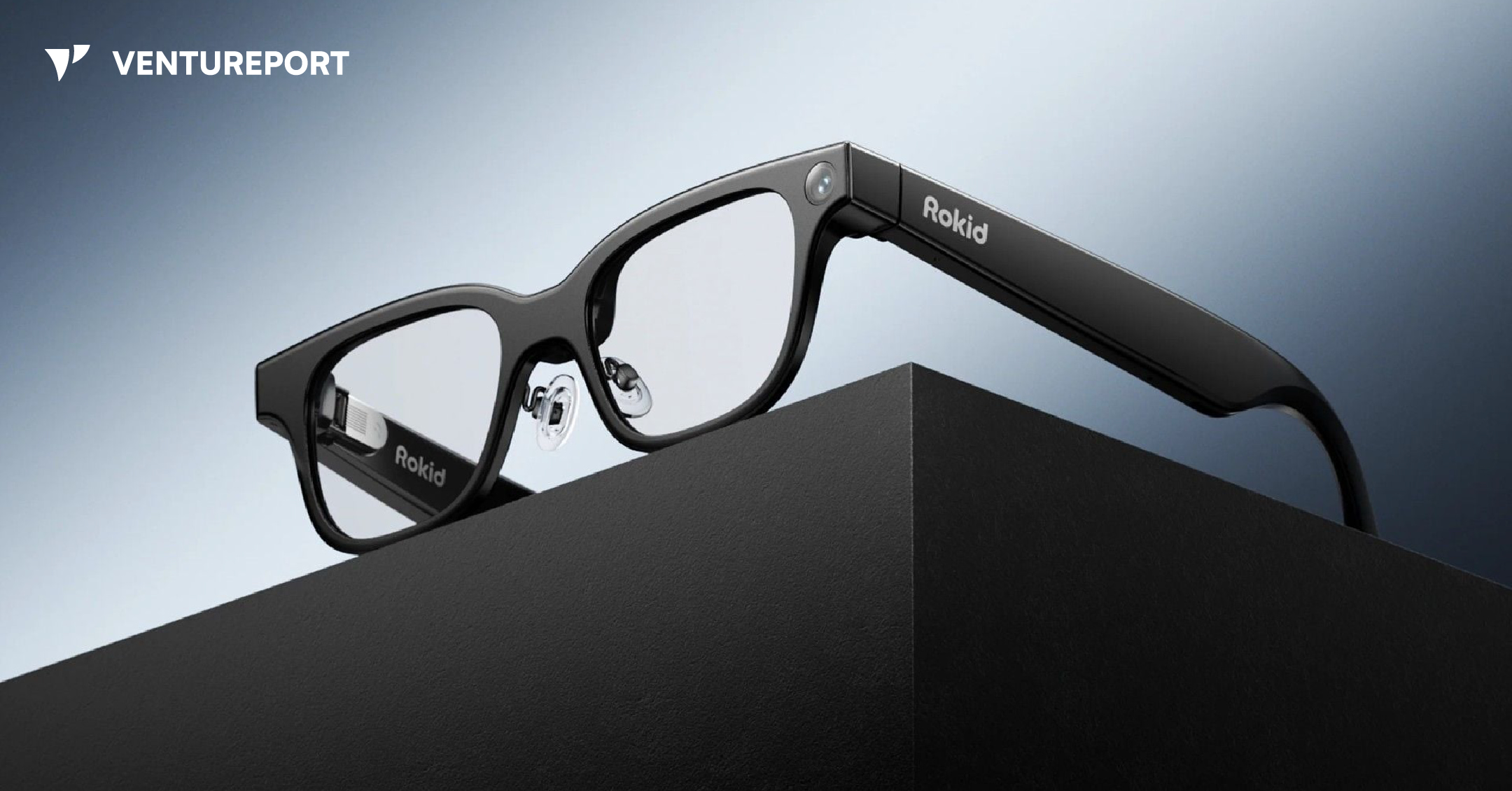
Rokid Glasses, a pair of AR glasses from Rokid. PHOTO: ROKID
Rokid has reached a significant crowdfunding milestone in Taiwan. Its Rokid Glasses campaign surpassed NT$62 million in pre-order funding on zeczec, Taiwan’s creative-oriented crowdfunding platform. The campaign ranked No. 1 across all categories on the platform in 2025 and entered the Top 10 funded campaigns in zeczec’s history, setting new records for AI and XR-related projects.
The campaign launched on October 28 and became one of the platform’s most prominent technology initiatives of the year. According to the company, the outcome followed growing visibility for Rokid Glasses after product showcases in New York, Berlin, Singapore and Paris, positioning the Taiwan campaign within a broader international rollout.
The crowdfunding achievement coincided with Rokid’s official market entry in Taiwan. On December 10, the company debuted Rokid Glasses locally, introducing the product to media, partners and early users in the region. The Taiwan launch mirrored earlier international events and connected the online crowdfunding campaign with a physical market presence.
Rokid Glasses combine augmented reality displays with built-in AI functions, including real-time multilingual translation, live transcription, navigation, object recognition and voice assistance. These capabilities were central to how the product was presented during both the crowdfunding campaign and the Taiwan launch, without framing the project as a traditional consumer electronics release.
The Taiwan campaign builds on Rokid’s prior crowdfunding history. The company previously raised more than US$4 million on Kickstarter, where Rokid Glasses became the highest-funded XR wearable project on the platform. The zeczec campaign extends that track record into one of Asia’s most established consumer electronics markets.
“Taiwan has one of the world's most mature and discerning consumer electronics markets”, said Said Justo Chang, Head of Global Channels at Rokid. “Reaching the top of Taiwan's crowdfunding platform is a great commercial achievement. We are excited to finally introduce Rokid Glasses to Taiwan”.
More broadly, the campaign highlights how crowdfunding platforms continue to function as launch and distribution channels for emerging AI and XR hardware. In Rokid’s case, product rollout, market entry and public participation converged within a single campaign, marking a notable moment for AI-enabled wearables in Taiwan’s technology landscape.
Keep Reading
A global survey shows robot anxiety drops when people encounter robots in real life
Updated
March 13, 2026 2:25 PM

Ameca the humanoid robot, featuring a grey rubber face. PHOTO: ADOBE STOCK
People often assume robots make people uneasy everywhere. But a new global study suggests something more nuanced. Robot anxiety tends to be highest in places where people rarely see robots in real life. Where robots are more visible, attitudes are often far more positive. That insight comes from a global study by Hexagon AB, which surveyed 18,000 participants across nine major markets. The research explored how adults and children think about robots and how those views change depending on everyday exposure.
In the United Kingdom, anxiety about robots is the highest among the countries studied. Around 52% of adults say they feel worried that something might go wrong when they think about interacting with or working alongside robots. South Korea sits at the other end of the spectrum, with only 29% reporting similar concerns. One factor appears to explain much of the gap: familiarity.
British adults are among the least likely to have encountered robots in real life. Only about 30% say they have seen or used one. In contrast, countries where robots are more visible tend to report greater comfort. China offers the clearest example. Around 75% of adults there say they have seen or interacted with robots. At the same time, 81% say they feel excited about the technology’s future potential.
The study suggests that attitudes toward robots are not fixed. Instead, they shift depending on where people encounter them and what tasks they perform. When robots are seen solving clear, practical problems, confidence tends to rise.
Across the surveyed countries, adults report the highest comfort levels with robots working in factories and warehouses. Around 63% say they are comfortable with robots in those environments. These are settings where tasks are clearly defined and safety standards are well understood. Acceptance drops in more personal spaces. Only 46% say they feel comfortable with robots in the home, while comfort falls further to 39% when robots are imagined in classrooms.
In other words, context matters. People appear more willing to accept robots when they take on physically demanding or dangerous work. Half of the respondents say improved safety is one of the main advantages of robotics in those environments. A similar share point to productivity gains as another benefit. Another finding challenges a common assumption about public fears. Job loss is often described as the biggest concern surrounding robotics. But the study suggests security risk worries people more.
Around 51% of adults say their biggest concern about robots at work is the possibility that the machines could be hacked or misused. That fear outweighs worries about physical malfunction or injury, which stand at 41%. Concerns about being replaced at work appear at the same level.
For many respondents, the issue is not simply whether robots can perform tasks. It is whether the systems controlling them are secure. According to researchers involved in the study, these concerns reflect how people evaluate emerging technologies. Instead of having a single opinion about robotics, people tend to judge each situation individually.
A robot helping assemble products in a factory may feel acceptable. The same technology operating in more sensitive environments can raise different questions. Dr. Jim Everett, an associate professor in moral psychology, says trust in artificial intelligence and robotics is often misunderstood. People are not simply asking whether they trust the technology, he notes. They are thinking about specific tools performing specific roles.
A robot assisting in a classroom or helping in healthcare carries different expectations than an AI system used in defense or surveillance. Even though these technologies are often grouped together in public debates, people evaluate them differently depending on their purpose.
Finally, the study also highlights another important factor shaping public attitudes: experience. When people actually encounter robots, fear often declines. Michael Szollosy, a robotics researcher involved in the project, says reactions tend to change quickly when individuals meet a robot for the first time.
The idea of an autonomous machine can feel intimidating in theory. But when people see a small service robot or an industrial machine performing a straightforward task, the reaction is often much calmer. Exposure can shift perceptions from abstract fears to practical understanding.
That shift matters because robotics is moving steadily into everyday environments. From manufacturing and logistics to healthcare and public services, machines capable of autonomous or semi-autonomous work are becoming more common.
As that happens, the study suggests public confidence may depend less on technical breakthroughs and more on visibility and transparency. Burkhard Boeckem, chief technology officer at Hexagon AB, argues that trust grows when people understand what robots are designed to do and where their limits lie.
Anxiety tends to increase when systems feel invisible or poorly understood. Clear boundaries and clear explanations can have the opposite effect. When people see robots working safely alongside humans, performing well-defined tasks and operating within clear rules, the technology becomes easier to accept.
In that sense, the future of robotics may depend as much on public familiarity as on engineering. The machines themselves are advancing quickly. But the relationship between humans and robots is still being negotiated. For now, the study offers a simple insight: the more people encounter robots in everyday life, the less mysterious they become. And once the mystery fades, the conversation often changes from fear to curiosity.