
From pre-orders to market entry, Rokid’s Taiwan campaign reflects how AI hardware is being introduced to consumers today.
Updated
January 8, 2026 6:30 PM
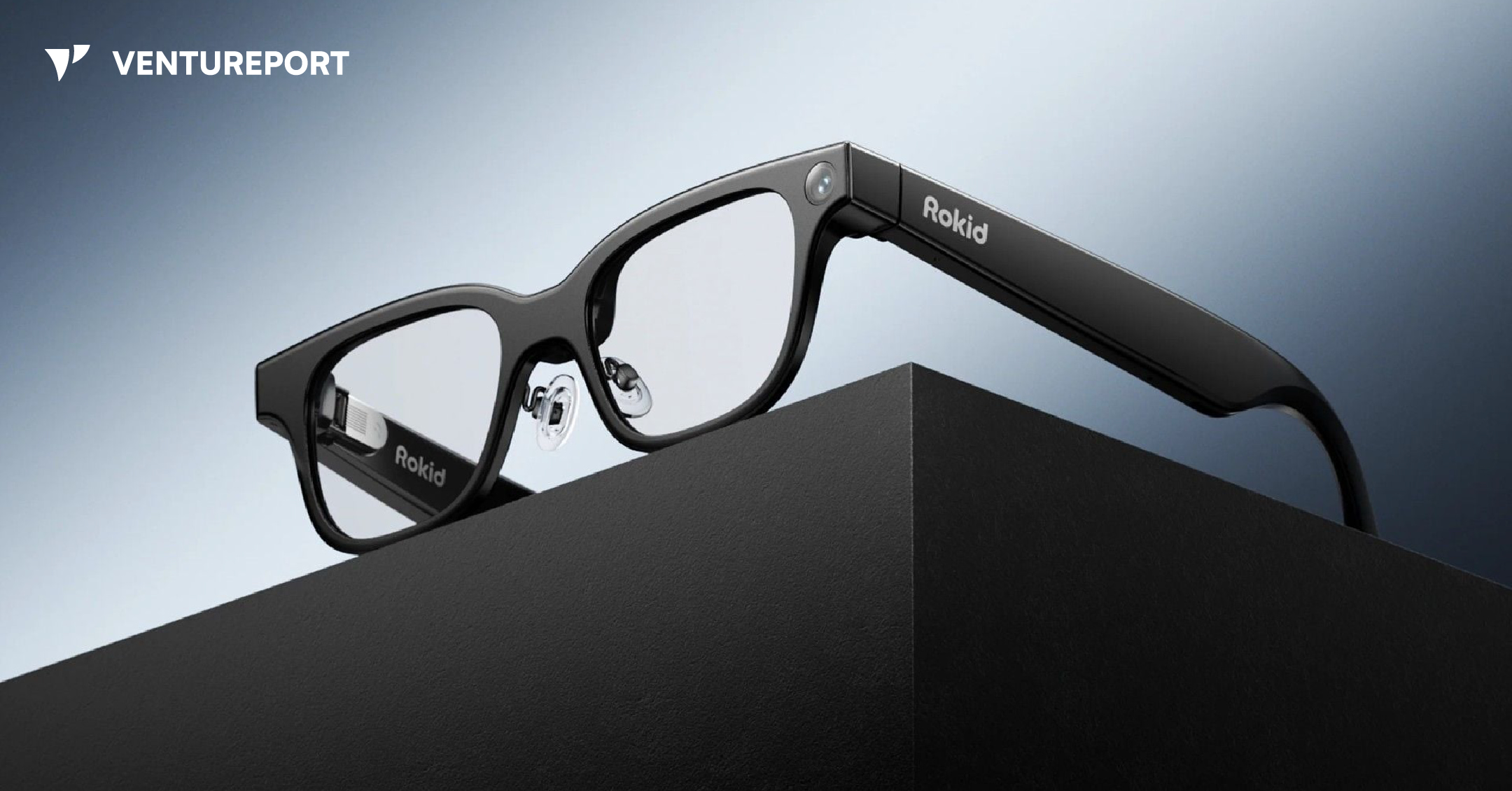
Rokid Glasses, a pair of AR glasses from Rokid. PHOTO: ROKID
Rokid has reached a significant crowdfunding milestone in Taiwan. Its Rokid Glasses campaign surpassed NT$62 million in pre-order funding on zeczec, Taiwan’s creative-oriented crowdfunding platform. The campaign ranked No. 1 across all categories on the platform in 2025 and entered the Top 10 funded campaigns in zeczec’s history, setting new records for AI and XR-related projects.
The campaign launched on October 28 and became one of the platform’s most prominent technology initiatives of the year. According to the company, the outcome followed growing visibility for Rokid Glasses after product showcases in New York, Berlin, Singapore and Paris, positioning the Taiwan campaign within a broader international rollout.
The crowdfunding achievement coincided with Rokid’s official market entry in Taiwan. On December 10, the company debuted Rokid Glasses locally, introducing the product to media, partners and early users in the region. The Taiwan launch mirrored earlier international events and connected the online crowdfunding campaign with a physical market presence.
Rokid Glasses combine augmented reality displays with built-in AI functions, including real-time multilingual translation, live transcription, navigation, object recognition and voice assistance. These capabilities were central to how the product was presented during both the crowdfunding campaign and the Taiwan launch, without framing the project as a traditional consumer electronics release.
The Taiwan campaign builds on Rokid’s prior crowdfunding history. The company previously raised more than US$4 million on Kickstarter, where Rokid Glasses became the highest-funded XR wearable project on the platform. The zeczec campaign extends that track record into one of Asia’s most established consumer electronics markets.
“Taiwan has one of the world's most mature and discerning consumer electronics markets”, said Said Justo Chang, Head of Global Channels at Rokid. “Reaching the top of Taiwan's crowdfunding platform is a great commercial achievement. We are excited to finally introduce Rokid Glasses to Taiwan”.
More broadly, the campaign highlights how crowdfunding platforms continue to function as launch and distribution channels for emerging AI and XR hardware. In Rokid’s case, product rollout, market entry and public participation converged within a single campaign, marking a notable moment for AI-enabled wearables in Taiwan’s technology landscape.
Keep Reading
Endometriosis often takes years to diagnose. This ultrasound simulation innovation could help change that
Updated
March 17, 2026 1:01 AM

A group of women facing backwards. PHOTO: UNSPLASH
Endometriosis affects roughly one in ten women worldwide, yet diagnosing the condition often takes years. In many cases, patients experience symptoms for nearly a decade before receiving a confirmed diagnosis. One reason is that detecting endometriosis through ultrasound requires specialized training and clinicians do not always encounter enough real cases to build that expertise.
To address this gap, medical simulation company Surgical Science has introduced a new ultrasound training module designed specifically for identifying endometriosis. The system allows clinicians to practice scanning techniques in a virtual environment, helping them recognize signs of the disease without relying solely on real-patient cases.
A key feature of the simulator is training on the “sliding sign,” an ultrasound indicator used to detect deep endometriosis. Because the condition can appear differently from patient to patient, mastering this assessment in real clinical settings can be difficult. The simulator allows clinicians to repeat the process across multiple scenarios, improving their ability to identify the condition during routine examinations.
The module also incorporates the International Deep Endometriosis Analysis (IDEA) protocol, which provides a structured method for performing a complete pelvic ultrasound assessment. Additional training cases, region-based scenarios and certification options are included to support standardized learning.
Early training results suggest strong improvements in clinician confidence, including higher skill levels in transvaginal ultrasound and better recognition of deep endometriosis. By expanding access to structured ultrasound training, simulation tools like this could help reduce diagnostic delays and improve care for millions of women living with the condition.