
A closer look at how startups are turning local AI into global opportunity
Updated
March 24, 2026 6:25 PM
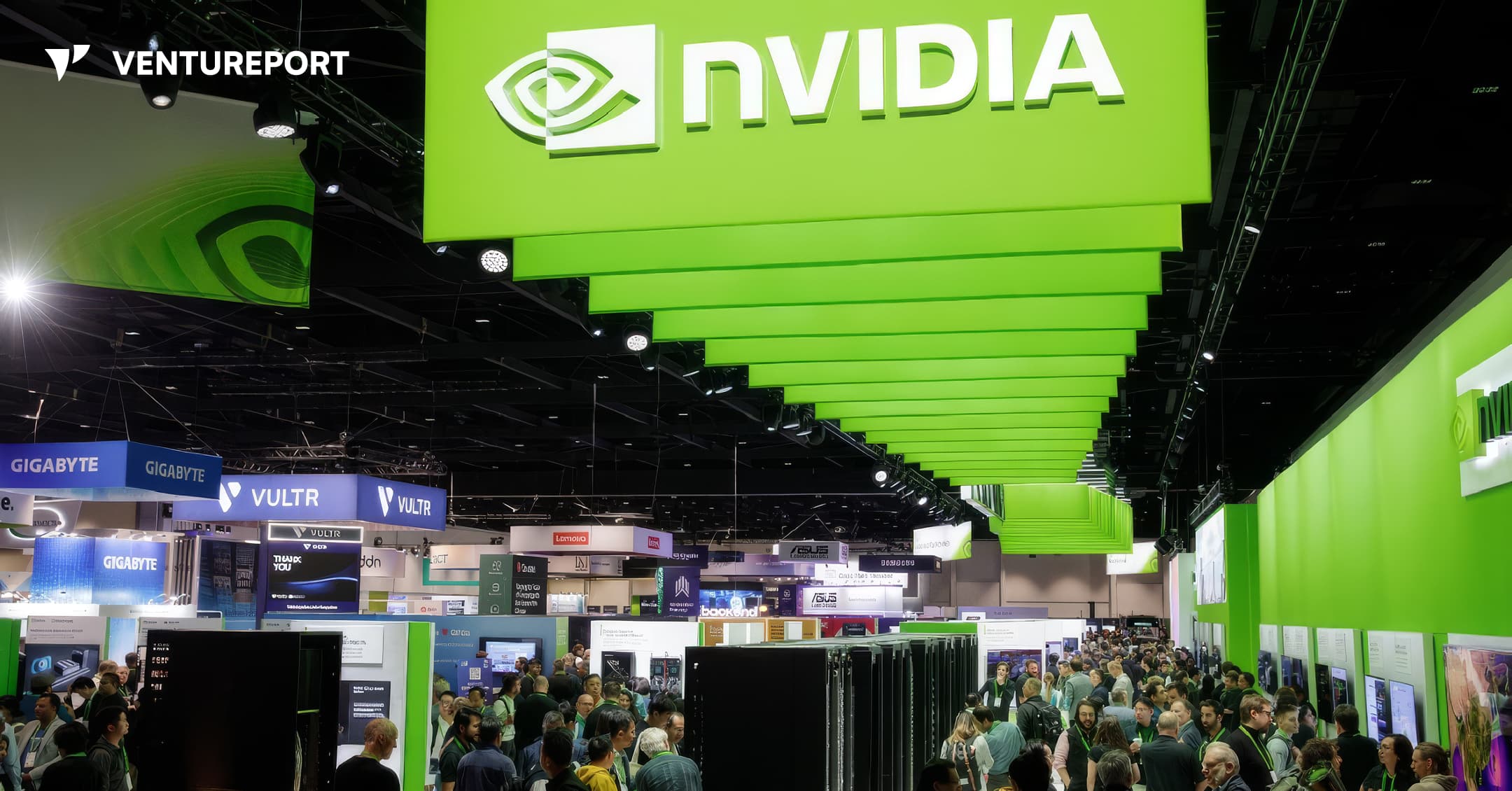
NVIDIA GTC 2026. PHOTO: NVIDIA
At NVIDIA GTC 2026 in Palo Alto, a group of 16 Taiwanese startups used the global AI stage to do more than showcase products—they tested how far their technologies could travel beyond domestic markets. The delegation, led by Startup Island TAIWAN Silicon Valley Hub with support from Taiwan’s National Development Council, reflected a broader shift in the country’s role within the AI ecosystem.
The startups represented a mix of emerging areas including digital twins, robotics, AI agents and healthcare, aligning closely with enterprise AI adoption trends. Some gained formal visibility within NVIDIA’s ecosystem, with companies such as MetAI and Spingence featured in the Inception Program, while six others presented their work in the conference’s poster gallery. These formats allowed them to engage directly with developers, enterprise users and potential partners rather than simply exhibiting technology.
A defining feature of Taiwan’s presence this year was how closely startups operated alongside established hardware companies such as ASUS, AAEON and Compal. This setup reflected a vertically integrated model where infrastructure and applications are developed together, offering a clearer path from product development to deployment. It also underscored Taiwan’s gradual shift from being primarily a hardware supplier to participating more actively across the full AI stack.
Activity around the conference extended well beyond the exhibition floor. A Taiwan Demo Day held during the week drew more than 1,000 registrations and nearly 600 in-person attendees, bringing startups into contact with close to 200 international investors. The event focused on structured introductions and deal flow, positioning startups in front of venture firms and corporate innovation teams looking for AI applications.
Alongside these formal sessions, Taiwan Startup Night provided a more informal but equally strategic setting. With over 100 curated participants, including founders, investors and corporate representatives, the gathering created space for early-stage conversations that could evolve into partnerships or market entry opportunities. These interactions, while less visible than on-stage presentations, are often where initial collaboration takes shape.
Taken together, the events around GTC point to a more coordinated approach to international expansion. Through platforms like Startup Island TAIWAN, the emphasis is not just on visibility but on building continuity—connecting startups with investors, partners and customers across multiple touchpoints in a single week. As AI development increasingly spans chips, systems and applications, Taiwan’s presence at GTC suggests a more integrated role, where the focus is as much on enabling global deployment as it is on developing the technology itself.
Keep Reading
From information gaps to global access — how AI is reshaping the pursuit of knowledge.
Updated
January 8, 2026 6:33 PM
.jpg)
Paper cut-outs of robots sitting on a pile of books. PHOTO: FREEPIK
Encyclopaedias have always been mirrors of their time — from heavy leather-bound volumes in the 19th century to Wikipedia’s community-edited pages online. But as the world’s information multiplies faster than humans can catalogue it, even open platforms struggle to keep pace. Enter Botipedia, a new project from INSEAD, The Business School for the World, that reimagines how knowledge can be created, verified and shared using artificial intelligence.
At its core, Botipedia is powered by proprietary AI that automates the process of writing encyclopaedia entries. Instead of relying on volunteers or editors, it uses a system called Dynamic Multi-method Generation (DMG) — a method that combines hundreds of algorithms and curated datasets to produce high-quality, verifiable content. This AI doesn’t just summarise what already exists; it synthesises information from archives, satellite feeds and data libraries to generate original text grounded in facts.
What makes this innovation significant is the gap it fills in global access to knowledge. While Wikipedia hosts roughly 64 million English-language entries, languages like Swahili have fewer than 40,000 articles — leaving most of the world’s population outside the circle of easily available online information. Botipedia aims to close that gap by generating over 400 billion entries across 100 languages, ensuring that no subject, event or region is overlooked.
"We are creating Botipedia to provide everyone with equal access to information, with no language left behind", says Phil Parker, INSEAD Chaired Professor of Management Science, creator of Botipedia and holder of one of the pioneering patents in the field of generative AI. "We focus on content grounded in data and sources with full provenance, allowing the user to see as many perspectives as possible, as opposed to one potentially biased source".
Unlike many generative AI tools that depend on large language models (LLMs), Botipedia adapts its methods based on the type of content. For instance, weather data is generated using geo-spatial techniques to cover every possible coordinate on Earth. This targeted, multi-method approach helps boost both the accuracy and reliability of what it produces — key challenges in today’s AI-driven content landscape.
Additionally, the innovation is also energy-efficient. Its DMG system operates at a fraction of the processing power required by GPU-heavy models like ChatGPT, making it a sustainable alternative for large-scale content generation.
By combining AI precision, linguistic inclusivity and academic credibility, Botipedia positions itself as more than a digital library — it’s a step toward universal, unbiased access to verified knowledge.
"Botipedia is one of many initiatives of the Human and Machine Intelligence Institute (HUMII) that we are establishing at INSEAD", says Lily Fang, Dean of Research and Innovation at INSEAD. "It is a practical application that builds on INSEAD-linked IP to help people make better decisions with knowledge powered by technology. We want technologies that enhance the quality and meaning of our work and life, to retain human agency and value in the age of intelligence".
By harnessing AI to bridge gaps of language, geography and credibility, Botipedia points to a future where access to knowledge is no longer a privilege, but a shared global resource.