
A closer look at how startups are turning local AI into global opportunity
Updated
March 24, 2026 6:25 PM
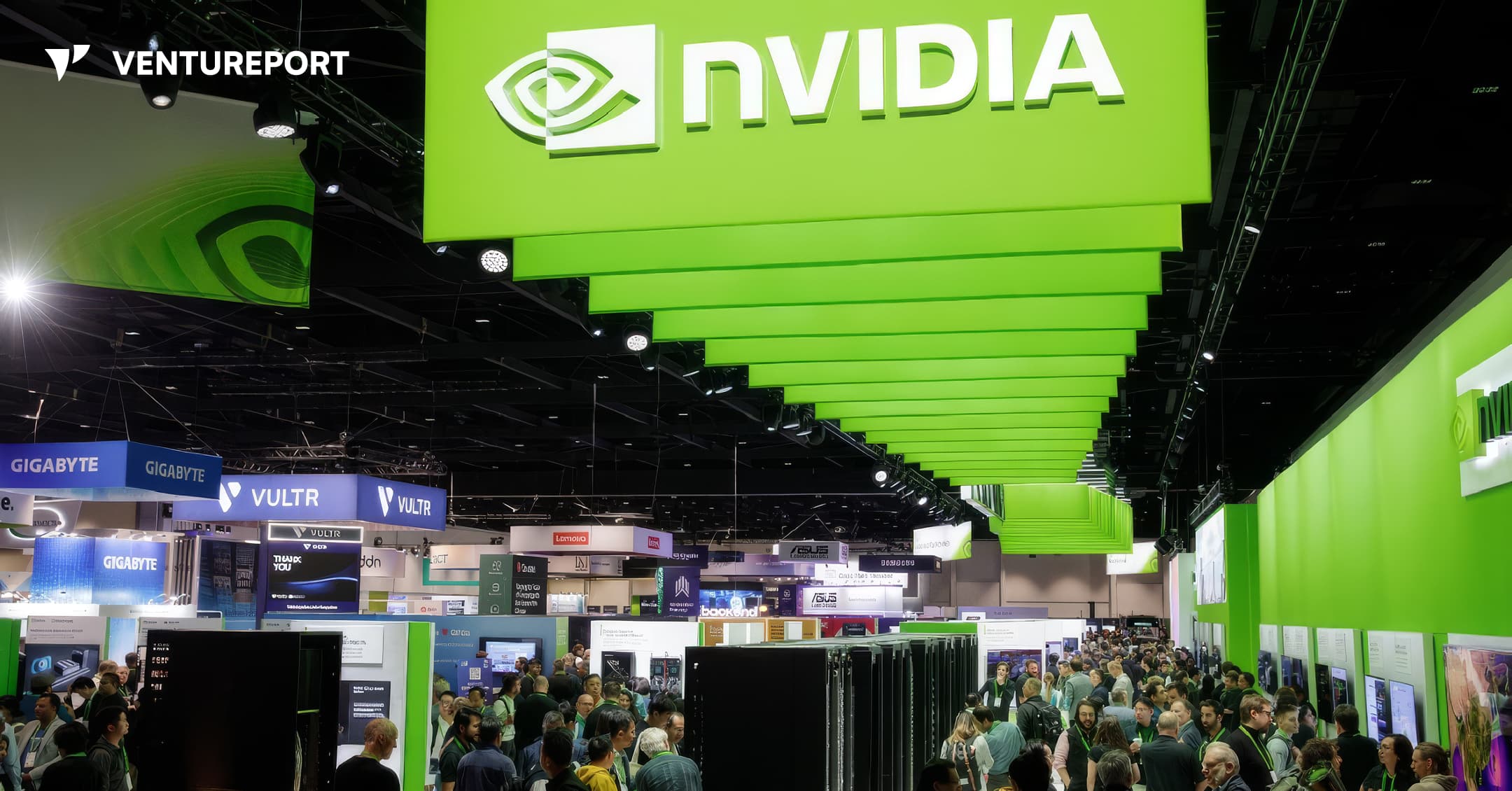
NVIDIA GTC 2026. PHOTO: NVIDIA
At NVIDIA GTC 2026 in Palo Alto, a group of 16 Taiwanese startups used the global AI stage to do more than showcase products—they tested how far their technologies could travel beyond domestic markets. The delegation, led by Startup Island TAIWAN Silicon Valley Hub with support from Taiwan’s National Development Council, reflected a broader shift in the country’s role within the AI ecosystem.
The startups represented a mix of emerging areas including digital twins, robotics, AI agents and healthcare, aligning closely with enterprise AI adoption trends. Some gained formal visibility within NVIDIA’s ecosystem, with companies such as MetAI and Spingence featured in the Inception Program, while six others presented their work in the conference’s poster gallery. These formats allowed them to engage directly with developers, enterprise users and potential partners rather than simply exhibiting technology.
A defining feature of Taiwan’s presence this year was how closely startups operated alongside established hardware companies such as ASUS, AAEON and Compal. This setup reflected a vertically integrated model where infrastructure and applications are developed together, offering a clearer path from product development to deployment. It also underscored Taiwan’s gradual shift from being primarily a hardware supplier to participating more actively across the full AI stack.
Activity around the conference extended well beyond the exhibition floor. A Taiwan Demo Day held during the week drew more than 1,000 registrations and nearly 600 in-person attendees, bringing startups into contact with close to 200 international investors. The event focused on structured introductions and deal flow, positioning startups in front of venture firms and corporate innovation teams looking for AI applications.
Alongside these formal sessions, Taiwan Startup Night provided a more informal but equally strategic setting. With over 100 curated participants, including founders, investors and corporate representatives, the gathering created space for early-stage conversations that could evolve into partnerships or market entry opportunities. These interactions, while less visible than on-stage presentations, are often where initial collaboration takes shape.
Taken together, the events around GTC point to a more coordinated approach to international expansion. Through platforms like Startup Island TAIWAN, the emphasis is not just on visibility but on building continuity—connecting startups with investors, partners and customers across multiple touchpoints in a single week. As AI development increasingly spans chips, systems and applications, Taiwan’s presence at GTC suggests a more integrated role, where the focus is as much on enabling global deployment as it is on developing the technology itself.
Keep Reading
Examining the shift from fast answers to verified intelligence in enterprise AI.
Updated
January 8, 2026 6:33 PM
Startup employee reviewing business metrics on an AI-powered dashboard. PHOTO: FREEPIK
Neuron7.ai, a company that builds AI systems to help service teams resolve technical issues faster, has launched Neuro. It is a new kind of AI agent built for environments where accuracy matters more than speed. From manufacturing floors to hospital equipment rooms, Neuro is designed for situations where a wrong answer can halt operations.
What sets Neuro apart is its focus on reliability. Instead of relying solely on large language models that often produce confident but inaccurate responses, Neuro combines deterministic AI — which draws on verified, trusted data — with autonomous reasoning for more complex cases. This hybrid design helps the system provide context-aware resolutions without inventing answers or “hallucinating”, a common issue that has made many enterprises cautious about adopting agentic AI.
“Enterprise adoption of agentic AI has stalled despite massive vendor investment. Gartner predicts 40% of projects will be canceled by 2027 due to reliability concerns”, said Niken Patel, CEO and Co-Founder of Neuron7. “The root cause is hallucinations. In service operations, outcomes are binary. An issue is either resolved or it is not. Probabilistic AI that is right only 70% of the time fails 30% of your customers and that failure rate is unacceptable for mission-critical service”.
That concern shaped how Neuro was built. “We use deterministic guided fixes for known issues. No guessing, no hallucinations — and reserve autonomous AI reasoning for complex scenarios. What sets Neuro apart is knowing which mode to use. While competitors race to make agents more autonomous, we're focused on making service resolution more accurate and trusted”, Patel explained.
At the heart of Neuro is the Smart Resolution Hub, Neuron7’s central intelligence layer that consolidates service data, knowledge bases and troubleshooting workflows into one conversational experience. This means a technician can describe a problem — say, a diagnostic error in an MRI scanner — and Neuro can instantly generate a verified, step-by-step solution. If the problem hasn’t been encountered before, it can autonomously scan through thousands of internal and external data points to identify the most likely fix, all while maintaining traceability and compliance.
Neuro’s architecture also makes it practical for real-world use. It integrates seamlessly with enterprise systems such as Salesforce, Microsoft, ServiceNow and SAP, allowing companies to embed it within their existing support operations. Early users of Neuron7’s platform have reported measurable improvements — faster resolutions, higher customer satisfaction and reduced downtime — thanks to guided intelligence that scales expert-level problem solving across teams.
The timing of Neuro’s debut feels deliberate. As organizations look to move past the hype of generative AI, trust and accountability have become the new benchmarks. AI systems that can explain their reasoning and stay within verifiable boundaries are emerging as the next phase of enterprise adoption.
“The market has figured out how to build autonomous agents”, Patel said. “The unsolved problem is building accurate agents for contexts where errors have consequences. Neuro fills that gap”.
Neuron7 is building a system that knows its limits — one that reasons carefully, acts responsibly and earns trust where it matters most. In a space dominated by speculation, that discipline may well redefine what “intelligent” really means in enterprise AI.