
Bitmo Lab is testing an ultra-thin, bendable tracker built to fit inside items traditional trackers can’t
Updated
February 12, 2026 4:43 PM
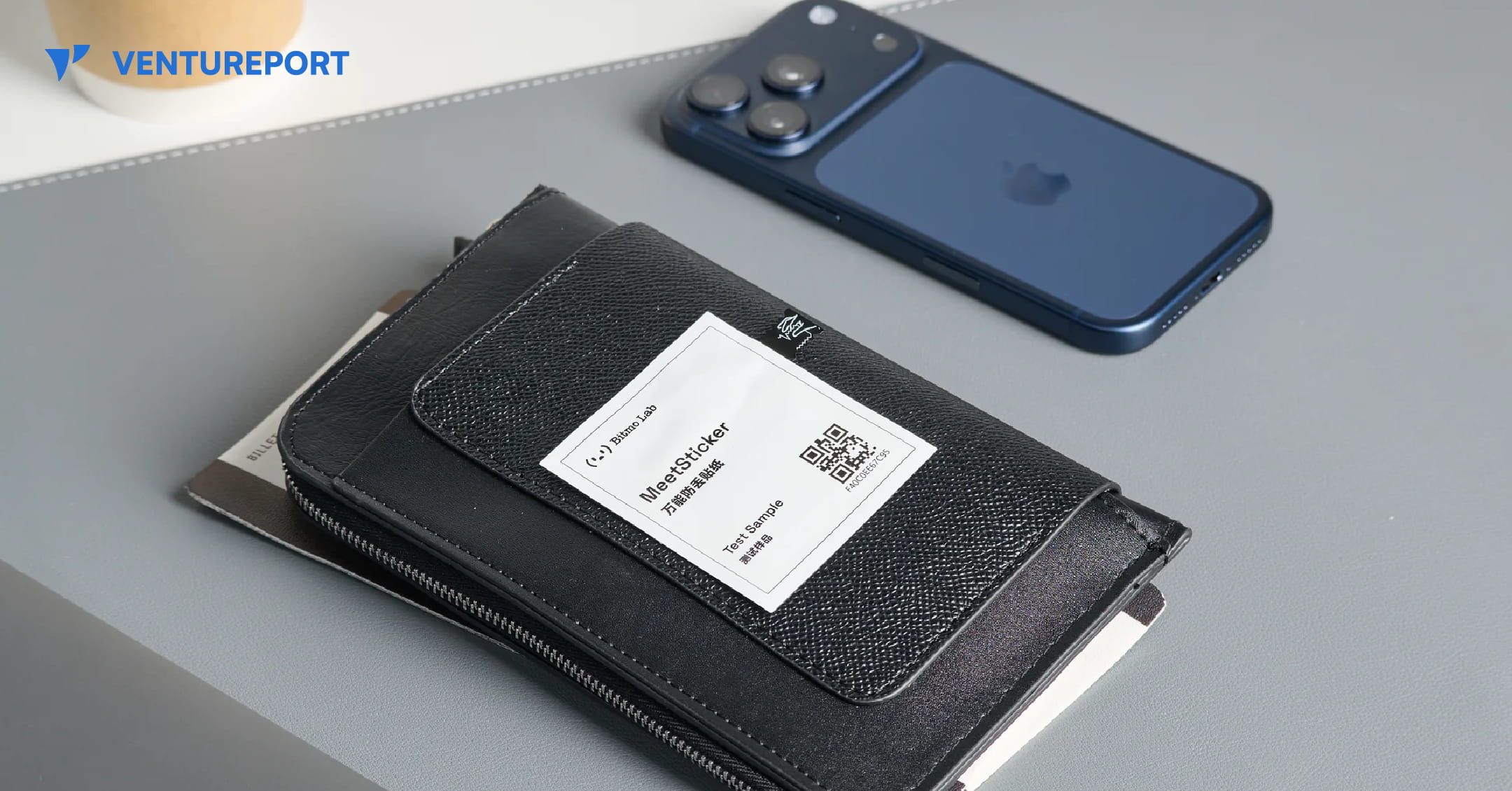
Bitmo Lab's MeetSticker tracker. PHOTO: BITMO LAB
Location trackers have become everyday accessories for keys, bags and luggage. But as personal items grow slimmer and more design-focused — from minimalist wallets to passport sleeves and specialised gear — tracking them has become less straightforward. Most trackers are built as small, rigid discs that assume the presence of space, loops or compartments. That assumption has created a growing mismatch between modern product design and the technology meant to secure it.
Hong Kong–based startup Bitmo Lab is attempting to address that gap with a device called MeetSticker. Instead of the solid plastic casing typical of most trackers, MeetSticker is engineered to be flexible and ultra-thin, measuring just 0.8 millimetres thick. The bendable design allows it to sit within narrow compartments or along curved surfaces without altering the shape of the object. Rather than attaching to an item externally, it is intended to integrate discreetly inside it.
That structural shift is the core of the product’s proposition. By removing the rigid shell that defines conventional tracking hardware, MeetSticker can be placed in items that previously had no practical way to accommodate a tracker. Bitmo Lab states that the device connects through a proprietary network and a companion application compatible with both iOS and Android, positioning it as a cross-platform solution rather than one tied to a single ecosystem.
The implications extend beyond form factor. Objects without obvious attachment points — such as compact travel accessories or specialised tools — could potentially be monitored without visible add-ons. In doing so, the device broadens the scope of tracking technology into categories where aesthetics, aerodynamics or compact design matter as much as functionality.
Before moving toward retail distribution, however, the company is focusing on validation. Bitmo Lab has launched a five-week global alpha testing programme beginning February 9. Sixty participants will receive a prototype unit and early access to the app. According to the company, the programme is designed to assess durability, usability and real-world performance before a wider commercial release. Participants who provide feedback will receive a retail unit upon launch.
Such testing is particularly relevant for flexible electronics. Unlike rigid devices, bendable hardware must withstand repeated flexing, daily handling and environmental exposure. Early user data can help refine manufacturing processes and software optimisation before scaling production.
As with other connected tracking devices, privacy considerations remain part of the equation. Bitmo Lab has stated that data collected during the alpha programme will be used strictly for testing purposes and deleted once the programme concludes.
Whether flexible trackers will redefine the category will depend on how they perform outside controlled testing environments. Still, the introduction of a near-invisible, bendable tracking device reflects a broader shift in consumer technology. As everyday products become thinner and more design-conscious, the tools built to protect them may need to adapt just as seamlessly.
Keep Reading
Tencent’s latest solution simplifies cross-border payments for Weixin users and merchants.
Updated
January 8, 2026 6:33 PM

Tencent's large penguin statue in front of a building. PHOTO: UNSPLASH
In a world where digital borders are fading faster than ever, Tencent is betting on familiarity. With the launch of TenPay Global Checkout, the company wants to make paying across countries feel as seamless as paying at home.
The new service, unveiled today, allows Weixin Mini Program merchants outside mainland China to accept a variety of local payment methods. That includes digital wallets, real-time payment networks and credit and debit cards, all through a single integration. The launch starts in Singapore and Macao SAR, where merchants can now take payments via PayNow, BOCPAY(MO), and major cards. Japan, Australia and New Zealand are next, with more regions to follow soon.
This rollout builds on the growing reach of Weixin Mini Programs, known internationally through WeChat. These small apps are built right into the platform, letting users' shop, book services and make payments without downloading separate apps. Today, there are over one million monthly active users in key overseas markets, with Mini Programs available across 92 countries and regions.
Yet, for many users abroad, paying within Mini Programs hasn’t always been simple. Foreign card restrictions, currency conversions and limited local options often made checkout a frustrating step. TenPay Global Checkout aims to change that.
“TenPay Global Checkout marks an important step in enhancing the local consumer experience. By enabling overseas Weixin Mini Program merchants to accept trusted and diversified local payment methods through one unified solution, users benefit from a more convenient and efficient payment experience. This helps merchants improve payment conversion rates, expand their user base and scale their businesses to serve a broader range of customers”, said Wenhui Yang, CEO of TenPay Global (Singapore).
What makes this move interesting isn’t just its technical simplicity—it’s the cultural bridge it builds. For users in Singapore or Japan, paying with PayNow or a local card inside Weixin feels less like an international transaction and more like an everyday purchase.
For merchants, it’s an invitation into a market that values convenience and trust. Payment familiarity, after all, often decides whether a user completes a purchase or abandons it at checkout.
The company remains focused on creating secure, connected and user-friendly payment experiences that help merchants grow and allow consumers to pay with confidence, wherever they are.
If successful, TenPay Global Checkout could quietly redefine how cross-border commerce feels—not like a transaction across regions, but a familiar tap, scan or click. In an increasingly global marketplace, that kind of familiarity might just be the next frontier in digital trust.