
How a Korean biotech startup is using AI to move drug discovery from trial-and-error to precision design
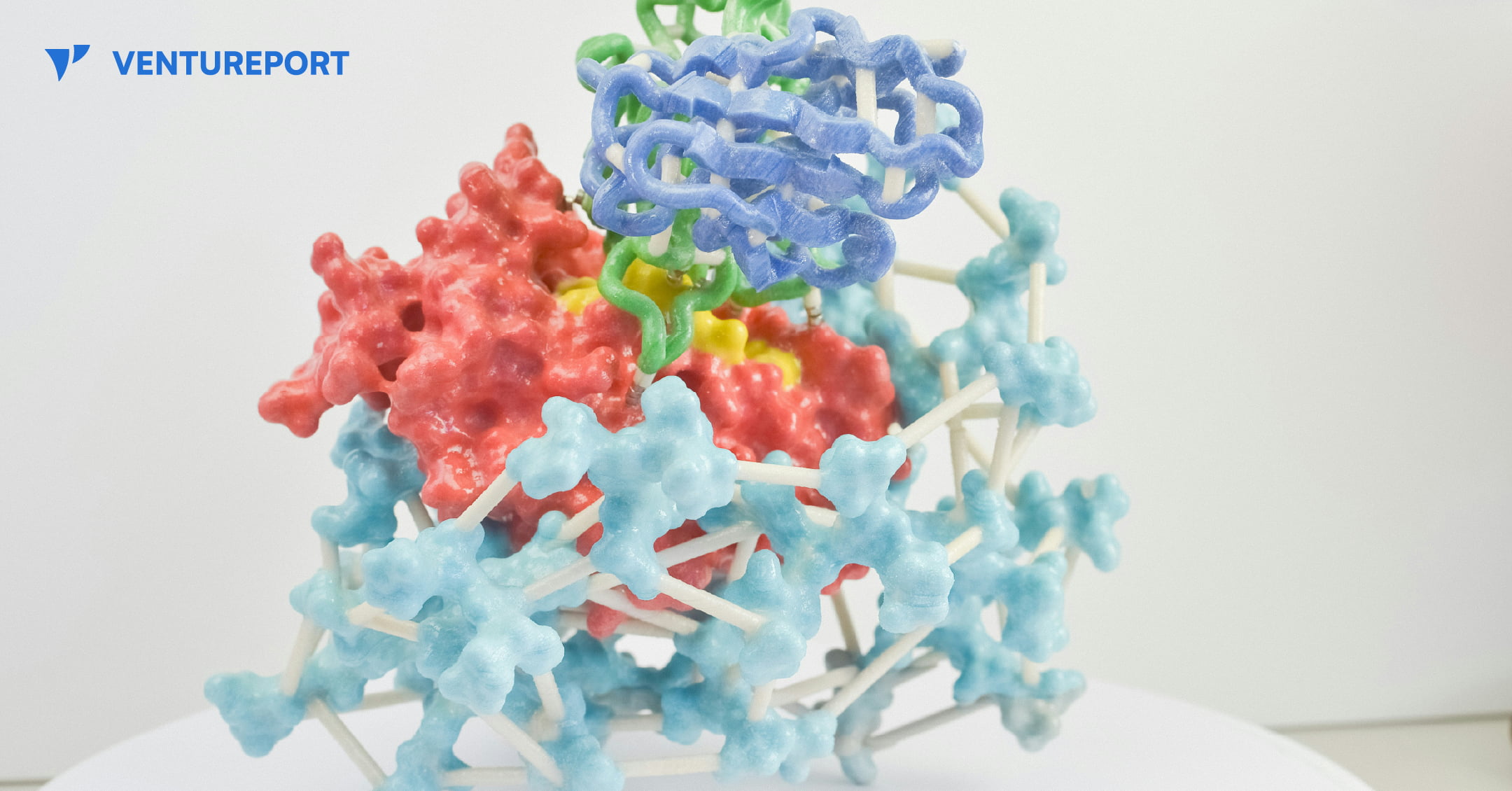
A close up of a protein structure model. PHOTO: UNSPLASH
For decades, drug discovery has relied on trial and error, with scientists testing thousands of molecules to find one that works. Galux, a South Korean biotech startup, is changing that by using AI to design proteins from scratch. This method, called “de novo” design, makes it possible to build precise new therapies instead of searching through existing ones.
The company recently announced a US$29 million Series B funding round, bringing its total capital to US$47 million.This significant investment attracted a substantial roster of institutional backers, including the Korea Development Bank (KDB), Yuanta Investment, SL Investment and NCORE Ventures. These firms joined existing investors such as InterVest, DAYLI Partners and PATHWAY Investment, as well as new participants including SneakPeek Investments, Korea Investment & Securities and Mirae Asset Securities.
At the core of the company’s work is a platform called GaluxDesign. Unlike many AI tools that only predict how existing proteins fold, this system uses deep learning and physics to create entirely new therapeutic antibodies. This “from scratch” approach lets the team go after so-called “undruggable” proteins. These are targets that traditional small-molecule drugs can’t reach because they lack clear binding pockets. By designing proteins to fit these complex shapes, Galux aims to unlock treatments that have stayed out of reach for decades. And that’s exactly why investors are paying attention.
The pharmaceutical industry is actively looking for faster and more efficient ways to develop new drugs, and Galux is built for exactly that. The company connects its AI platform directly to its own wet lab, where designs can be tested in real time. Each result feeds straight back into the system, sharpening the next round of models. This continuous loop speeds up discovery and improves precision at every step. It’s also why partners like Celltrion, LG Chem and Boehringer Ingelheim are already working with Galux.
Galux is no longer just trying to make drugs that stick to a target. The company now wants its AI to design medicines that actually work in the body and can be made at scale. In simple terms, a drug has to do more than bind to a disease—it must be stable, safe and strong enough to change how the illness behaves. Galux is moving into tougher targets such as ion channels and GPCRs. These play key roles in heart function and sensory signals. Ultimately, the goal is to show that AI-driven design can turn complex biology into real treatments. And instead of hunting blindly for a solution, the team is building exactly what they need.
Keep Reading
AI meets AR: How Rokid Glasses bring multilingual, real-time intelligence to smart eyewear globally
Updated
March 17, 2026 1:01 AM

Rokid's smart glasses. PHOTO: ROKID
Rokid, a Chinese company specializing in AI-powered smart eyewear and human–computer interaction, has rolled out a major software update for the international version of its Rokid Glasses. This update makes it the first smart glasses manufacturer to natively support Google’s Gemini, alongside three other leading large language models: OpenAI’s ChatGPT, Alibaba’s Qwen and DeepSeek.
The integration is powered by Rokid’s device-to-cloud architecture, which enables users to switch between AI models on the fly. In practice, this means a traveler can receive a real-time translation in Japanese using one AI model, then quickly switch to ChatGPT to answer a technical query—without noticeable delay. The system also supports multi-modal inputs like voice and gestures, making interactions more intuitive for everyday use.
This is more than a routine software update. By combining AI models from both U.S. and Chinese developers, Rokid is making its smart glasses relevant to global users, with features that adapt to local languages and preferences while maintaining high performance.
These technological advancements have directly fueled Rokid’s international growth. Between November 2024 and October 2025, Shangpu Group data shows Rokid Glasses ranked No.1 in global sales for AI glasses with display functionality. Crowdfunding milestones further reflect this momentum: the product became the fastest smart glasses to raise over 100 million Japanese Yen on Japan’s MAKUAKE platform and broke Kickstarter records for smart eyewear.
Taken together, Rokid’s update highlights a shift in the smart glasses space: success increasingly comes from openness, flexibility and localized AI experiences rather than closed, single-platform ecosystems. By giving users choice, integrating global AI capabilities and bridging cultural and linguistic gaps, Rokid is positioning itself as a serious contender in the international AR and AI wearable market.