
We bring you concise, up-to-the-minute coverage of the founders, funding rounds, and technologies shaping tomorrow. Expect clear explains, deal roundups, and stories that cut through the noise—so you can spot the next big move in tech, fast.
What Overstory’s vegetation intelligence reveals about wildfire and outage risk.
Managing vegetation around power lines has long been one of the biggest operational challenges for utilities. A single tree growing too close to electrical infrastructure can trigger outages or, in the worst cases, spark fires. With vast service territories, shifting weather patterns and limited visibility into changing landscape conditions, utilities often rely on inspections and broad wildfire-risk maps that provide only partial insight into where the most serious threats actually are.
Overstory, a company specializing in AI-powered vegetation intelligence, addresses this visibility gap with a platform that uses high-resolution satellite imagery and machine-learning models to interpret vegetation conditions in detail.Instead of assessing risk by region, terrain type or outdated maps, the system evaluates conditions tree by tree. This helps utilities identify precisely where hazards exist and which areas demand immediate intervention—critical in regions where small variations in vegetation density, fuel type or moisture levels can influence how quickly a spark might spread.
At the core of this technology is Overstory’s proprietary Fuel Detection Model, designed to identify vegetation most likely to ignite or accelerate wildfire spread. Unlike broad, publicly available fire-risk maps, the model analyzes the specific fuel conditions surrounding electrical infrastructure. By pinpointing exact locations where certain fuel types or densities create elevated risk, utilities can plan targeted wildfire-mitigation work rather than relying on sweeping, resource-heavy maintenance cycles.
This data-driven approach is reshaping how utilities structure vegetation-management programs. Having visibility into where risks are concentrated—and which trees or areas pose the highest threat—allows teams to prioritize work based on measurable evidence. For many utilities, this shift supports more efficient crew deployment, reduces unnecessary trims and builds clearer justification for preventive action. It also offers a path to strengthening grid reliability without expanding operational budgets.
Overstory’s recent US$43 million Series B funding round, led by Blume Equity with support from Energy Impact Partners and existing investors, reflects growing interest in AI tools that translate environmental data into actionable wildfire-prevention intelligence. The investment will support further development of Overstory’s risk models and help expand access to its vegetation-intelligence platform.
Yet the company’s focus remains consistent: giving utilities sharper, real-time visibility into the landscapes they manage. By converting satellite observations into clear and actionable insights, Overstory’s AI system provides a more informed foundation for decisions that impact grid safety and community resilience. In an environment where a single missed hazard can have far-reaching consequences, early and precise detection has become an essential tool for preventing wildfires before they start.
Clinically grounded, game-based and always available — MIRDC’s AI system is redefining how children learn to communicate.
Speech and language delays are common, yet access to therapy remains limited. In Taiwan, only about 2,200 licensed speech-language pathologists serve hundreds of thousands of children who need support—especially those with autism spectrum disorders or significant communication challenges. As a result, many children miss crucial periods of language development simply because help isn’t available soon enough.
MIRDC’s new AI-powered interactive speech therapy system aims to close that gap. Instead of focusing solely on articulation, it targets a wider range of language skills that many children struggle with: oral expression, comprehension, sentence building and conversational ability. This makes it a more complete tool for childhood speech and language development.
The system combines game-based learning, AI-driven guidance and automated language assessment into one platform that can be used both in clinics and at home. This integrated design helps children practice more consistently, providing therapists and parents with clearer insight into their progress.
The interactive game modules are built around clinically validated therapy methods. Imitation exercises, picture cards, storybooks and conversational prompts are turned into structured game levels, each aligned with a specific developmental goal. This step-by-step approach helps children move from simple naming tasks to more complex comprehension and response skills, all within a sequenced curriculum.
A key differentiator is the system’s real-time AI speech interpretation. As the child talks, the AI analyzes the response and generates tailored therapeutic cues—such as imitation, modeling, expansion or extension—based on the conversation. These are the same strategies used by speech-language pathologists, but now children can access them continuously, supporting more effective at-home practice and reducing long gaps between sessions.
After each session, the system automatically conducts a data-driven language assessment using 20 objective indicators across semantics, syntax and pragmatics. This provides clinicians and families with measurable, easy-to-understand reports that show how the child is progressing and which skills need more attention—something many traditional tools do not offer.
By offering a personalized, scalable and clinically grounded solution, MIRDC’s AI therapy system helps address the ongoing shortage of speech-language services. It doesn’t replace therapists; instead, it extends their reach, allows for more consistent practice and helps families support their child’s communication at home.
As an added recognition of its impact, the system recently earned two R&D 100 Awards, including the Silver Award for Corporate Social Responsibility. But at its core, the project remains focused on a simple mission: making high-quality speech therapy accessible to every child who needs a voice.
When farm challenges grow, smart tools need to grow with them.
Farms today are under pressure. Fields are getting bigger, workers are harder to find and many jobs still rely on long hours of manual labor. XAG’s new P150 Max agricultural drone is designed for exactly this reality. Instead of replacing farmers, it takes over the heavy, repetitive fieldwork that slows them down, making farm operations more efficient and more precise.
The P150 Max is built around one simple idea: a single machine that can handle multiple farming tasks. Most farm drones focus only on spraying or mapping, but this one is fully modular. With a quick switch of attachments, it can spray crops, spread seeds or fertilizer, map fields or transport supplies. This flexibility helps farmers keep up with changing tasks throughout the day without needing different machines, improving both productivity and cost-efficiency.
A key challenge in agriculture is that fields are rarely smooth or predictable. Tractors can get stuck, smaller drones can’t carry much and some areas—like orchards or hilly plots—are simply hard to reach. The P150 Max fills that gap with an 80-kilogram payload and fast flight speed, letting it cover more ground per trip. Fewer takeoffs mean less downtime and more work completed before weather or daylight cuts operations short.
When it’s time to spray, the drone uses a smart spraying system that allows farmers to adjust droplet size based on the crop’s needs. This matters because precise spraying reduces waste and improves targeting. With an output of up to 46 liters per minute, the drone can serve both large open fields and dense orchards where consistent coverage is traditionally difficult.
The spreading system applies the same logic. Instead of dropping seeds or fertilizer unevenly, the vertical mechanism spreads material smoothly and resists wind drift. This ensures uniform application across irregular or hard-to-reach land—an ongoing challenge for modern farms aiming for higher yield and better resource use.
Another everyday issue for farmers is understanding and surveying the land before working on it. The P150 Max helps here with a built-in mapping tool that covers up to 20 hectares per flight and instantly converts the images into detailed maps. With AI detecting obstacles like trees or irrigation lines, the drone can plan safe and efficient autonomous routes, reducing manual planning time.
Beyond spraying and spreading, the drone can transport tools, produce and farm supplies using a sling attachment. This is particularly helpful after heavy rain, when vehicles cannot easily move across muddy or flooded fields.
Under all these functions is XAG’s upgraded flight control system, which provides centimeter-level accuracy even when network signals are weak. Integrated sensors—including 4D radar and a wide-angle camera—help the drone recognize hazards such as poles and wires. Farmers can manage all operations through the XAG One app or a handheld controller, both of which automatically generate the best route based on field shape and terrain.
Since long field days require long operating hours, the fast-charging battery system can recharge in about seven minutes using a dedicated kit. This supports continuous drone use throughout the day with minimal interruptions.
After years of testing, the XAG P150 Max is essentially an effort to make practical, scalable farm automation more accessible. By combining spraying, spreading, mapping and transport into one heavy-duty platform, it offers a way to ease labor shortages while keeping operations efficient and sustainable. Instead of focusing on one task, the drone aims to take over the time-consuming physical work so farmers can focus on decisions, planning and crop management.
A breakdown of the mission aiming to turn space into the next layer of digital infrastructure.
PowerBank Corporation and Smartlink AI, the company behind Orbit AI, are preparing to send a very different kind of satellite into space. Their upcoming mission, scheduled for December 2025, aims to test what they call the world’s first “Orbital Cloud” — a system that moves parts of today’s digital infrastructure off the ground and into orbit. While satellites already handle GPS, TV signals and weather data, this project tries to do something bigger: turn space itself into a platform for computing, artificial intelligence (AI) and secure blockchain-based digital transactions. In essence, it marks the beginning of space-based cloud computing.
To understand why this matters, it is helpful to examine the limitations of our current systems. As AI tools grow more advanced, they require massive data centers that consume enormous amounts of electricity, especially for cooling. These facilities depend on national power grids, face regulatory constraints and are concentrated in just a few regions. Meanwhile, global connectivity still struggles with inequalities, censorship, congestion and geopolitical bottlenecks. The Orbital Cloud is meant to plug these gaps by building a computing and communication layer above Earth — a solar-powered, space-cooled network in Low Earth Orbit (LEO) that no single nation or company fully controls.
Orbit AI’s approach brings together two new systems. The first, called DeStarlink, is a decentralized satellite network designed for global internet-style connectivity and resilient communication. The second, DeStarAI, is a set of AI-focused in-orbit data centers placed directly on satellites, using space’s naturally cold environment instead of the energy-hungry cooling towers used on Earth. When these two ideas merge, the result is a floating digital layer where information can be transmitted, processed and verified without touching terrestrial infrastructure — a key shift in how AI workloads and cloud computing may be handled in the future.
PowerBank enters the picture by supplying the electricity and temperature-control technology needed to keep these satellites running. In space, sunlight is constant and uninterrupted — no clouds, no storms, no nighttime periods where panels lie idle. PowerBank plans to provide high-efficiency solar arrays and adaptive thermal systems that help the satellites manage heat in orbit. This collaboration marks a shift for PowerBank, which is expanding from traditional solar and battery projects into the realm of digital infrastructure, AI energy systems and next-generation satellite technology.
Describing the ambition behind this move, Dr. Richard Lu, CEO of PowerBank, said: “The next frontier of human innovation isn't just in space exploration, it's in building the infrastructure of tomorrow above the Earth”. He pointed to a future market that could surpass US$700 billion, driven by orbital satellites, AI computing in space, blockchain verification and solar-powered data systems. Integrating solar energy with orbital computing, he said, could help create “a globally sovereign, AI-enabled digital layer in space, which is a system that can help power finance, communications and critical infrastructure”.
Orbit AI’s Co-Founder and CEO, Gus Liu, describes their satellites as deliberately autonomous and intelligent. “Orbit AI is creating the first truly intelligent layer in orbit — satellites that compute, verify and optimize themselves autonomously”, he said, “The Orbital Cloud turns space into a platform for AI, blockchain and global connectivity. By leveraging solar-powered compute payloads and decentralized verification nodes, we are opening an entirely new, potentially US$700+ billion-dollar market opportunity — one that combines energy, data and sovereignty to reshape industries from finance to government and Web3. PowerBank's expertise in advanced solar energy systems will be significant in supporting this initiative."
This vision is not isolated. Earlier this year, Jeff Bezos echoed a similar idea at Italian Tech Week, saying: “We will be able to beat the cost of terrestrial data centres in space in the next couple of decades. These giant training clusters will be better built in space, because we have solar power there, 24/7 — no clouds, no rain, no weather. The next step is going to be data centres and then other kinds of manufacturing.” His comments reflect a growing industry belief that space-based data centers will eventually outperform those on Earth.
The idea gains traction because the advantages are practical. Space offers free, constant solar power. It provides natural cooling, which is one of the costliest parts of running data centers on Earth. And above all, satellites in low-Earth orbit operate beyond national firewalls and political boundaries, making them more resilient to outages, censorship and conflict. For industries that rely heavily on secure connectivity and real-time data — finance, defense, AI, blockchain networks and global cloud providers — this could become an important alternative layer of infrastructure.
The upcoming Genesis-1 satellite is designed as a demonstration mission. It will test an Ethereum wallet, run a blockchain verification node and perform simple AI tasks in orbit. If the technology works as expected, Orbit AI plans to add several more satellites in 2026, expand into larger networks by 2027 and 2028 and begin full commercial operations by the decade’s end.
To build this system, Orbit AI plans to source technologies from some of the world’s most influential players: NVIDIA for AI processors, the Ethereum Foundation for blockchain tools, Galaxy Space and SparkX Satellite for satellite components, Galactic Energy for launch systems and AscendX Aerospace for advanced materials.
If successful, the Orbital Cloud could become the first step toward a world where part of humanity’s data, computing power and digital services run not in massive buildings on Earth, but in clusters of autonomous satellites illuminated by constant sunlight. For now, the journey begins with a single launch — a test satellite aiming to show that space can do far more than connect us. It may soon help power the systems that run our economies, technologies and global communication networks.
Redefining sensor performance with advanced physical AI and signal processing.
Atomathic, the company once known as Neural Propulsion Systems, is stepping into the spotlight with a bold claim: its new AI platforms can help machines “see the invisible”. With the commercial launch of AIDAR™ and AISIR™, the company says it is opening a new chapter for physical AI, AI sensing and advanced sensor technology across automotive, aviation, defense, robotics and semiconductor manufacturing.
The idea behind these platforms is simple yet ambitious. Machines gather enormous amounts of signal data, yet they still struggle to understand the faint, fast or hidden details that matter most when making decisions. Atomathic says its software closes that gap. By applying AI signal processing directly to raw physical signals, the company aims to help sensors pick up subtle patterns that traditional systems miss, enabling faster reactions and more confident autonomous system performance.
"To realize the promise of physical AI, machines must achieve greater autonomy, precision and real-time decision-making—and Atomathic is defining that future," said Dr. Behrooz Rezvani, Founder and CEO of Atomathic. "We make the invisible visible. Our technology fuses the rigor of mathematics with the power of AI to transform how sensors and machines interact with the world—unlocking capabilities once thought to be theoretical. What can be imagined mathematically can now be realized physically."
This technical shift is powered by Atomathic’s deeper mathematical framework. The core of its approach is a method called hyperdefinition technology, which uses the Atomic Norm and fast computational techniques to map sparse physical signals. In simple terms, it pulls clarity out of chaos. This enables ultra-high-resolution signal visualization in real time—something the company claims has never been achieved at this scale in real-time sensing.
AIDAR and AISIR are already being trialled and integrated across multiple sectors and they’re designed to work with a broad range of hardware. That hardware-agnostic design is poised to matter even more as industries shift toward richer, more detailed sensing. Analysts expect the automotive sensor market to surge in the coming years, with radar imaging, next-gen ADAS systems and high-precision machine perception playing increasingly central roles.
Atomathic’s technology comes from a tight-knit team with deep roots in mathematics, machine intelligence and AI research, drawing talent from institutions such as Caltech, UCLA, Stanford and the Technical University of Munich. After seven years of development, the company is ready to show its progress publicly, starting with demonstrations at CES 2026 in Las Vegas.
Suppose the future of autonomy depends on machines perceiving the world with far greater fidelity. In that case, Atomathic is betting that the next leap forward won’t come from more hardware, but from rethinking the math behind the signal—and redefining what physical AI can do.
Weird, wonderful and winning.
If startup success stories usually make you picture cutting-edge tech, you might be missing a big part of the picture. Sometimes, the weirdest ideas shine the brightest, making real money and delighting both founders and customers. From ordinary rocks turned into pets to renting live chickens, these unusual startups show how far creativity and a pinch of humor can go.
If you think the business world is all suits and serious pitches, think again—welcome to the wonderfully weird side of entrepreneurship.

Owning a pet is a joy, but let’s be honest—it’s also a handful. Between shedding fur, endless feeding schedules, surprise messes and finding a sitter when you’re away, pet parenting is not exactly effortless.
Back in 1975, an advertising executive named Gary Dahl found himself joking about this very problem over drinks with friends. His solution for the “perfect” pet: a rock. No feeding, no walking, no grooming and absolutely no accidents on the carpet.
What started as a joke quickly snowballed into a real business. Smooth stones were sourced from Rosarito Beach in Mexico, then packed in playful cardboard “pet carrier” boxes with little air holes and a bed of straw. To make the experience even more cheeky, every Pet Rock came with a care manual that instructed owners to give their new companion sunlight, affection and, of course, a name.
It was absurd and hilarious, but it worked. Selling at US$3.95 apiece in the ’70s, Pet Rocks became a cultural phenomenon. Today, you can still find them on Amazon, but they will now set you back around US$29.99 or more. Would you bring home a Pet Rock? People in the ’70s sure did.

Back in 2013, Phil and Jenn Tompkins a couple duo, launched the company "Rent The Chicken" with one straightforward goal: give people a chance to try raising backyard hens and enjoy fresh eggs without the long-term commitment.
Through partnerships with local farmers across the U.S. and Canada, this backyard chicken rental startup brings egg-laying hens straight to people’s yards. It offers different rental packages, but a standard six-month rental costs around US$500. This usually includes two hens ready to lay within days, a portable coop, feed, food and water dishes and expert support for any chicken-related questions.
The chickens arrive in spring and stay until fall. When the season ends, families can choose to return the hens, extend the rental or even buy them for about US$40 each at the end of the contract.
Today, the company works with partners in 29 states, from Oregon to Texas, and in parts of Canadain p. For people outside those areas, an out-of-area purchase package that comes with three hens can be shipped anywhere in the 48 contiguous states in the U.S. for about US$1,550.
In a way, it’s a fun and hands-on path to food security — giving families the joy of collecting their own eggs and knowing exactly where their breakfast comes from.

By day, Gadlin worked as a full-time web developer for a television broadcasting company. Outside of work, he poured his energy into comedy and writing. That creative streak took him back to high school days, when he had drawn silly cats for a comic series called Silly Cats Comic.
With those doodles as his foundation and a bit of basic design know-how, Gadlin launched his website, “I Want to Draw a Cat For You” in 2011. The concept was as simple as it was funny: visitors would describe the cat of their dreams and Gadlin would personally hand-draw it, then send it their way.
This quirky startup idea landed him on Shark Tank, where he secured an offer of US$25,000 from investor Mark Cuban for a 33% stake in the business. Not bad for stick-figure cats.
When the site first launched, customers could pay extra US$5 for colour. Shipping cost US$1 if they didn’t mind the drawing arriving in a folded envelope, or US$5 for a flat mailer. For delivery within 48 hours, there was a US$19.95 rush fee that many customers were happy to pay.
These days, Gadlin leans more on digital delivery and limited runs of his cat drawings at US$50, rather than mailing every single piece of his art. What he once described as “mediocre cat drawings” has become proof that a simple, original idea can claw its way into the startup world.

Imagine arriving in a new city with no one to show you around. That is exactly the kind of situation where RentAFriend can help.
Launched in 2009 by Scott Rosenbaum, the unusual business was inspired by Japan’s “rental family” services, where people can hire a friend, a date or even a parent for a short period. Rosenbaum saw an opportunity to adapt that concept for North America, but with a focus strictly on platonic friendship.
Here’s how it works: Anyone can sign up as a “friend” for free by creating a profile, listing their interests and setting an hourly rate. People who want to hire pay a membership fee, typically around US$24.95 a month, to connect with friends across the platform.
With a rented friend, you can do pretty much anything platonic. Go sightseeing, hit a museum, catch a game, work out together or even bring them along to a party or family event. At its heart, RentAFriend connects people who need company with those happy to earn a little extra simply by being one.
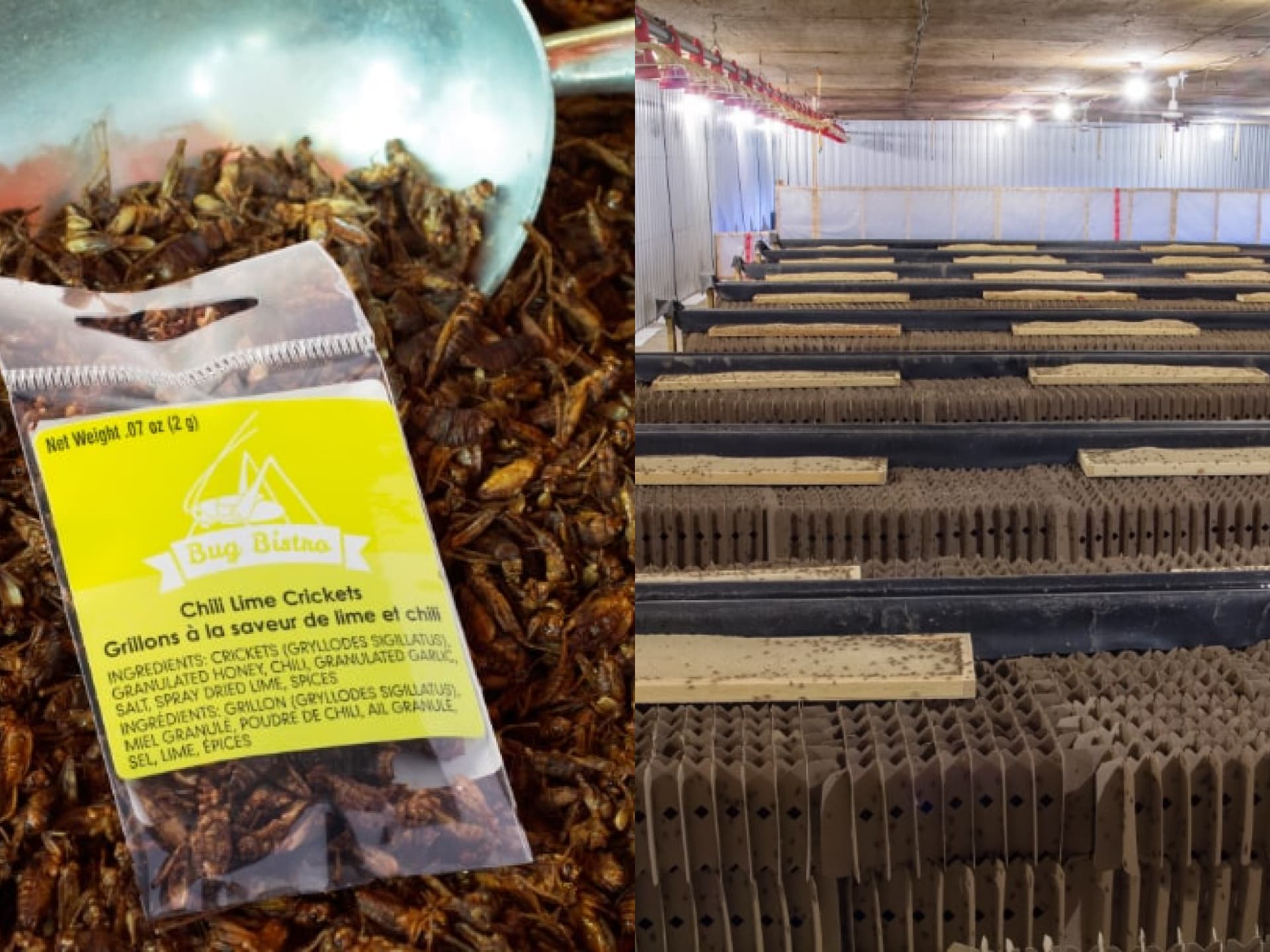
Back in 2014, in the small town of Norwood, Ontario, Canada, three brothers—Jarrod, Darren and Ryan Goldin, set out to do something that sounded downright bizarre at the time: farm crickets for people to eat.
The idea first struck Jarrod after he saw a cricket-based nutrition bar on television. Around the same time, the UN released a report on edible insects as a sustainable food source. Suddenly, the “weird” idea didn’t seem so weird after all.
At Entomo Farms, crickets are raised in cage-free “cricket condos”, where they live in warm, dark spaces that mimic their natural habitat. They’re fed and cared for until they reach about six or seven weeks old, then humanely harvested using a CO₂ method. From there, they’re rinsed, roasted and ground into a fine powder—no additives, just pure cricket protein.
The appeal goes beyond novelty. Crickets are packed with nutrients and need far less land, feed and water than beef, making them both healthy and eco-friendly.
While their approach may seem unconventional, what drives Entomo Farms is simple: making sustainable, responsible food accessible to everyone.
These startups prove that innovation doesn’t always wear a serious face. Sometimes, it turns up wrapped in humor, curiosity or even a touch of absurdity, yet still manages to spark real change. From crickets turned into protein to chickens rented out by the season, each weird startup idea shows that entrepreneurship thrives when people dare to think differently.
While some of these unusual business ideas burned bright then faded, others are still evolving in the background, shifting from fads to niche services or steady, quiet companies. What they share is a willingness to test an idea most people would dismiss at first glance.
That is the real takeaway for founders. Weird startup ideas will not always scale into unicorns, yet they can test new consumer habits, open up fresh markets and shape culture in surprising ways. If you are building something new, there is space for products that make people laugh, think or raise an eyebrow before they reach for their wallet.
Bindwell is testing a simple idea: use AI to design smarter, more targeted pesticides built for today’s farming challenges.
Bindwell, a San Francisco–based ag-tech startup using AI to design new pesticide molecules, has raised US$6 million in seed funding, co-led by General Catalyst and A Capital, with participation from SV Angel and Y Combinator founder Paul Graham. The round will help the company expand its lab in San Carlos, hire more technical talent and advance its first pesticide candidates toward validation.
Even as pesticide use has doubled over the last 30 years, farmers still lose up to 40% of global crops to pests and disease. The core issue is resistance: pests are adapting faster than the industry can update its tools. As a result, farmers often rely on larger amounts of the same outdated chemicals, even as they deliver diminishing returns.
Meanwhile, innovation in the agrochemical sector has slowed, leaving the industry struggling to keep up with rapidly evolving pests. This is the gap Bindwell is targeting. Instead of updating old chemicals, the company uses AI to find completely new compounds designed for today’s pests and farming conditions.
This vision is made even more striking by the people leading it. Bindwell was founded by 18-year-old Tyler Rose and 19-year-old Navvye Anand, who met at the Wolfram Summer Research Program in 2023. Both had deep ties to agriculture — Rose in China and Anand in India — witnessing up close how pest outbreaks and chemical dependence burdened farmers.
Filling the gap in today’s pesticide pipeline, Bindwell created an AI system that can design and evaluate new molecules long before they hit the lab. It starts with Foldwell, the company’s protein-structure model, which helps map the shapes of pest proteins so scientists know where a molecule should bind. Then comes PLAPT, which can scan through every known synthesized compound in just a few hours to see which ones might actually work. For biopesticides, they use APPT, a model tuned to spot protein-to-protein interactions and shown to outperform existing tools on industry benchmarks.
Bindwell isn’t selling AI tools. Instead, the company develops the molecules itself and licenses them to major agrochemical players. Owning the full discovery process lets the team bake in safety, selectivity and environmental considerations from day one. It also allows Bindwell to plug directly into the pipelines that produce commercial pesticides — just with a fundamentally different engine powering the science.
At present, the team is now testing its first AI-generated candidates in its San Carlos lab and is in early talks with established pesticide manufacturers about potential licensing deals. For Rose and Anand, the long-term vision is simple: create pest control that works without repeating the mistakes of the last half-century. As they put it, the goal is not to escalate chemical use but to design molecules that are more precise, less harmful and resilient against resistance from the start.
Mainland giants accelerate expansion as local players face unprecedented competition.
Hong Kong is entering a new phase of competition as mainland platforms accelerate their expansion into the city, turning it into a frontline testing ground for Chinese companies preparing to push into global markets. With retail, logistics and food-delivery businesses all reshaped in the past year, Hong Kong has become the closest international environment where mainland firms can experiment with pricing, supply chains and customer behaviour under a familiar regulatory and cultural framework.
The shift became especially clear this week. At HKTVmall’s Vision Day on November 11, 2025, CEO Ricky Wong warned that Hong Kong’s traditional retail model is facing its toughest moment yet. He said the biggest threat is not mainland competitors like Taobao, JD.com or Pinduoduo entering Hong Kong, but the city’s longstanding dependence on physical shopping. If local retailers do not evolve, he said, they risk becoming “very easy to die of thirst in the desert”. Wong even welcomed the rise of mainland e-commerce giants, arguing that the more players enter the city, the faster consumers will shift online — a transition HKTVmall relies on for growth.
Yet his optimism is layered over a challenging reality. HKTVmall’s own numbers reflect pressure from competition and changing consumer habits. The company reported average daily GMV of HK$22.2 million during the latest shopping festival season — up 2.8% month-on-month but still down 4.3% compared year-on-year — showing that even established online platforms are struggling to maintain momentum as mainland entrants squeeze prices and widen product selection.
The city’s food-delivery market illustrates the shift even more sharply. Deliveroo, once the fastest-growing platform in Hong Kong and at one point holding more than half of the market, officially shut down in April this year after a long decline. Its trajectory mirrored the sector’s upheaval: the company surged during the pandemic but lost ground after restrictions eased, first overtaken by Foodpanda and then pressured heavily by Meituan-backed Keeta, which entered Hong Kong in 2023 and quickly seized about 30% of citywide orders.
Deliveroo’s exit and the handover of parts of its business to Foodpanda did little to stabilise the market. Keeta’s rapid expansion instead pushed Foodpanda onto the defensive, leaving two major players competing in a market shaped by mainland-style pricing and operations. Hong Kong’s delivery sector, once dominated by global firms, is increasingly defined by Chinese platforms optimizing speed and efficiency at a scale few competitors can match.
These changes are unfolding as Chinese companies shift their focus toward new global markets.
With China reducing its reliance on the US and EU and exports steadily moving toward ASEAN, Hong Kong has become a strategic launchpad. The city’s proximity, language familiarity and regulatory structure make it the nearest international setting where Chinese firms can test overseas strategies before expanding into Southeast Asia, the Middle East or Latin America. The result is a competitive intensity that local companies have rarely experienced. Retailers face price pressure they can’t match, local platforms are losing ground to mainland giants and global players are struggling to stay in the game.
Consumers benefit from lower prices, faster delivery and wider choice — but for Hong Kong businesses, the landscape has turned unforgiving. Mainland companies are not treating Hong Kong as a final destination but as the first stop in a broader global push. That positioning is reshaping the city’s entire consumer economy. As more mainland firms look outward, Hong Kong’s role as a testing ground will only deepen and the first players to feel the impact will be those operating closest to the consumer.
Tencent’s latest solution simplifies cross-border payments for Weixin users and merchants.
In a world where digital borders are fading faster than ever, Tencent is betting on familiarity. With the launch of TenPay Global Checkout, the company wants to make paying across countries feel as seamless as paying at home.
The new service, unveiled today, allows Weixin Mini Program merchants outside mainland China to accept a variety of local payment methods. That includes digital wallets, real-time payment networks and credit and debit cards, all through a single integration. The launch starts in Singapore and Macao SAR, where merchants can now take payments via PayNow, BOCPAY(MO), and major cards. Japan, Australia and New Zealand are next, with more regions to follow soon.
This rollout builds on the growing reach of Weixin Mini Programs, known internationally through WeChat. These small apps are built right into the platform, letting users' shop, book services and make payments without downloading separate apps. Today, there are over one million monthly active users in key overseas markets, with Mini Programs available across 92 countries and regions.
Yet, for many users abroad, paying within Mini Programs hasn’t always been simple. Foreign card restrictions, currency conversions and limited local options often made checkout a frustrating step. TenPay Global Checkout aims to change that.
“TenPay Global Checkout marks an important step in enhancing the local consumer experience. By enabling overseas Weixin Mini Program merchants to accept trusted and diversified local payment methods through one unified solution, users benefit from a more convenient and efficient payment experience. This helps merchants improve payment conversion rates, expand their user base and scale their businesses to serve a broader range of customers”, said Wenhui Yang, CEO of TenPay Global (Singapore).
What makes this move interesting isn’t just its technical simplicity—it’s the cultural bridge it builds. For users in Singapore or Japan, paying with PayNow or a local card inside Weixin feels less like an international transaction and more like an everyday purchase.
For merchants, it’s an invitation into a market that values convenience and trust. Payment familiarity, after all, often decides whether a user completes a purchase or abandons it at checkout.
The company remains focused on creating secure, connected and user-friendly payment experiences that help merchants grow and allow consumers to pay with confidence, wherever they are.
If successful, TenPay Global Checkout could quietly redefine how cross-border commerce feels—not like a transaction across regions, but a familiar tap, scan or click. In an increasingly global marketplace, that kind of familiarity might just be the next frontier in digital trust.
HKU professor apologizes after PhD student’s AI-assisted paper cites fabricated sources.
It’s no surprise that artificial intelligence, while remarkably capable, can also go astray—spinning convincing but entirely fabricated narratives. From politics to academia, AI’s “hallucinations” have repeatedly shown how powerful technology can go off-script when left unchecked.
Take Grok-2, for instance. In July 2024, the chatbot misled users about ballot deadlines in several U.S. states, just days after President Joe Biden dropped his re-election bid against former President Donald Trump. A year earlier, a U.S. lawyer found himself in court for relying on ChatGPT to draft a legal brief—only to discover that the AI tool had invented entire cases, citations and judicial opinions. And now, the academic world has its own cautionary tale.
Recently, a journal paper from the Department of Social Work and Social Administration at the University of Hong Kong was found to contain fabricated citations—sources apparently created by AI. The paper, titled “Forty Years of Fertility Transition in Hong Kong,” analyzed the decline in Hong Kong’s fertility rate over the past four decades. Authored by doctoral student Yiming Bai, along with Yip Siu-fai, Vice Dean of the Faculty of Social Sciences and other university officials, the study identified falling marriage rates as a key driver behind the city’s shrinking birth rate. The authors recommended structural reforms to make Hong Kong’s social and work environment more family-friendly.
But the credibility of the paper came into question when inconsistencies surfaced among its references. Out of 61 cited works, some included DOI (Digital Object Identifier) links that led to dead ends, displaying “DOI Not Found.” Others claimed to originate from academic journals, yet searches yielded no such publications.
Speaking to HK01, Yip acknowledged that his student had used AI tools to organize the citations but failed to verify the accuracy of the generated references. “As the corresponding author, I bear responsibility”, Yip said, apologizing for the damage caused to the University of Hong Kong and the journal’s reputation. He clarified that the paper itself had undergone two rounds of verification and that its content was not fabricated—only the citations had been mishandled.
Yip has since contacted the journal’s editor, who accepted his explanation and agreed to re-upload a corrected version in the coming days. A formal notice addressing the issue will also be released. Yip said he would personally review each citation “piece by piece” to ensure no errors remain.
As for the student involved, Yip described her as a diligent and high-performing researcher who made an honest mistake in her first attempt at using AI for academic assistance. Rather than penalize her, Yip chose a more constructive approach, urging her to take a course on how to use AI tools responsibly in academic research.
Ultimately, in an age where generative AI can produce everything from essays to legal arguments, there are two lessons to take away from this episode. First, AI is a powerful assistant, but only that. The final judgment must always rest with us. No matter how seamless the output seems, cross-checking and verifying information remain essential. Second, as AI becomes integral to academic and professional life, institutions must equip students and employees with the skills to use it responsibly. Training and mentorship are no longer optional; they’re the foundation for using AI to enhance, not undermine, human work.
Because in this age of intelligent machines, staying relevant isn’t about replacing human judgment with AI, it’s about learning how to work alongside it.