
Inside a partnership showing how open-source platforms and startups are scaling autonomous driving beyond the lab.
Updated
January 8, 2026 6:30 PM
.jpg)
A Robotaxi prototype developed by TIER IV. PHOTO: TIER IV
Autonomous driving is often discussed in terms of futuristic cars and distant timelines. This investment is about something more immediate. Japan-based TIER IV has invested in Turing Drive, a Taiwan startup that builds autonomous driving systems designed for controlled, everyday environments such as factories, ports, airports and industrial campuses. The investment establishes a capital and business alliance between the two companies, with a shared focus on developing autonomous driving technology and expanding operations across Asia.
Rather than targeting open roads and city traffic, Turing Drive’s work centres on places where vehicles follow fixed routes and move at low speeds. These include logistics hubs, manufacturing facilities and commercial sites where automation is already part of daily operations. According to the release, Turing Drive has deployments across Taiwan, Japan and other regions and works closely with vehicle manufacturers to integrate autonomous systems into special-purpose vehicles.
The investment also connects Turing Drive more closely with Autoware, an open-source autonomous driving software ecosystem supported by TIER IV. Turing Drive joined the Autoware Foundation in September 2024 and develops its systems using this shared software framework. TIER IV’s own Pilot.Auto platform, which is built around Autoware, is used across applications such as factory transport, public transit, freight movement and autonomous mobility services.
Through the alliance, TIER IV plans to work with Turing Drive to further develop autonomous driving systems for these controlled environments, while strengthening its presence in Taiwan and the broader Asia-Pacific region. The collaboration brings together software development and on-the-ground deployment experience within markets where autonomous driving is already being tested in real operational settings.
“This partnership with Turing Drive represents a significant step forward in accelerating the deployment of autonomous driving across Asia”, said TIER IV CEO Shinpei Kato. “At TIER IV, our mission has always been to make autonomous driving accessible to all. By collaborating with Turing Drive, which has demonstrated remarkable achievements in real-world deployments in Taiwan, we aim to deliver autonomous driving that enables a safer, more sustainable and more inclusive society”.
“We are thrilled to establish this strategic alliance with TIER IV, a global leader in open-source autonomous driving”, said Weilung Chen, chairman of Turing Drive. “In Taiwan, autonomous driving deployment is gaining significant momentum, particularly across logistics hubs, ports, airports and industrial campuses. By combining our field expertise with TIER IV's world-class Pilot.Auto platform, we aim to accelerate the development of practical, commercially viable mobility services powered by autonomous driving”. Overall, the investment highlights how autonomous driving in Asia is being shaped by operational needs and gradual integration, rather than headline-grabbing demonstrations.
Keep Reading
From pre-orders to market entry, Rokid’s Taiwan campaign reflects how AI hardware is being introduced to consumers today.
Updated
January 8, 2026 6:30 PM
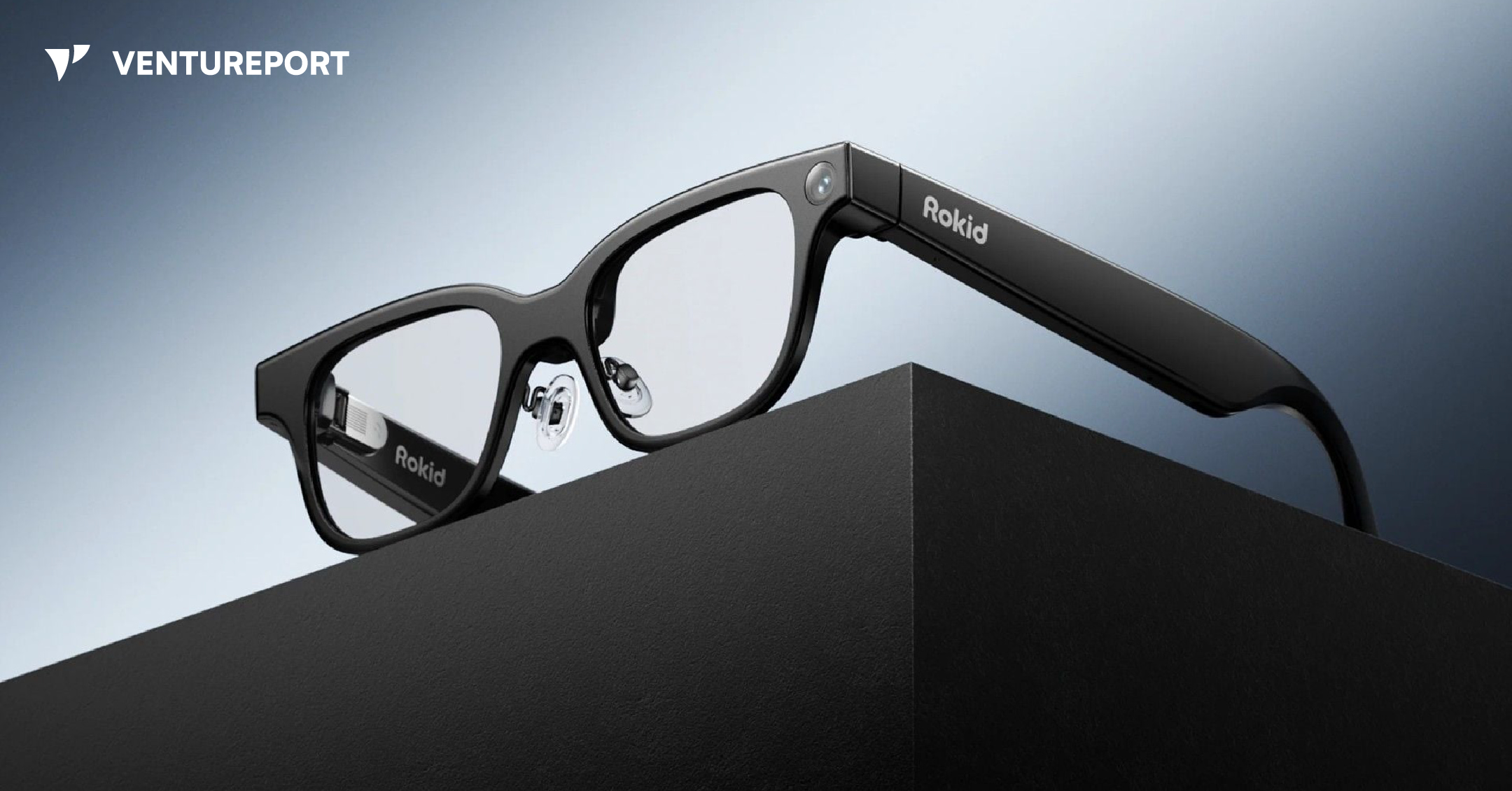
Rokid Glasses, a pair of AR glasses from Rokid. PHOTO: ROKID
Rokid has reached a significant crowdfunding milestone in Taiwan. Its Rokid Glasses campaign surpassed NT$62 million in pre-order funding on zeczec, Taiwan’s creative-oriented crowdfunding platform. The campaign ranked No. 1 across all categories on the platform in 2025 and entered the Top 10 funded campaigns in zeczec’s history, setting new records for AI and XR-related projects.
The campaign launched on October 28 and became one of the platform’s most prominent technology initiatives of the year. According to the company, the outcome followed growing visibility for Rokid Glasses after product showcases in New York, Berlin, Singapore and Paris, positioning the Taiwan campaign within a broader international rollout.
The crowdfunding achievement coincided with Rokid’s official market entry in Taiwan. On December 10, the company debuted Rokid Glasses locally, introducing the product to media, partners and early users in the region. The Taiwan launch mirrored earlier international events and connected the online crowdfunding campaign with a physical market presence.
Rokid Glasses combine augmented reality displays with built-in AI functions, including real-time multilingual translation, live transcription, navigation, object recognition and voice assistance. These capabilities were central to how the product was presented during both the crowdfunding campaign and the Taiwan launch, without framing the project as a traditional consumer electronics release.
The Taiwan campaign builds on Rokid’s prior crowdfunding history. The company previously raised more than US$4 million on Kickstarter, where Rokid Glasses became the highest-funded XR wearable project on the platform. The zeczec campaign extends that track record into one of Asia’s most established consumer electronics markets.
“Taiwan has one of the world's most mature and discerning consumer electronics markets”, said Said Justo Chang, Head of Global Channels at Rokid. “Reaching the top of Taiwan's crowdfunding platform is a great commercial achievement. We are excited to finally introduce Rokid Glasses to Taiwan”.
More broadly, the campaign highlights how crowdfunding platforms continue to function as launch and distribution channels for emerging AI and XR hardware. In Rokid’s case, product rollout, market entry and public participation converged within a single campaign, marking a notable moment for AI-enabled wearables in Taiwan’s technology landscape.