
Inside a partnership showing how open-source platforms and startups are scaling autonomous driving beyond the lab.
Updated
January 8, 2026 6:30 PM
.jpg)
A Robotaxi prototype developed by TIER IV. PHOTO: TIER IV
Autonomous driving is often discussed in terms of futuristic cars and distant timelines. This investment is about something more immediate. Japan-based TIER IV has invested in Turing Drive, a Taiwan startup that builds autonomous driving systems designed for controlled, everyday environments such as factories, ports, airports and industrial campuses. The investment establishes a capital and business alliance between the two companies, with a shared focus on developing autonomous driving technology and expanding operations across Asia.
Rather than targeting open roads and city traffic, Turing Drive’s work centres on places where vehicles follow fixed routes and move at low speeds. These include logistics hubs, manufacturing facilities and commercial sites where automation is already part of daily operations. According to the release, Turing Drive has deployments across Taiwan, Japan and other regions and works closely with vehicle manufacturers to integrate autonomous systems into special-purpose vehicles.
The investment also connects Turing Drive more closely with Autoware, an open-source autonomous driving software ecosystem supported by TIER IV. Turing Drive joined the Autoware Foundation in September 2024 and develops its systems using this shared software framework. TIER IV’s own Pilot.Auto platform, which is built around Autoware, is used across applications such as factory transport, public transit, freight movement and autonomous mobility services.
Through the alliance, TIER IV plans to work with Turing Drive to further develop autonomous driving systems for these controlled environments, while strengthening its presence in Taiwan and the broader Asia-Pacific region. The collaboration brings together software development and on-the-ground deployment experience within markets where autonomous driving is already being tested in real operational settings.
“This partnership with Turing Drive represents a significant step forward in accelerating the deployment of autonomous driving across Asia”, said TIER IV CEO Shinpei Kato. “At TIER IV, our mission has always been to make autonomous driving accessible to all. By collaborating with Turing Drive, which has demonstrated remarkable achievements in real-world deployments in Taiwan, we aim to deliver autonomous driving that enables a safer, more sustainable and more inclusive society”.
“We are thrilled to establish this strategic alliance with TIER IV, a global leader in open-source autonomous driving”, said Weilung Chen, chairman of Turing Drive. “In Taiwan, autonomous driving deployment is gaining significant momentum, particularly across logistics hubs, ports, airports and industrial campuses. By combining our field expertise with TIER IV's world-class Pilot.Auto platform, we aim to accelerate the development of practical, commercially viable mobility services powered by autonomous driving”. Overall, the investment highlights how autonomous driving in Asia is being shaped by operational needs and gradual integration, rather than headline-grabbing demonstrations.
Keep Reading
Amid AI and tech startups, Eastseabrother proved the power of demand and trust.
Updated
January 23, 2026 10:41 AM
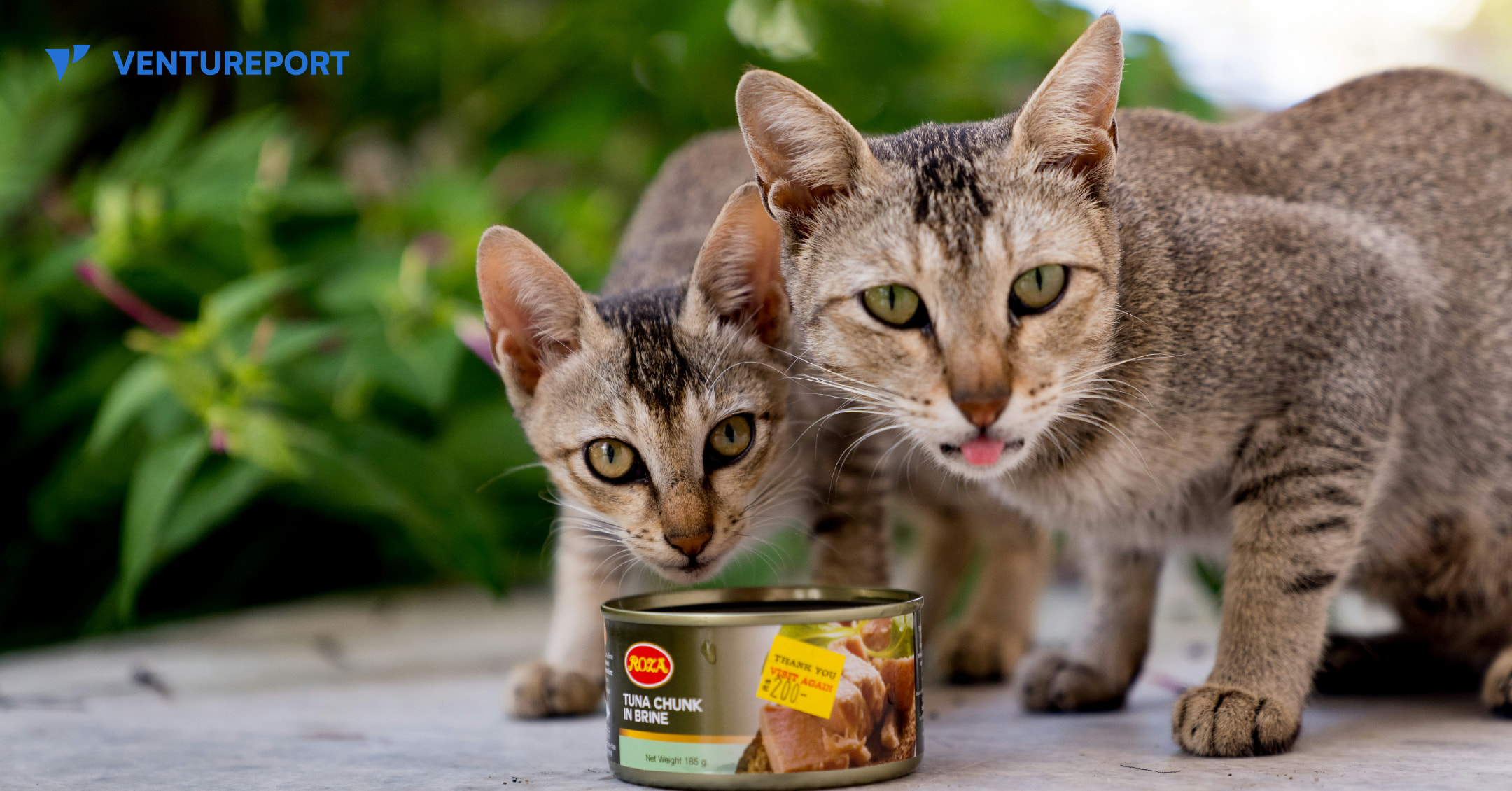
Cats having a jolly good time with a can of tuna. PHOTO: UNSPLASH
At a Silicon Valley pitch event crowded with AI, SaaS and deep-tech startups, the company that stood out was not selling software or algorithms. It was selling pet treats.
Eastseabrother, a premium pet food brand from South Korea, ranked first at a Plug and Play–hosted investor pitch competition in Sunnyvale. The product itself is simple: single-ingredient pet treats made from wild-caught seafood sourced from Korea’s East Sea. The company follows a principle it calls “Only What the Sea Allows”, working directly with regional fishermen while avoiding overfishing. With no additives and minimal processing, what sets Eastseabrother apart is not novelty, but control—over sourcing, supply chains and consistency.
That clarity helped the company walk away with both Best Product and Best Potential. “Investors asked detailed questions about repeat purchase rates and customer feedback, not just our technology or supply chain”, said Eunyul Kim, CEO of Eastseabrother. “That told us the market is shifting—real consumer trust now carries as much weight as a compelling tech narrative”.
What truly caught investors’ attention was not an ambitious vision of the future, but concrete evidence of traction today. Eastseabrother has already secured shelf space in specialty pet stores across California, New York and North Carolina, including an exclusive partnership with EarthWise Pet, a national specialty retail chain. At a consumer showcase at San Francisco’s Ferry Building, the brand recorded the highest on-site sales among all participating companies.
At its core, the pitch was built on simplicity: one ingredient, clear sourcing and a defined customer need. In a market saturated with complex products and abstract claims, that focus and transparency stood out.
The judges’ decision also reflects a broader shift in venture capital thinking. Not every successful startup is built on complex software or high-tech innovation. In categories like pet care—where trust, quality and transparency shape buying behavior—execution and credibility can matter more than technical sophistication.
Today, Eastseabrother has extended its reach beyond the U.S., expanding into Singapore and Hong Kong, with additional plans to grow further in North America as demand for premium pet food rises. And the broader takeaway from this pitch is not that consumer brands are overtaking tech startups. It is that investors are increasingly focused on fundamentals: who is buying, why they are returning and whether the business can sustain itself beyond the pitch deck.