
The collaboration between Oversonic Robotics and STMicroelectronics highlights how robotics is beginning to fill gaps traditional automation cannot.
Updated
January 23, 2026 10:41 AM
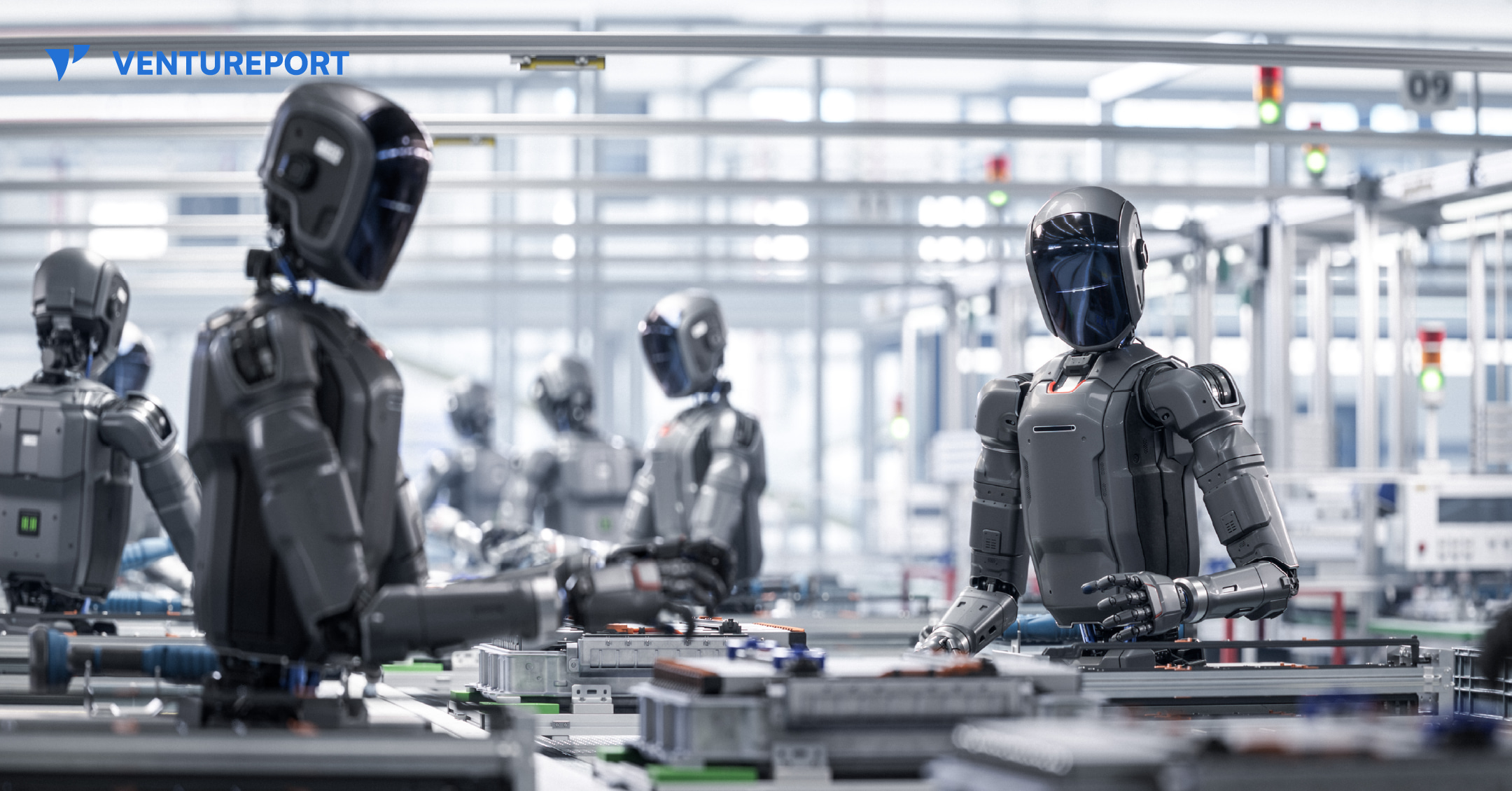
3D render of humanoid robots working in a factory assembly line. PHOTO: ADOBE STOCK
Oversonic Robotics, an Italian company known for building cognitive humanoid robots, has signed an agreement with STMicroelectronics, one of the world’s largest semiconductor manufacturers, to deploy humanoid robots inside semiconductor plants.
According to the companies, this is the first time cognitive humanoid robots will be used operationally inside semiconductor manufacturing facilities. And the first deployment has already taken place at ST’s advanced packaging and test plant in Malta.
At the center of the collaboration is RoBee, Oversonic’s humanoid robot. RoBee is designed to carry out support tasks within industrial environments, particularly where flexibility and interaction with human workers are required. In ST’s factories, the robots will assist with complex manufacturing and logistics flows linked to new semiconductor products. They are intended to work alongside existing automation systems, not replace them.
RoBee is notable for its ability to operate in environments shared with people. It is currently the only humanoid robot certified for use in both industrial and healthcare settings and is already in operation within several Italian companies. The robot is also being used in experimental hospital programs. That background helped position RoBee for deployment in tightly controlled manufacturing environments such as semiconductor plants.
Fabio Puglia, President of Oversonic Robotics, described the agreement as a milestone for deploying humanoid robots in complex industrial settings: “The partnership with STMicroelectronics is a great source of pride for us because it embodies the vision of cognitive robotics that Oversonic has brought to the industrial and healthcare markets. Being the first to introduce cognitive humanoid robots in a sophisticated production context such as semiconductors means measuring ourselves against the highest standards in terms of reliability, safety and operational continuity. This agreement represents a fundamental milestone for Oversonic and, more generally, for the industrial challenges these new machines are called to face in innovative and highly complex environments, alongside people and supporting their quality of work”.
From STMicroelectronics’ side, the use of humanoid robots is framed as part of a broader effort to manage growing manufacturing complexity. he company said RoBee will support complex tasks and help manage the intricate production flows required by newer semiconductor products. It is also expected to contribute to improved product quality and shorter manufacturing cycle times. The robots are designed to integrate with existing automation and software systems, helping improve safety and operational continuity.
In semiconductor manufacturing, precision and reliability leave little room for experimentation. Therefore, introducing humanoid robots into this environment signals a practical shift. It shows how robotics is starting to fill gaps that traditional automation has struggled to address.
Keep Reading
How a Korean biotech startup is using AI to move drug discovery from trial-and-error to precision design
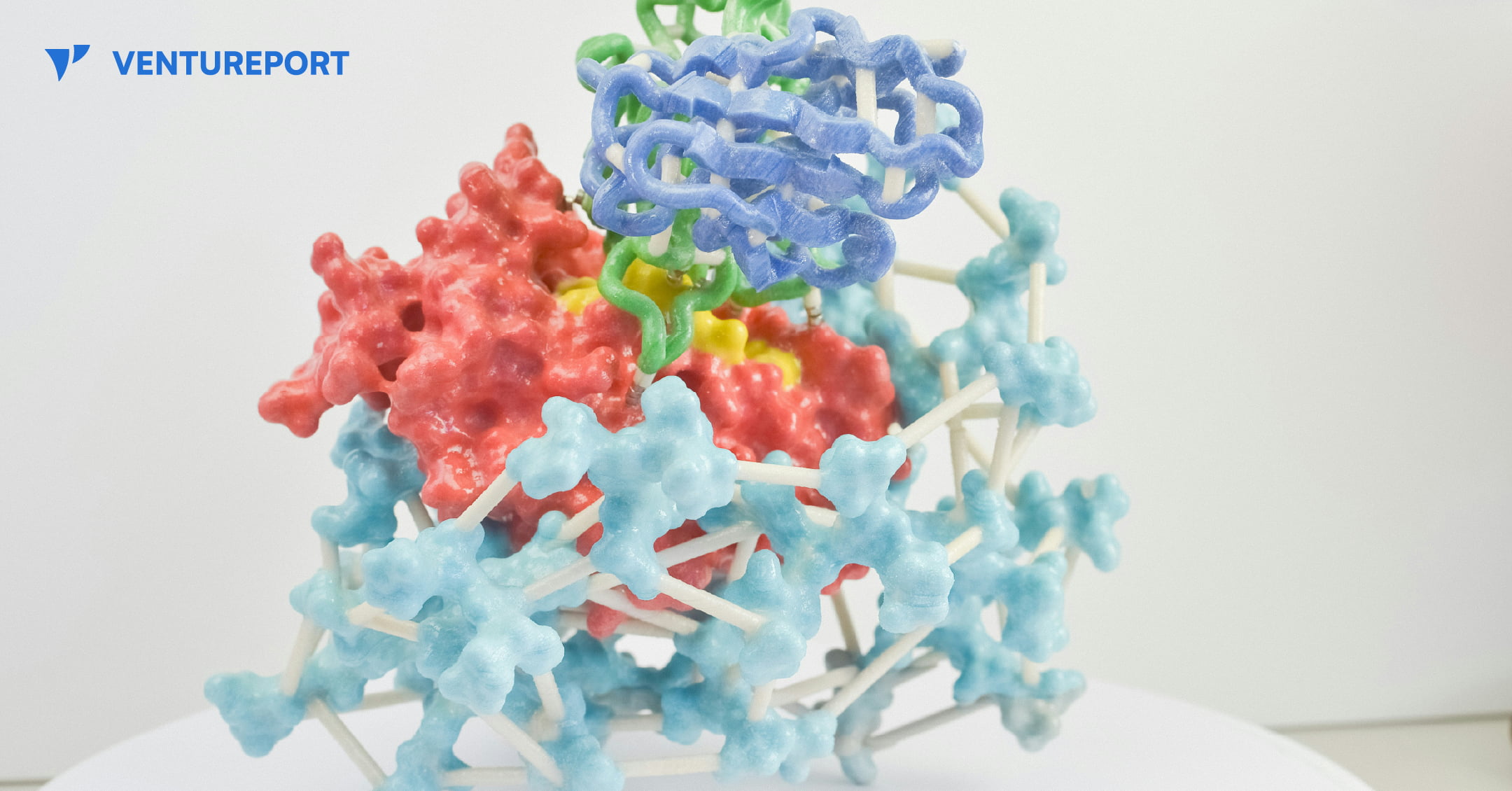
A close up of a protein structure model. PHOTO: UNSPLASH
For decades, drug discovery has relied on trial and error, with scientists testing thousands of molecules to find one that works. Galux, a South Korean biotech startup, is changing that by using AI to design proteins from scratch. This method, called “de novo” design, makes it possible to build precise new therapies instead of searching through existing ones.
The company recently announced a US$29 million Series B funding round, bringing its total capital to US$47 million.This significant investment attracted a substantial roster of institutional backers, including the Korea Development Bank (KDB), Yuanta Investment, SL Investment and NCORE Ventures. These firms joined existing investors such as InterVest, DAYLI Partners and PATHWAY Investment, as well as new participants including SneakPeek Investments, Korea Investment & Securities and Mirae Asset Securities.
At the core of the company’s work is a platform called GaluxDesign. Unlike many AI tools that only predict how existing proteins fold, this system uses deep learning and physics to create entirely new therapeutic antibodies. This “from scratch” approach lets the team go after so-called “undruggable” proteins. These are targets that traditional small-molecule drugs can’t reach because they lack clear binding pockets. By designing proteins to fit these complex shapes, Galux aims to unlock treatments that have stayed out of reach for decades. And that’s exactly why investors are paying attention.
The pharmaceutical industry is actively looking for faster and more efficient ways to develop new drugs, and Galux is built for exactly that. The company connects its AI platform directly to its own wet lab, where designs can be tested in real time. Each result feeds straight back into the system, sharpening the next round of models. This continuous loop speeds up discovery and improves precision at every step. It’s also why partners like Celltrion, LG Chem and Boehringer Ingelheim are already working with Galux.
Galux is no longer just trying to make drugs that stick to a target. The company now wants its AI to design medicines that actually work in the body and can be made at scale. In simple terms, a drug has to do more than bind to a disease—it must be stable, safe and strong enough to change how the illness behaves. Galux is moving into tougher targets such as ion channels and GPCRs. These play key roles in heart function and sensory signals. Ultimately, the goal is to show that AI-driven design can turn complex biology into real treatments. And instead of hunting blindly for a solution, the team is building exactly what they need.