
Rethinking 3D modelling for a world that generates too much, too quickly.
Updated
January 8, 2026 6:32 PM
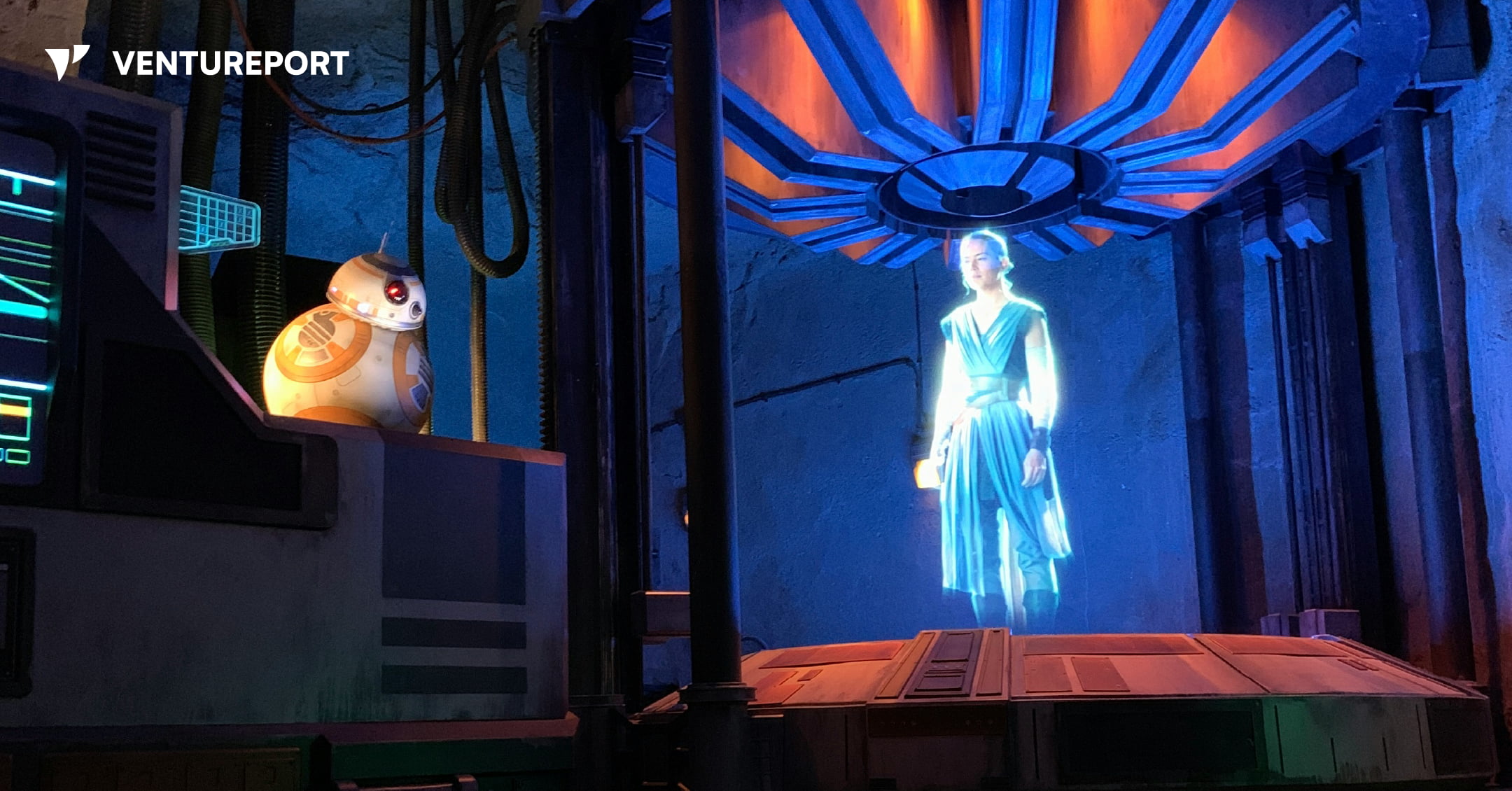
A hologram in the franchise Star Wars, in Walt Disney World Resort, Orlando. PHOTO: UNSPLASH
MicroCloud Hologram Inc. (NASDAQ: HOLO), a technology service provider recognized for its holography and imaging systems, is now expanding into a more advanced realm: a quantum-driven 3D intelligent model. The goal is to generate detailed 3D models and images with far less manual effort — a need that has only grown as industries flood the world with more visual data every year.
The concept is straightforward, even if the technology behind it isn’t. Traditional 3D modeling workflows are slow, fragmented and depend on large teams to clean datasets, train models, adjust parameters and fine-tune every output. HOLO is trying to close that gap by combining quantum computing with AI-powered 3D modeling, enabling the system to process massive datasets quickly and automatically produce high-precision 3D assets with much less human involvement.
To achieve this, the company developed a distributed architecture comprising of several specialized subsystems. One subsystem collects and cleans raw visual data from different sources. Another uses quantum deep learning to understand patterns in that data. A third converts the trained model into ready-to-use 3D assets based on user inputs. Additional modules manage visualization, secure data storage and system-wide protection — all supported by quantum-level encryption. Each subsystem runs in its own container and communicates through encrypted interfaces, allowing flexible upgrades and scaling without disrupting the entire system.
Why this matters: Industries ranging from gaming and film to manufacturing, simulation and digital twins are rapidly increasing their reliance on 3D content. The real bottleneck isn’t creativity — it’s time. Producing accurate, high-quality 3D assets still requires a huge amount of manual processing. HOLO’s approach attempts to lighten that workload by utilizing quantum tools to speed up data processing, model training, generation and scaling, while keeping user data secure.
According to the company, the system’s biggest advantages include its ability to handle massive datasets more efficiently, generate precise 3D models with fewer manual steps, and scale easily thanks to its modular, quantum-optimized design. Whether quantum computing will become a mainstream part of 3D production remains an open question. Still, the model shows how companies are beginning to rethink traditional 3D workflows as demand for high-quality digital content continues to surge.
Keep Reading
AutoFlight’s five-tonne Matrix bets on heavy payloads and regional range to prove the case for electric flight
Updated
February 10, 2026 12:56 PM

A multiroter flying through a blue sky. PHOTO: UNSPLASH
The nascent industry of electric vertical takeoff and landing (eVTOL) aircraft has long been defined by a specific set of limitations: small payloads, short distances and a primary focus on urban air taxis. AutoFlight, a Chinese aviation startup, recently moved to shift that narrative by unveiling "Matrix," a five-tonne aircraft that represents a significant leap in scale for electric aviation.
In a demonstration at the company’s flight test center, the Matrix completed a full transition flight—the technically demanding process of switching from vertical lift-off to forward wing-born flight and back to a vertical landing. While small-scale drones and four-seat prototypes have become increasingly common, this marks the first time an electric aircraft of this mass has successfully executed the maneuver.
The sheer scale of the Matrix places it in a different category than the "flying cars" currently being tested for hops over city traffic. With a maximum takeoff weight of 5,700 kilograms (roughly 12,500 pounds), the aircraft has the footprint of a traditional regional turboprop, boasting a 20-meter wingspan. Its size allows for configurations that the industry has previously struggled to accommodate, including a ten-seat business class cabin or a cargo hold capable of carrying 1,500 kilograms of freight.
This increased capacity is more than just a feat of engineering; it is a direct attempt to solve the financial hurdles that have plagued the sector, specifically addressing the skepticism industry analysts have often expressed regarding the economic viability of smaller eVTOLs. These critics frequently cite the high cost of operation relative to the low passenger count as a barrier to entry.
AutoFlight’s founder and CEO, Tian Yu, suggested the Matrix is a direct response to those concerns. “Matrix is not just a rising star in the aviation industry, but also an ambitious disruptor,” Yu stated. “It will eliminate the industry perception that eVTOL = short-haul, low payload and reshape the rules of eVTOL routes. Through economies of scale, it significantly reduces transportation costs per seat-kilometer and per ton-kilometer, thus revolutionizing costs and driving profitability.”
To achieve this, the aircraft utilizes a "lift and cruise" configuration. In simple terms, this means the plane uses one set of dedicated rotors to lift it off the ground like a helicopter, but once it reaches a certain speed, it uses a separate propeller to fly forward like a traditional airplane, allowing the wings to provide the lift. This design is paired with a distinctive "triplane" layout—three layers of wings—and a six-arm structure to keep the massive frame stable.
These features allow the Matrix to serve a variety of roles. For the "low-altitude economy" being promoted by Chinese regulators, the startup is offering a pure electric model with a 250-kilometer range for regional hops, alongside a hybrid-electric version capable of traveling 1,500 kilometers. The latter version, equipped with a forward-opening door to fit standard air freight containers, targets a logistics sector still heavily reliant on carbon-intensive trucking.
However, the road to commercial flight remains a steep one. Despite the successful flight demonstration, AutoFlight faces the same formidable headwinds as its competitors, such as a complex global regulatory landscape and the rigorous demands of airworthiness certification. While the Matrix validates the company's high-power propulsion, moving from a test-center demonstration to a commercial fleet will require years of safety data.
Nevertheless, the debut of the Matrix signals a maturation of the startup’s ambitions. Having previously developed smaller models for autonomous logistics and urban mobility, AutoFlight is now betting that the future of electric flight isn't just in avoiding gridlock, but in hauling the weight of regional commerce. Whether the infrastructure and regulators are ready to accommodate a five-tonne electric disruptor remains the industry's unanswered question.