
Rethinking 3D modelling for a world that generates too much, too quickly.
Updated
January 8, 2026 6:32 PM
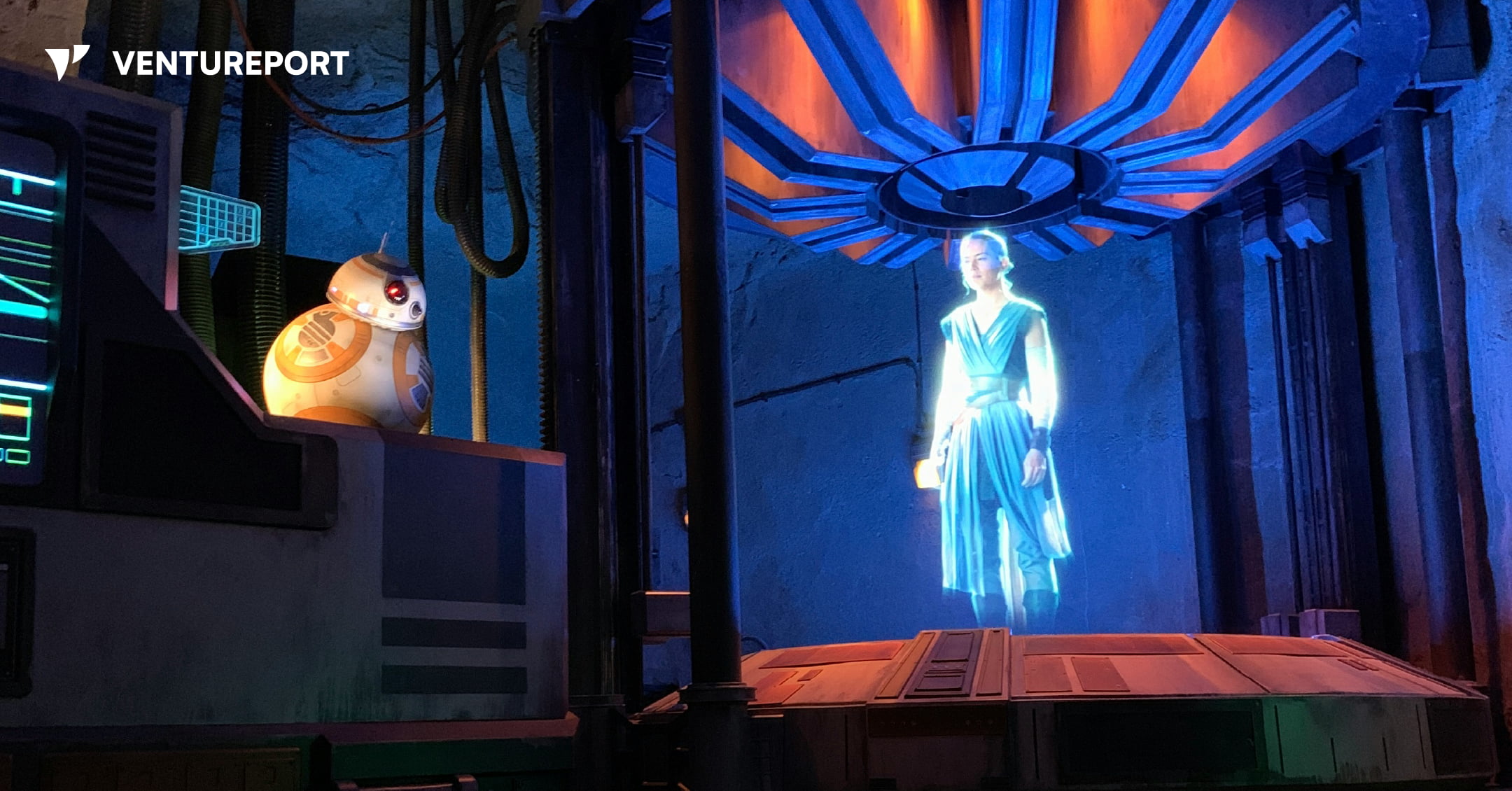
A hologram in the franchise Star Wars, in Walt Disney World Resort, Orlando. PHOTO: UNSPLASH
MicroCloud Hologram Inc. (NASDAQ: HOLO), a technology service provider recognized for its holography and imaging systems, is now expanding into a more advanced realm: a quantum-driven 3D intelligent model. The goal is to generate detailed 3D models and images with far less manual effort — a need that has only grown as industries flood the world with more visual data every year.
The concept is straightforward, even if the technology behind it isn’t. Traditional 3D modeling workflows are slow, fragmented and depend on large teams to clean datasets, train models, adjust parameters and fine-tune every output. HOLO is trying to close that gap by combining quantum computing with AI-powered 3D modeling, enabling the system to process massive datasets quickly and automatically produce high-precision 3D assets with much less human involvement.
To achieve this, the company developed a distributed architecture comprising of several specialized subsystems. One subsystem collects and cleans raw visual data from different sources. Another uses quantum deep learning to understand patterns in that data. A third converts the trained model into ready-to-use 3D assets based on user inputs. Additional modules manage visualization, secure data storage and system-wide protection — all supported by quantum-level encryption. Each subsystem runs in its own container and communicates through encrypted interfaces, allowing flexible upgrades and scaling without disrupting the entire system.
Why this matters: Industries ranging from gaming and film to manufacturing, simulation and digital twins are rapidly increasing their reliance on 3D content. The real bottleneck isn’t creativity — it’s time. Producing accurate, high-quality 3D assets still requires a huge amount of manual processing. HOLO’s approach attempts to lighten that workload by utilizing quantum tools to speed up data processing, model training, generation and scaling, while keeping user data secure.
According to the company, the system’s biggest advantages include its ability to handle massive datasets more efficiently, generate precise 3D models with fewer manual steps, and scale easily thanks to its modular, quantum-optimized design. Whether quantum computing will become a mainstream part of 3D production remains an open question. Still, the model shows how companies are beginning to rethink traditional 3D workflows as demand for high-quality digital content continues to surge.
Keep Reading
Quantara AI launches a continuous platform designed to estimate the financial impact of cyber risk as companies move beyond periodic assessments
Updated
February 20, 2026 6:43 PM

A person tightrope walking between two cliffs. PHOTO: UNSPLASH
Cyber risk is increasingly treated as a financial issue. Boards want to know how much a cyber incident could cost the company, how it could affect earnings, and whether current security spending is justified.
Yet many organizations still measure cyber risk through periodic reviews. These assessments are often conducted once or twice a year, supported by consultants and spreadsheet models. By the time the report reaches senior leadership, the company’s systems may have changed and new threats may have emerged. The way risk is measured does not always match how quickly it evolves.
This gap is where Quantara AI is positioning its new platform. Quantara AI, a Boise-based cybersecurity startup, has introduced what it describes as the industry’s first persistent AI-powered cyber risk solution. The system is designed to run continuously rather than rely on occasional assessments.
The company’s core argument is straightforward: not every security weakness carries the same financial consequence. Instead of ranking issues only by technical severity, the platform analyzes active threats, identifies which company systems are exposed, and estimates how much money a successful attack could cost. It uses statistical models, including Value at Risk (VaR), to calculate potential losses. It also estimates how specific security improvements could reduce that projected loss.
The timing aligns with a broader market shift. International Data Corporation (IDC) projects that by 2028, 40% of enterprises will adopt AI-based cyber risk quantification platforms. These tools convert security data into financial estimates that can guide budgeting and investment decisions. The forecast reflects growing pressure on security leaders to present risk in terms that boards and regulators understand.
Traditional compliance and risk management systems often focus on meeting regulatory standards. Vulnerability management programs typically score weaknesses based on technical characteristics. Consultant-led risk studies provide detailed analysis, but they are usually performed at set intervals. In fast-changing threat environments, that model can leave decision-makers working with outdated information.
Quantara’s platform attempts to replace that periodic process with continuous measurement. It brings together threat data, internal system information and financial modeling in one system. The goal is to show, at any given time, which specific weaknesses could lead to the largest financial losses.
Cyber risk quantification as a concept is not new. What is changing is the expectation that these calculations be updated regularly and tied directly to financial decision-making. As cyber incidents carry clearer monetary consequences, companies are looking for ways to measure exposure with greater precision.
The broader question is whether enterprises will shift fully toward continuous, AI-driven risk analysis or continue relying on periodic external assessments. What is clear is that cybersecurity discussions are moving closer to financial reporting — and tools that estimate potential loss in dollar terms are becoming central to that shift.