
From AI love affairs to cosmic survival, 2026 has it all.
Updated
January 8, 2026 6:28 PM

A man in a space suit looking upon a ringed marble. PHOTO: UNSPLASH
Grab your popcorn—the 2026 sci-fi movie slate is stacked. We’re getting everything from post-apocalyptic survival films to AI thrillers, plus a big-space adventure and a fresh DC superhero story. Some films launch new worlds, others expand familiar ones, but all of them aim to leave an impression, but all of them look like the kind of movies you’ll want to talk about after the credits.
Here are five upcoming sci-fi movies to mark on your calendar.

Release Date: January 9, 2026
Director: Kate Dolan
Stars: Lily Sullivan, David Rysdahl and Claudia Doumit
If you like your sci-fi with a creepy edge, Soulm8te is very much in that lane. A spin-off from the M3GAN universe, the film follows a man grieving the loss of his wife who turns to an AI android to ease the pain. At first, it seems to help. The connection feels real, even comforting. But before long, it becomes a little too real and slips into something far more dangerous. What makes Soulm8te unsettling is how close it feels to the present. AI companions are no longer science fiction, and the film plays with that reality in a way that feels intimate rather than futuristic. Directed by Kate Dolan, the story stays on quiet unease instead of spectacle, allowing tension to build as affection turns possessive and attachment becomes dangerous. The film is produced by Allison Williams and James Wan, both closely involved in the hit horror franchise M3GAN, and their experience with technology-driven horror is clearly felt here. Fans of grounded, psychological sci-fi should keep this one on their radar.

Release Date: January 9, 2026
Director: Ric Roman Waugh
Stars: Gerard Butler, Morena Baccarin, Amber Rose Revah, Sophie Thompson, Trond Fausa Aurvåg
Back in 2020, Greenland introduced audiences to John Garrity (Gerard Butler), a father racing against time to save his family as comet fragments threatened to wipe out life on Earth. The film ended with survivors heading into bunkers deep in Greenland, hanging on to the last thin thread of hope. This sequel follows the Garrity family as they leave the safety of underground shelters and face a world that no longer resembles home. The setting moves across a battered Europe, where every decision carries weight and every journey feels uncertain. Rather than repeating the ticking-clock chaos of the original, Migration leans into endurance, exhaustion and the question of whether rebuilding is even possible. It’s a post-apocalyptic movie about movement, loss and the cost of starting over.
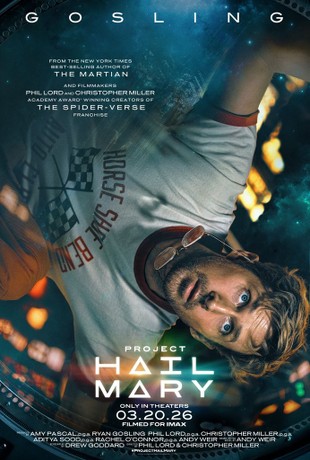
Release Date: March 20, 2026
Director: Phil Lord & Chris Miller
Stars: Ryan Gosling, Milana Vayntrub, Sandra Hüller
Based on Andy Weir’s best-selling novel, Project Hail Mary is shaping up to be one of the most talked-about space survival films of 2026. Ryan Gosling stars as Ryland Grace, an unlikely astronaut whose journey into space begins with confusion rather than heroics. Grace, a former junior high science teacher, wakes up alone on a spacecraft, cut off from Earth and missing key memories about how he got there. As pieces slowly fall into place, so does the scale of the problem he’s been sent to solve. The film blends real science with high-stakes isolation, balancing quiet moments with the pressure of a mission that affects the entire planet. Directed by Phil Lord and Chris Miller, Project Hail Mary promises tension, curiosity and a heavy dose of human vulnerability set against the vastness of space.

Release Date: March 27, 2026
Director: Ridley Scott
Stars: Jacob Elordi, Josh Brolin
The Dog Stars strips the apocalypse down to its bare essentials. Based on Peter Heller’s novel of the same name, the film features a screenplay by Mark L. Smith and Christopher Wilkinson, known for The Revenant and Ali. The setup of The Dog Stars is simple and bleak: a virus has erased most of humanity. What’s left is silence, abandoned airfields and roaming scavengers known as the “Reapers” who prey on the few survivors left behind.
Jacob Elordi plays Hig, a pilot living in isolation with his dog and a heavily armed companion. His days follow a strict routine, broken only by short flights in his aging Cessna. That fragile balance shatters when a distant radio signal breaks through the quiet. It’s the first real sign of life he has heard in years, and it draws him toward a journey that could change everything. Directed by Ridley Scott, the film focuses less on large-scale destruction and more on loneliness, hope and the risk of reaching out in a broken world. The result is a post-apocalyptic thriller that feels intimate, reflective and quietly tense.

Release Date: June 26, 2026
Director: Craig Gillespie
Stars: Milly Alcock, Jason Momoa, Matthias Schoenaerts
Supergirl: Woman of Tomorrow offers a very different take on the DC universe. This is a cosmic sci-fi story first, superhero film second. Kara Zor-El is older, tougher and shaped by memories of a world she lost. Unlike her cousin Superman, she remembers the destruction of Krypton clearly, and that history weighs heavily on her. The film follows Kara as she crosses paths with a young alien seeking justice, pulling her into a dangerous journey across distant worlds. Rather than focusing on Earth-saving spectacle, the story explores identity, grief and what heroism looks like far from home. With Milly Alcock stepping into the role, Supergirl 2026 aims to expand DC’s sci-fi side while giving the character emotional depth rarely seen on screen.
One reason science fiction movies stick with us is that they ask big questions in a way that feels personal. What happens when tech starts filling emotional gaps? What does survival look like when the world doesn’t bounce back? And how far would you go to save everyone you’ve ever known? If you’re looking for 2026 sci-fi movies that range from gritty to hopeful to unsettling, this lineup has you covered.
Keep Reading
Structured AI interviews and human judgment combine to address the global talent shortage
Updated
March 4, 2026 4:46 PM

ManpowerGroup World Headquarters in Milwaukee. PHOTO: ADOBE STOCK
As hiring pressures mount across global markets, ManpowerGroup is turning to technology to strengthen how it connects people to work. The workforce solutions major has announced a global partnership with Hubert, a startup focused on AI-driven structured interviews. The aim is simple: make hiring faster and fairer, without removing the human touch.
ManpowerGroup has spent decades operating at the center of the global labor market. The company works with employers across industries to fill roles, manage workforce planning and build talent pipelines. With millions of placements each year, it has a clear view of how strained hiring has become. A large share of employers today report difficulty finding skilled talent. At the same time, candidates expect more transparency, quicker feedback and flexibility in how they engage with employers.
Hubert enters this picture as a specialist in structured digital interviewing. The startup has built tools that allow candidates to complete interviews online, at any time, while being assessed against consistent criteria. Instead of relying on informal screening calls or resume filters, its system focuses on standardized questions tied directly to job requirements. The idea is to bring more consistency to early-stage hiring.
The partnership brings these capabilities into ManpowerGroup’s global operations. AI-powered interviews will now support the first stage of screening, helping recruiters identify qualified candidates earlier in the process. This does not replace recruiters. Final decisions and contextual judgment remain with experienced hiring professionals. What changes is the speed and structure of the initial assessment.
For employers, this could mean earlier visibility into job-ready talent and less time spent on manual screening. For candidates, it offers more flexibility. A significant portion of interviews on Hubert’s platform are completed outside regular office hours, allowing applicants to engage when it suits them. That flexibility can make a difference in competitive labor markets where timing matters.
The collaboration is also positioned as a step toward reducing bias. By evaluating each candidate against the same transparent standards, the process becomes more consistent. While no system can remove bias entirely, structured assessments can reduce the variability that often comes with unstructured interviews.
At its core, the partnership addresses a gap many large organizations are facing. They need scale and speed, but they cannot afford to lose the human judgment that good hiring depends on. Manual processes are too slow. Fully automated systems can feel impersonal and risky. ManpowerGroup’s approach suggests a middle path, where technology handles repetition and structure and recruiters focus on potential and fit.
The move also reflects a broader shift in the workforce industry. AI is no longer being tested on the sidelines. It is being built into the foundation of hiring operations. For established players like ManpowerGroup, the challenge is not whether to adopt AI, but how to do so responsibly and at scale.
By working with Hubert, the company is signaling that the future of recruitment will likely blend structured digital tools with human expertise. In a market defined by talent shortages and rising expectations, that balance may prove critical.