
Getting to the Moon was the first chapter. Interlune and Astrolab are working on how to operate there.
Updated
March 6, 2026 1:32 AM

Apollo 17 Astronaut's Snapshot of Taurus-Littrow Valley. PHOTO: UNSPLASH
As plans for a long-term human presence on the Moon pick up pace, the focus is shifting from landing there to working there. It is one thing to reach the surface. It is another to build roads, prepare sites and extract materials in a way that can support real activity.
That is where Interlune and Astrolab come in. Interlune is a space resources company. Astrolab builds planetary rovers. The two are now working together to mount Interlune’s lunar digging system onto Astrolab’s Flexible Logistics and Exploration (FLEX) rover. They have completed a concept study and are planning hardware testing in Houston.
The aim is straightforward: combine a rover that can move reliably across the Moon with equipment that can dig, collect and handle lunar soil. Interlune is focused on harvesting natural resources from the Moon, starting with helium-3. To do that at scale, the system cannot sit in one place. It has to move across the surface, handle dust and operate in harsh conditions. "Reliable, autonomous mobility is crucial to the Interlune harvesting system and broader lunar infrastructure development", said Rob Meyerson, co-founder and CEO of Interlune. "Astrolab's FLEX is the right vehicle for the job".
By fitting its digging and collection hardware onto FLEX, Interlune is working toward a mobile system that can gather large amounts of lunar soil and support future construction needs. Beyond helium-3, the same setup could help prepare base sites, level ground, build protective barriers and lay the groundwork for other structures. In simple terms, it is about turning a rover into a working machine for the Moon.
The partnership also connects to Interlune’s work with Vermeer Corporation to develop equipment for continuous, high-volume digging adapted to lunar conditions. Taken together, the goal is to build systems that can support both commercial and government missions — whether that means resource extraction or preparing land for future bases.
For Astrolab, the collaboration strengthens the role of FLEX as more than just a transport vehicle.
"Working with Interlune further differentiates FLEX as the rover of choice for commercial and government Moon missions", said Jaret Matthews, Astrolab founder and CEO. "Interlune's expertise in developing and testing highly specialized regolith simulant will further enhance FLEX's ability to mitigate dust and operate in extreme environments".
Testing will be centered in Houston, which is becoming an important hub for commercial space development. Astrolab was the first company to lease space at the Texas A&M University Space Institute, currently under construction at NASA’s Johnson Space Center. Interlune operates the Houston-based Interlune Research Lab, where it creates and tests simulated versions of lunar soil.
That detail matters. Moon dust is fine, abrasive and difficult to manage. Before any hardware flies, it needs to prove it can survive and function in those conditions. By testing their systems in realistic soil simulants, the companies can refine how the rover moves and how the digging system performs.
The Houston lab is partially funded by the Texas Space Commission, reflecting the growing role of regional space initiatives in supporting private companies building beyond Earth. Overall, the collaboration is not about grand promises. It is about integrating hardware, running real tests and taking practical steps toward operating on the Moon.
Keep Reading
How a Korean biotech startup is using AI to move drug discovery from trial-and-error to precision design
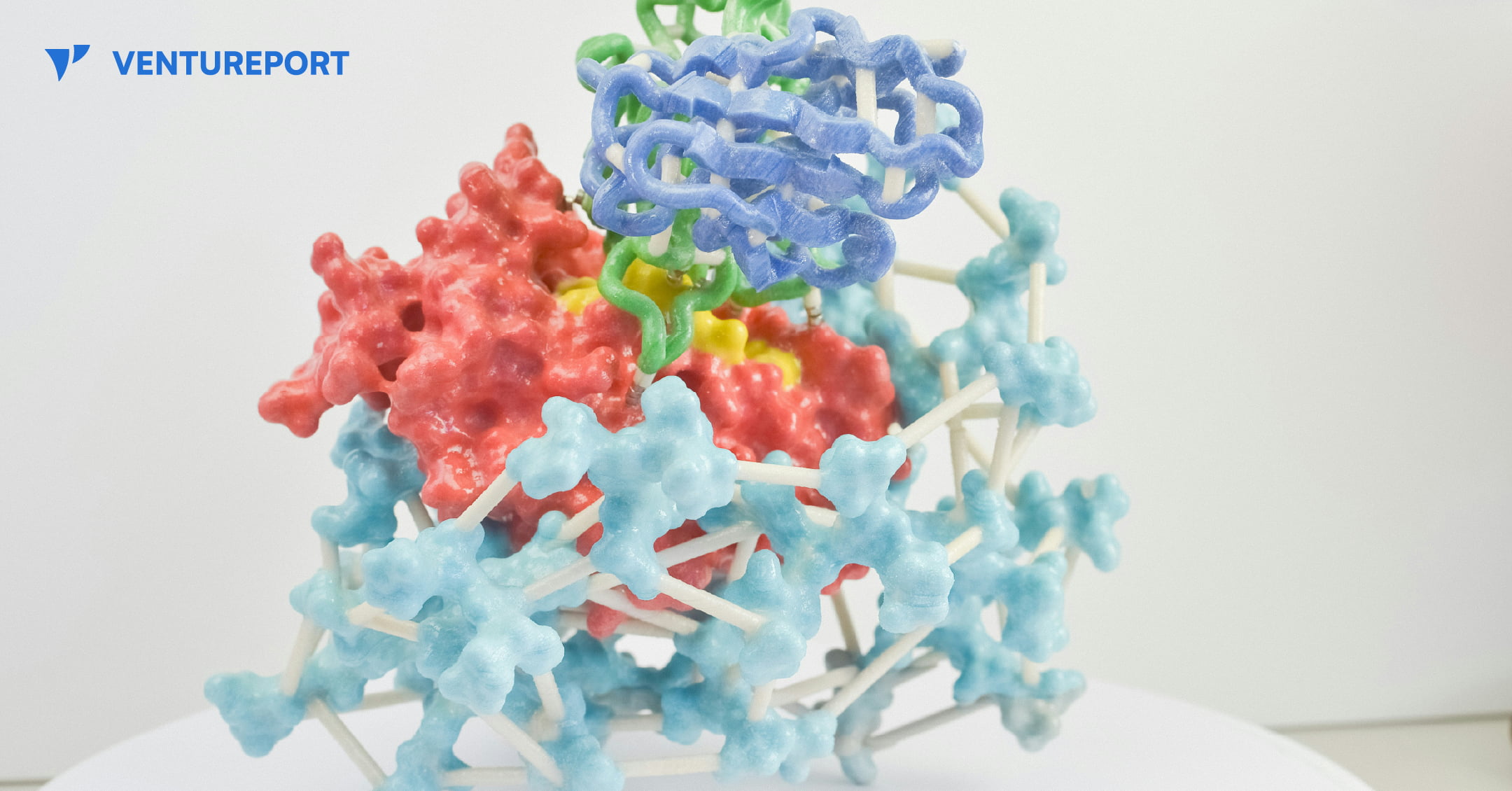
A close up of a protein structure model. PHOTO: UNSPLASH
For decades, drug discovery has relied on trial and error, with scientists testing thousands of molecules to find one that works. Galux, a South Korean biotech startup, is changing that by using AI to design proteins from scratch. This method, called “de novo” design, makes it possible to build precise new therapies instead of searching through existing ones.
The company recently announced a US$29 million Series B funding round, bringing its total capital to US$47 million.This significant investment attracted a substantial roster of institutional backers, including the Korea Development Bank (KDB), Yuanta Investment, SL Investment and NCORE Ventures. These firms joined existing investors such as InterVest, DAYLI Partners and PATHWAY Investment, as well as new participants including SneakPeek Investments, Korea Investment & Securities and Mirae Asset Securities.
At the core of the company’s work is a platform called GaluxDesign. Unlike many AI tools that only predict how existing proteins fold, this system uses deep learning and physics to create entirely new therapeutic antibodies. This “from scratch” approach lets the team go after so-called “undruggable” proteins. These are targets that traditional small-molecule drugs can’t reach because they lack clear binding pockets. By designing proteins to fit these complex shapes, Galux aims to unlock treatments that have stayed out of reach for decades. And that’s exactly why investors are paying attention.
The pharmaceutical industry is actively looking for faster and more efficient ways to develop new drugs, and Galux is built for exactly that. The company connects its AI platform directly to its own wet lab, where designs can be tested in real time. Each result feeds straight back into the system, sharpening the next round of models. This continuous loop speeds up discovery and improves precision at every step. It’s also why partners like Celltrion, LG Chem and Boehringer Ingelheim are already working with Galux.
Galux is no longer just trying to make drugs that stick to a target. The company now wants its AI to design medicines that actually work in the body and can be made at scale. In simple terms, a drug has to do more than bind to a disease—it must be stable, safe and strong enough to change how the illness behaves. Galux is moving into tougher targets such as ion channels and GPCRs. These play key roles in heart function and sensory signals. Ultimately, the goal is to show that AI-driven design can turn complex biology into real treatments. And instead of hunting blindly for a solution, the team is building exactly what they need.