
New funding and ad support aim to ease capital gaps for small wedding businesses
Updated
February 24, 2026 2:55 PM
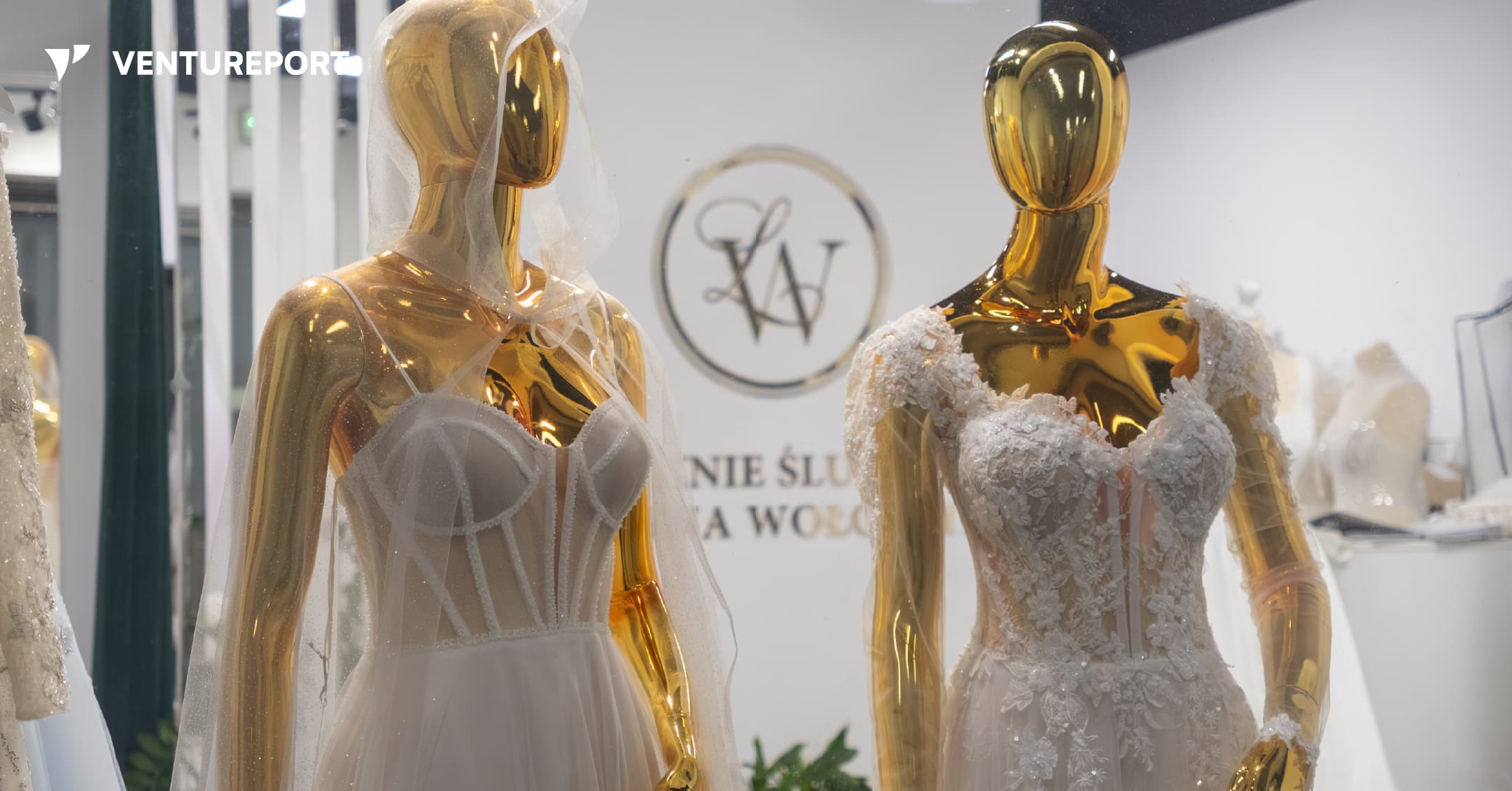
Mannequins display white wedding dresses in a bridal shop window. PHOTO: ADOBE STOCK
The Knot Worldwide, a global wedding technology platform and vendor marketplace, has launched a new grant initiative aimed at small businesses in the wedding industry.
The company, which operates brands such as The Knot and WeddingWire, connects couples with wedding professionals and provides tools to help vendors grow. It says the new WeddingPro Grant Program is designed to address a persistent challenge in the sector: access to capital.
Under the program, up to US$500,000 will be distributed to U.S.-based wedding professionals who run small businesses. The support will come in the form of financial grants, advertising credits on WeddingPro and mentorship. Selected businesses will also receive access to education resources and community support through the company’s network.
The move comes at a time when many wedding businesses remain small and resource-constrained. According to the company’s State of the Vendor Report, more than half of wedding businesses employ fewer than ten people. Three in four professionals surveyed said adaptability is critical to long-term success, while flexible funding remains a barrier. The grant program is positioned as a response to that funding gap.
“Our mission at The Knot Worldwide is to help the nearly 900,000 small businesses on our global platforms get discovered through our centralized vendor marketplace as well as give them the tools and resources to grow their business,” said Raina Moskowitz, Chief Executive Officer, The Knot Worldwide. “We consistently hear from our wedding professionals that access to capital is a barrier to getting started in the industry. With our new WeddingPro Grant Program, we will provide access to both capital and critical support services such as mentorship and education that will enable small business owners to further grow and scale.”
The application window opens on February 23 and closes on March 27. Winners are expected to be notified by May 2026, subject to eligibility verification and compliance with the official rules.
The program is open to U.S. wedding professionals who operate small businesses, have been in business for at least six months, can demonstrate an active revenue stream and earn at least 50% of their revenue from weddings. Applicants must submit a short form and a video outlining their business and how they would use the grant funds over the next 12 to 24 months. They can choose whether they prefer a monetary grant or free advertising support on WeddingPro.
To execute the program, The Knot Worldwide has partnered with the Global Entrepreneurship Network, which works with entrepreneurs worldwide. The company says the initiative builds on earlier efforts to support vendors on its platform, which includes about 200,000 wedding professionals in the United States. Its impact will depend on how effectively the support reaches the businesses that need it most. The real measure will be whether it helps them achieve steady, sustainable growth.
Keep Reading
A turbine-inspired generator shows how overlooked industrial airflow could quietly become a new source of usable power
Updated
February 12, 2026 4:43 PM

Campus building of Chung-Ang University. PHOTO: CHUNG-ANG UNIVERSITY
Compressed air is used across factories, data centers and industrial plants to move materials, cool systems and power tools. Once it has done that job, the air is usually released — and its remaining energy goes unused.
That everyday waste is what caught the attention of a research team at Chung-Ang University in South Korea. They are investigating how this overlooked airflow can be harnessed to generate electricity instead of disappearing into the background.
Most of the world’s power today comes from systems like turbines, which turn moving fluids into energy or solar cells, which convert sunlight into electricity. The Chung-Ang team has built a device that uses compressed air to generate electricity without relying on traditional blades or sunlight.
At the center of the work is a simple question: what happens when high-pressure air spins through a specially shaped device at very high speed? The answer lies in the air itself. The researchers found that tiny particles naturally present in the air carry an electric charge. When that air moves rapidly across certain surfaces, it can transfer charge without physical contact. This creates electricity through a process known as the “particulate static effect.”
To use that effect, the team designed a generator based on a Tesla turbine. Unlike conventional turbines with blades, a Tesla turbine uses smooth rotating disks and relies on the viscosity of air to create motion. Compressed air enters the device, spins the disks at high speed and triggers charge buildup on specially layered surfaces inside.
What makes this approach different is that the system does not depend on friction between parts rubbing together. Instead, the charge comes from particles in the air interacting with the surfaces as they move past. This reduces wear and allows the generator to operate at very high speeds. And those speeds translate into real output.
In lab tests, the device produced strong electrical power. The researchers also showed that this energy could be used in practical ways. It ran small electronic devices, helped pull moisture from the air and removed dust particles from its surroundings.
The problem this research is addressing is straightforward.
Compressed air is already everywhere in industry, but its leftover energy is usually ignored. This system is designed to capture part of that unused motion and convert it into electricity without adding complex equipment or major safety risks.
Earlier methods of harvesting static electricity from particles showed promise, but they came with dangers. Uncontrolled discharge could cause sparks or even ignition. By using a sealed, turbine-based structure, the Chung-Ang University team offers a safer and more stable way to apply the same physical effect.
As a result, the technology is still in the research stage, but its direction is easy to see. It points toward a future where energy is not only generated in power plants or stored in batteries, but also recovered from everyday industrial processes.