
"Discover how emerging sustainability trends in digital marketing are reshaping the way small businesses connect with eco-conscious consumers."
Updated
January 8, 2026 6:35 PM
.jpg)
Protestor holding a sign "NO BUSINESS ON A DEAD PLANET" during a march. PHOTO: UNSPLASH
Sustainability has become more than just a buzzword—it’s a movement that’s reshaping business practices across industries. For small businesses, aligning with sustainable values isn’t just about doing the right thing; it’s about staying competitive in a world where consumers increasingly prioritize eco-conscious brands.
In the digital age, sustainable marketing is evolving rapidly, offering businesses new ways to reduce their environmental impact while engaging with customers who care deeply about the planet. Let’s take a closer look at the top trends driving sustainable marketing today and their implications for small businesses.
Most people don’t realize that online advertising has an environmental cost. Every time an ad is displayed, clicked on, or streamed as a video, it consumes energy. This energy powers the servers, data centers, and networks that host and deliver these ads. The problem is that much of this energy still comes from non-renewable sources like coal and natural gas, which contribute to carbon emissions.
For small businesses, this could mean optimizing ad campaigns to reduce unnecessary data usage or using platforms that offset their carbon emissions. Additionally, adopting lighter website designs and faster-loading ads can not only reduce energy consumption but also improve user experience—leading to better engagement and conversion rates.
Small businesses can stand out by making their digital campaigns both efficient and eco-friendly. Highlighting these efforts in marketing messages can appeal to sustainability-minded customers while showcasing innovation.
Sustainable packaging is no longer optional—it’s an expectation. But for small businesses, it’s not just about switching to biodegradable materials. It’s about effectively communicating those efforts to customers through digital channels.
Brands are using their websites, social media, and email marketing to share the stories behind their packaging choices. Whether it’s sourcing recycled materials or partnering with eco-friendly suppliers, transparency is key. Educational content, such as videos or infographics, can help customers understand the impact of their purchases and feel good about supporting a brand.
By using digital platforms to tell the story of their sustainability efforts, small businesses can create deeper emotional connections with customers. Sharing behind-the-scenes processes or celebrating packaging milestones can boost loyalty and differentiate a brand from competitors.
Influencer marketing has become a powerful tool for brands, and the rise of eco-conscious influencers is creating new opportunities for businesses that prioritize sustainability. These influencers focus on topics like waste reduction, ethical consumption, and eco-friendly lifestyles, making them an ideal partner for sustainable brands.
Collaborating with such influencers allows small businesses to reach niche audiences that are already committed to sustainable living. These partnerships feel more authentic compared to traditional ads, as followers trust influencers to recommend products that align with their values.
Even small businesses with limited budgets can benefit from micro-influencers —individuals with smaller but highly engaged audiences. Partnering with eco-conscious influencers can amplify a business’s sustainability message and create a ripple effect of awareness.
Consumers today are more skeptical of vague claims like "green" or "eco-friendly." They want specifics. Brands that embrace transparency by sharing measurable data about their sustainability efforts are earning trust and loyalty.
For example, brands that disclose the carbon footprint of their products or provide detailed information about their supply chains stand out in an age of greenwashing (misleading sustainability claims). This trend is particularly relevant for small businesses, as customers often expect smaller, local brands to be more ethical and transparent.
Being upfront about sustainability efforts—even if they’re still a work in progress—can build credibility. Sharing challenges, milestones, and small wins through social media or email newsletters makes the brand relatable and trustworthy.
The circular economy—a model in which products are reused, repaired, or recycled instead of discarded—is gaining momentum. Small businesses are finding creative ways to incorporate this principle into their operations and marketing.
For example, some businesses encourage customers to return used products in exchange for discounts or loyalty points. Others upcycle returned goods into new products and share this process with customers through digital platforms.
By participating in the circular economy, small businesses can differentiate themselves while building a loyal customer base. Promoting these initiatives online—whether through videos, blogs, or customer testimonials—can amplify their impact and attract eco-conscious buyers.
Sustainable marketing is more than a trend—it’s becoming a necessity for businesses of all sizes. For small businesses, it represents both an opportunity to stand out in a competitive market and a chance to make a meaningful impact on the planet.
Emerging trends like green digital advertising, circular economy initiatives, and transparency are reshaping how brands connect with their audiences. By embracing these practices, small businesses can attract eco-conscious consumers, build loyalty, and foster trust—all while reducing their environmental footprint.
The future of marketing belongs to those who see sustainability not as an add-on, but as the foundation of their growth. For small businesses ready to take on this challenge, the rewards go beyond profits—they include making a lasting, positive impact on the planet and the people who inhabit it.
Keep Reading
How Korea is trying to take control of its AI future.
Updated
January 13, 2026 10:56 AM
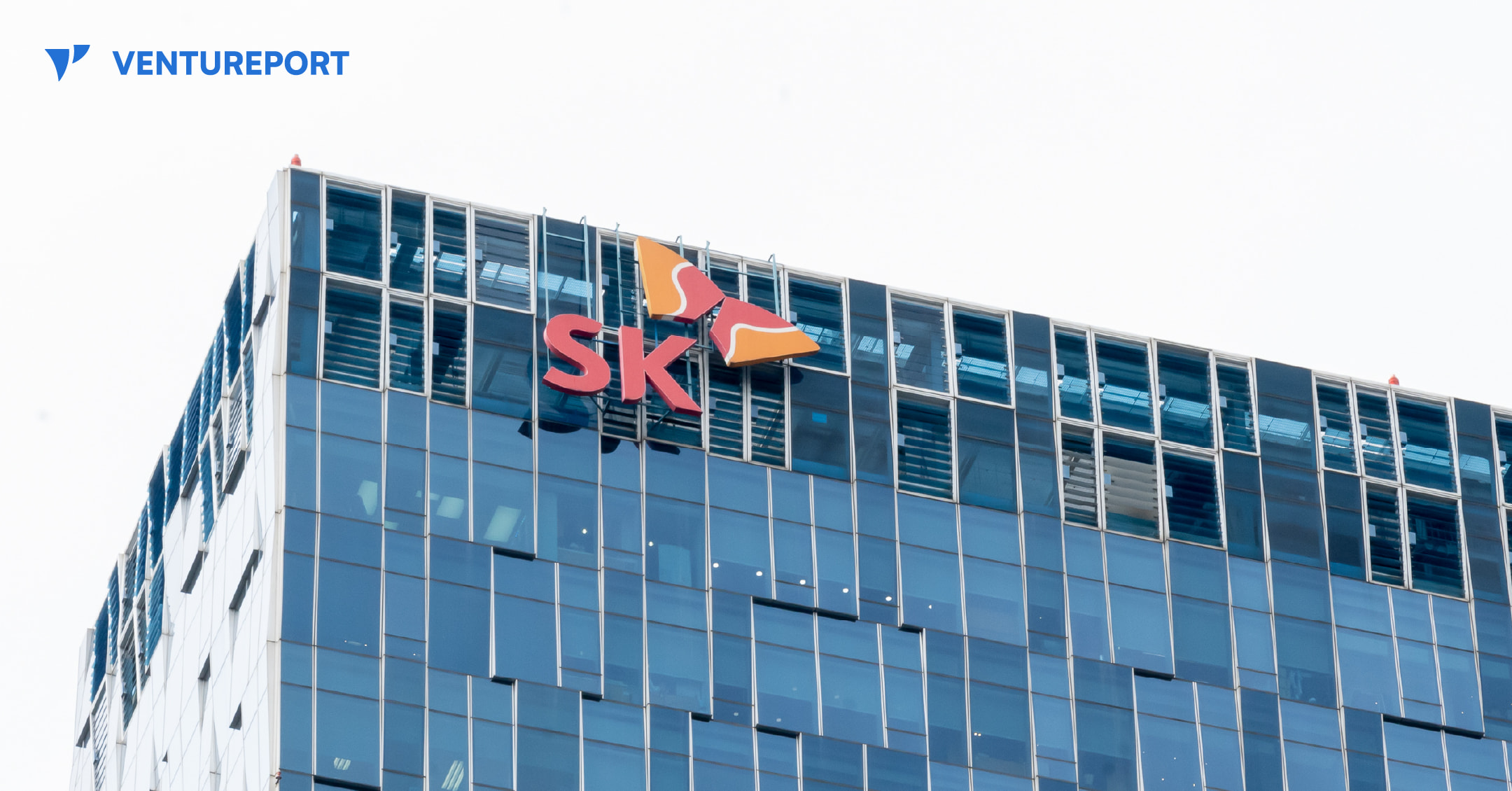
SK Telecom Headquarters in Seoul, South Korea. PHOTO: ADOBE STOCK
SK Telecom, South Korea’s largest mobile operator, has unveiled A.X K1, a hyperscale artificial intelligence model with 519 billion parameters. The model sits at the center of a government-backed effort to build advanced AI systems and domestic AI infrastructure within Korea. This comes at a time when companies in the United States and China largely dominate the development of the most powerful large language models.
Rather than framing A.X K1 as just another large language model, SK Telecom is positioning it as part of a broader push to build sovereign AI capacity from the ground up. The model is being developed as part of the Korean government’s Sovereign AI Foundation Model project, which aims to ensure that core AI systems are built, trained and operated within the country. In simple terms, the initiative focuses on reducing reliance on foreign AI platforms and cloud-based AI infrastructure, while giving Korea more control over how artificial intelligence is developed and deployed at scale.
One of the gaps this approach is trying to address is how AI knowledge flows across a national ecosystem. Today, the most powerful AI foundation models are often closed, expensive and concentrated within a small number of global technology companies. A.X K1 is designed to function as a “teacher model,” meaning it can transfer its capabilities to smaller, more specialized AI systems. This allows developers, enterprises and public institutions to build tailored AI tools without starting from scratch or depending entirely on overseas AI providers.
That distinction matters because most real-world applications of artificial intelligence do not require massive models operating independently. They require focused, reliable AI systems designed for specific use cases such as customer service, enterprise search, manufacturing automation or mobility. By anchoring those systems to a large, domestically developed foundation model, SK Telecom and its partners are aiming to create a more resilient and self-sustaining AI ecosystem.
The effort also reflects a shift in how AI is being positioned for everyday use. SK Telecom plans to connect A.X K1 to services that already reach millions of users, including its AI assistant platform A., which operates across phone calls, messaging, web services and mobile applications. The broader goal is to make advanced AI feel less like a distant research asset and more like an embedded digital infrastructure that supports daily interactions.
This approach extends beyond consumer-facing services. Members of the SKT consortium are testing how the hyperscale AI model can support industrial and enterprise applications, including manufacturing systems, game development, robotics and autonomous technologies. The underlying logic is that national competitiveness in artificial intelligence now depends not only on model performance, but on whether those models can be deployed, adapted and validated in real-world environments.
There is also a hardware dimension to the project. Operating an AI model at the 500-billion-parameter scale places heavy demands on computing infrastructure, particularly memory performance and communication between processors. A.X K1 is being used to test and validate Korea’s semiconductor and AI chip capabilities under real workloads, linking large-scale AI software development directly to domestic semiconductor innovation.
The initiative brings together technology companies, universities and research institutions, including Krafton, KAIST and Seoul National University. Each contributes specialized expertise ranging from data validation and multimodal AI research to system scalability. More than 20 institutions have already expressed interest in testing and deploying the model, reinforcing the idea that A.X K1 is being treated as shared national AI infrastructure rather than a closed commercial product.
Looking ahead, SK Telecom plans to release A.X K1 as open-source AI software, alongside APIs and portions of the training data. If fully implemented, the move could lower barriers for developers, startups and researchers across Korea’s AI ecosystem, enabling them to build on top of a large-scale foundation model without incurring the cost and complexity of developing one independently.