
From pre-orders to market entry, Rokid’s Taiwan campaign reflects how AI hardware is being introduced to consumers today.
Updated
January 8, 2026 6:30 PM
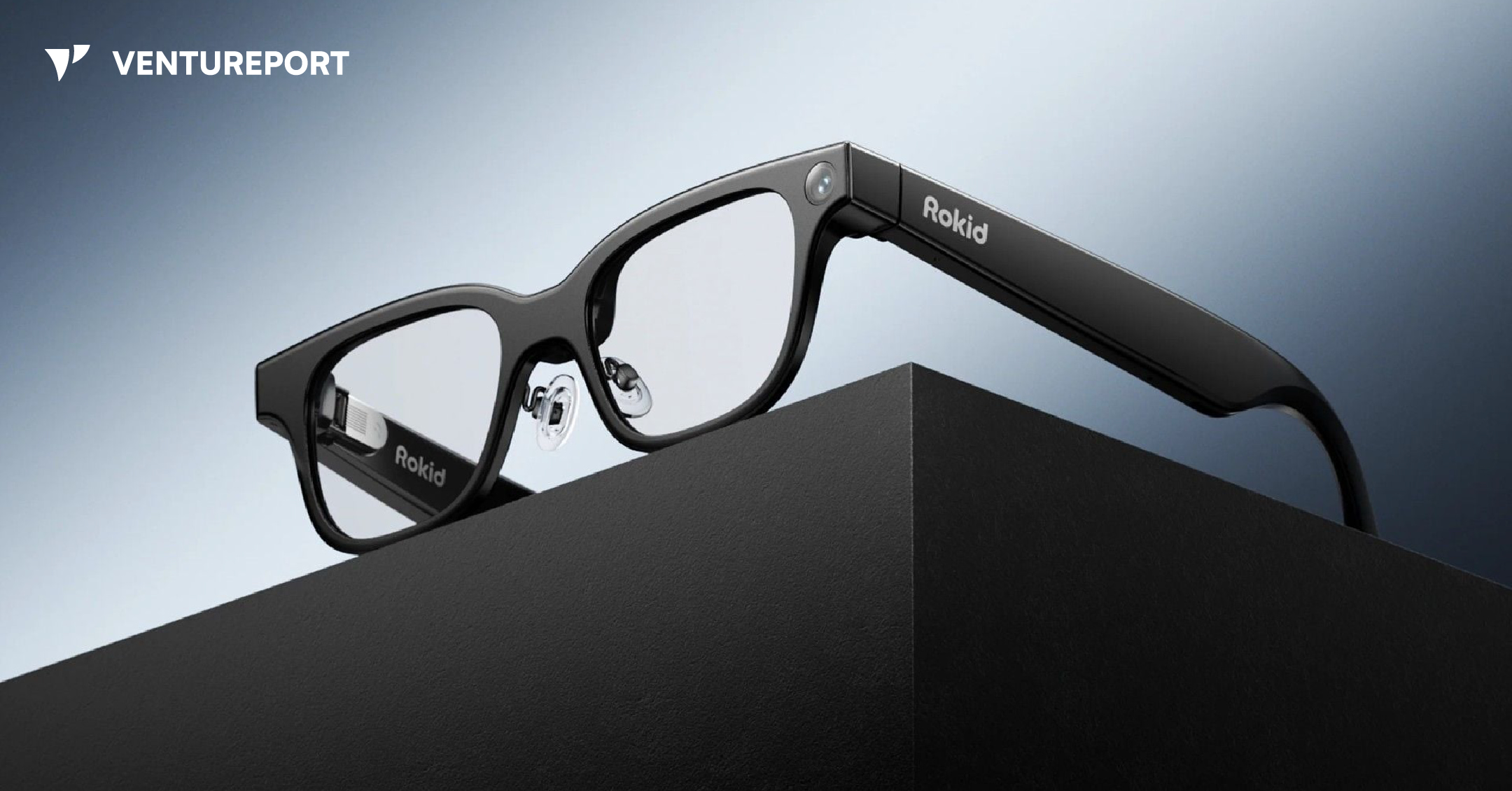
Rokid Glasses, a pair of AR glasses from Rokid. PHOTO: ROKID
Rokid has reached a significant crowdfunding milestone in Taiwan. Its Rokid Glasses campaign surpassed NT$62 million in pre-order funding on zeczec, Taiwan’s creative-oriented crowdfunding platform. The campaign ranked No. 1 across all categories on the platform in 2025 and entered the Top 10 funded campaigns in zeczec’s history, setting new records for AI and XR-related projects.
The campaign launched on October 28 and became one of the platform’s most prominent technology initiatives of the year. According to the company, the outcome followed growing visibility for Rokid Glasses after product showcases in New York, Berlin, Singapore and Paris, positioning the Taiwan campaign within a broader international rollout.
The crowdfunding achievement coincided with Rokid’s official market entry in Taiwan. On December 10, the company debuted Rokid Glasses locally, introducing the product to media, partners and early users in the region. The Taiwan launch mirrored earlier international events and connected the online crowdfunding campaign with a physical market presence.
Rokid Glasses combine augmented reality displays with built-in AI functions, including real-time multilingual translation, live transcription, navigation, object recognition and voice assistance. These capabilities were central to how the product was presented during both the crowdfunding campaign and the Taiwan launch, without framing the project as a traditional consumer electronics release.
The Taiwan campaign builds on Rokid’s prior crowdfunding history. The company previously raised more than US$4 million on Kickstarter, where Rokid Glasses became the highest-funded XR wearable project on the platform. The zeczec campaign extends that track record into one of Asia’s most established consumer electronics markets.
“Taiwan has one of the world's most mature and discerning consumer electronics markets”, said Said Justo Chang, Head of Global Channels at Rokid. “Reaching the top of Taiwan's crowdfunding platform is a great commercial achievement. We are excited to finally introduce Rokid Glasses to Taiwan”.
More broadly, the campaign highlights how crowdfunding platforms continue to function as launch and distribution channels for emerging AI and XR hardware. In Rokid’s case, product rollout, market entry and public participation converged within a single campaign, marking a notable moment for AI-enabled wearables in Taiwan’s technology landscape.
Keep Reading
What Overstory’s vegetation intelligence reveals about wildfire and outage risk.
Updated
January 15, 2026 8:03 PM

Aerial photograph of a green field. PHOTO: UNSPLASH
Managing vegetation around power lines has long been one of the biggest operational challenges for utilities. A single tree growing too close to electrical infrastructure can trigger outages or, in the worst cases, spark fires. With vast service territories, shifting weather patterns and limited visibility into changing landscape conditions, utilities often rely on inspections and broad wildfire-risk maps that provide only partial insight into where the most serious threats actually are.
Overstory, a company specializing in AI-powered vegetation intelligence, addresses this visibility gap with a platform that uses high-resolution satellite imagery and machine-learning models to interpret vegetation conditions in detail.Instead of assessing risk by region, terrain type or outdated maps, the system evaluates conditions tree by tree. This helps utilities identify precisely where hazards exist and which areas demand immediate intervention—critical in regions where small variations in vegetation density, fuel type or moisture levels can influence how quickly a spark might spread.
At the core of this technology is Overstory’s proprietary Fuel Detection Model, designed to identify vegetation most likely to ignite or accelerate wildfire spread. Unlike broad, publicly available fire-risk maps, the model analyzes the specific fuel conditions surrounding electrical infrastructure. By pinpointing exact locations where certain fuel types or densities create elevated risk, utilities can plan targeted wildfire-mitigation work rather than relying on sweeping, resource-heavy maintenance cycles.
This data-driven approach is reshaping how utilities structure vegetation-management programs. Having visibility into where risks are concentrated—and which trees or areas pose the highest threat—allows teams to prioritize work based on measurable evidence. For many utilities, this shift supports more efficient crew deployment, reduces unnecessary trims and builds clearer justification for preventive action. It also offers a path to strengthening grid reliability without expanding operational budgets.
Overstory’s recent US$43 million Series B funding round, led by Blume Equity with support from Energy Impact Partners and existing investors, reflects growing interest in AI tools that translate environmental data into actionable wildfire-prevention intelligence. The investment will support further development of Overstory’s risk models and help expand access to its vegetation-intelligence platform.
Yet the company’s focus remains consistent: giving utilities sharper, real-time visibility into the landscapes they manage. By converting satellite observations into clear and actionable insights, Overstory’s AI system provides a more informed foundation for decisions that impact grid safety and community resilience. In an environment where a single missed hazard can have far-reaching consequences, early and precise detection has become an essential tool for preventing wildfires before they start.