
AI meets AR: How Rokid Glasses bring multilingual, real-time intelligence to smart eyewear globally
Updated
March 3, 2026 3:50 PM

Rokid's smart glasses. PHOTO: ROKID
Rokid, a Chinese company specializing in AI-powered smart eyewear and human–computer interaction, has rolled out a major software update for the international version of its Rokid Glasses. This update makes it the first smart glasses manufacturer to natively support Google’s Gemini, alongside three other leading large language models: OpenAI’s ChatGPT, Alibaba’s Qwen and DeepSeek.
The integration is powered by Rokid’s device-to-cloud architecture, which enables users to switch between AI models on the fly. In practice, this means a traveler can receive a real-time translation in Japanese using one AI model, then quickly switch to ChatGPT to answer a technical query—without noticeable delay. The system also supports multi-modal inputs like voice and gestures, making interactions more intuitive for everyday use.
This is more than a routine software update. By combining AI models from both U.S. and Chinese developers, Rokid is making its smart glasses relevant to global users, with features that adapt to local languages and preferences while maintaining high performance.
These technological advancements have directly fueled Rokid’s international growth. Between November 2024 and October 2025, Shangpu Group data shows Rokid Glasses ranked No.1 in global sales for AI glasses with display functionality. Crowdfunding milestones further reflect this momentum: the product became the fastest smart glasses to raise over 100 million Japanese Yen on Japan’s MAKUAKE platform and broke Kickstarter records for smart eyewear.
Taken together, Rokid’s update highlights a shift in the smart glasses space: success increasingly comes from openness, flexibility and localized AI experiences rather than closed, single-platform ecosystems. By giving users choice, integrating global AI capabilities and bridging cultural and linguistic gaps, Rokid is positioning itself as a serious contender in the international AR and AI wearable market.
Keep Reading
A step forward that could influence how smart contracts are designed and verified.
Updated
January 8, 2026 6:32 PM
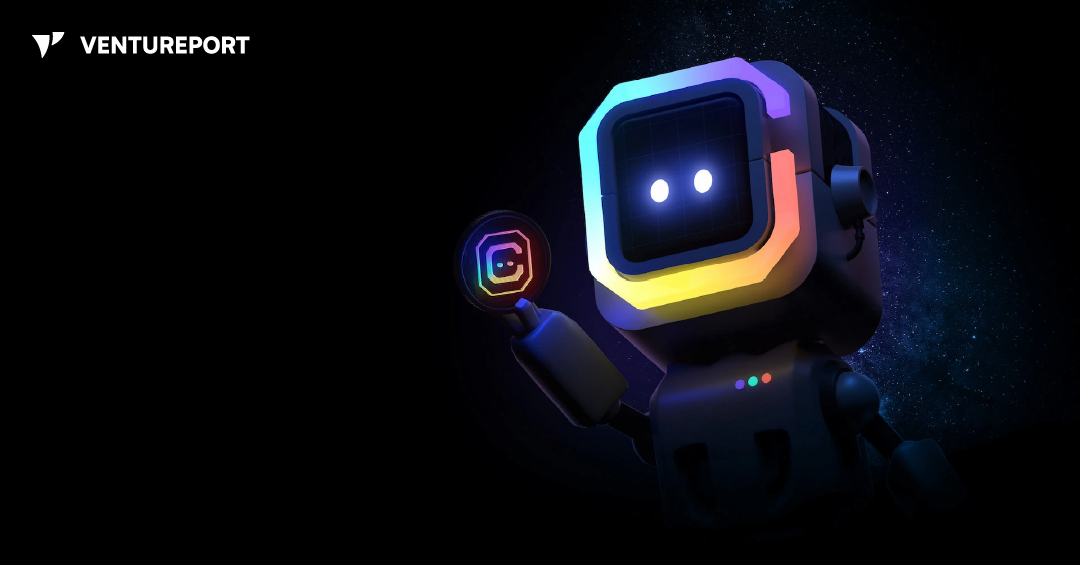
ChainGPT's robot mascot. IMAGE: CHAINGPT
A new collaboration between ChainGPT, an AI company specialising in blockchain development tools and Secret Network, a privacy-focused blockchain platform, is redefining how developers can safely build smart contracts with artificial intelligence. Together, they’ve achieved a major industry first: an AI model trained exclusively to write and audit Solidity code is now running inside a Trusted Execution Environment (TEE). For the blockchain ecosystem, this marks a turning point in how AI, privacy and on-chain development can work together.
For years, smart-contract developers have faced a trade-off. AI assistants could speed up coding and security reviews, but only if developers uploaded their most sensitive source code to external servers. That meant exposing intellectual property, confidential logic and even potential vulnerabilities. In an industry where trust is everything, this risk held many teams back from using AI at all.
ChainGPT’s Solidity-LLM aims to solve that problem. It is a specialised large language model trained on over 650,000 curated Solidity contracts, giving it a deep understanding of how real smart contracts are structured, optimised and secured. And now, by running inside SecretVM, the Confidential Virtual Machine that powers Secret Network’s encrypted compute layer, the model can assist developers without ever revealing their code to outside parties.
“Confidential computing is no longer an abstract concept,” said Luke Bowman, COO of the Secret Network Foundation. “We've shown that you can run a complex AI model, purpose-built for Solidity, inside a fully encrypted environment and that every inference can be verified on-chain. This is a real milestone for both privacy and decentralised infrastructure”.
SecretVM makes this workflow possible by using hardware-backed encryption to protect all data while computations take place. Developers don’t interact with the underlying hardware or cryptography. Instead, they simply work inside a private, sealed environment where their code stays invisible to everyone except them—even node operators. For the first time, developers can generate, test and analyse smart contracts with AI while keeping every detail confidential.
This shift opens new possibilities for the broader blockchain community. Developers gain a private coding partner that can streamline contract logic or catch vulnerabilities without risking leaks. Auditors can rely on AI-assisted analysis while keeping sensitive audit material protected. Enterprises working in finance, healthcare or governance finally have a path to adopt AI-driven blockchain automation without raising compliance concerns. Even decentralised organisations can run smart-contract agents that make decisions privately, without exposing internal logic on a public chain.
The system also supports secure model training and fine-tuning on encrypted datasets. This enables collaborative AI development without forcing anyone to share raw data—a meaningful step toward decentralised and privacy-preserving AI at scale.
By combining specialised AI with confidential computing, ChainGPT and Secret Network are shifting the trust model of on-chain development. Instead of relying on centralised cloud AI services, developers now have a verifiable, encrypted environment where they keep full control of their code, their data and their workflow. It’s a practical solution to one of blockchain’s biggest challenges: using powerful AI tools without sacrificing privacy.
As the technology evolves, the roadmap includes confidential model fine-tuning, multi-agent AI systems and cross-chain use cases. But the core advancement is already clear: developers now have a way to use AI for smart contract development that is fast, private and verifiable—without compromising the security standards that decentralised systems rely on.