
A plug-and-play export pathway helps regional brands reach Asia without building overseas operations
Updated
February 26, 2026 4:29 PM

Coupang headquarters in Silicon Valley. PHOTO: ADOBE STOCK
Two western Pennsylvania companies — Kate’s Real Food and Healthy Origins — are expanding beyond the U.S. through a partnership with Coupang.
Coupang, a U.S.-technology and Fortune 150 company, operates one of the largest e-commerce platforms in South Korea. It allows American sellers to reach customers overseas without setting up their own distribution networks. Businesses ship products to a domestic Coupang logistics facility. From there, the company manages storage, fulfillment and delivery directly to customers abroad.
For Kate’s Real Food and Healthy Origins, this system opens the door to new markets without requiring on-the-ground operations. Kate’s Real Food makes organic energy and protein bars. Healthy Origins is a family-owned supplements business based near Pittsburgh. Both are now selling to customers in South Korea and in Healthy Origins’ case, Taiwan as well.
That structure addresses a practical gap for growing brands: how to access international demand without building international operations. Instead of navigating foreign warehousing and retail partnerships independently, sellers plug into an existing marketplace and logistics system.
“At Coupang, we’re proud to help thousands of American small and medium-sized businesses, agricultural producers and larger brands sell their goods to customers around the world”, said Coupang vice president Bill Anaya. “We’ve built an innovative, AI-driven export engine that enables great American entrepreneurs — like those who created Kate’s Real Food and Healthy Origins — to expand their horizons, find new revenue abroad and keep growing their local teams".
For Kate’s Real Food, the move marks its entry into South Korea for the first time. For Healthy Origins, the results have been measurable. The company reports that sales of its products on the platform have increased more than 50% year over year since partnering with Coupang. It has also expanded into Taiwan.
“Partnering with Coupang has been a significant step forward for our business”, said Bret Eby, CEO of Healthy Origins. “Coupang makes it easier to deliver a great shopping experience and we’ve appreciated the collaboration and support throughout the process. Its scale, efficiency and consumer reach in Korea are unmatched and launching on Coupang allowed us to elevate our presence and connect with customers in a much more impactful and direct way”.
The broader relevance lies in the model itself. Digital marketplaces are building integrated cross-border infrastructure. That shift changes what international expansion requires. Smaller regional brands no longer need to replicate warehousing, logistics and retail partnerships in every new market. Instead, they can plug into an existing system and reach customers abroad.
In this case, two Pennsylvania companies are doing exactly that. Their expansion illustrates how platform-led trade is reshaping the path from local operations to global reach.
Keep Reading
Amid AI and tech startups, Eastseabrother proved the power of demand and trust.
Updated
January 23, 2026 10:41 AM
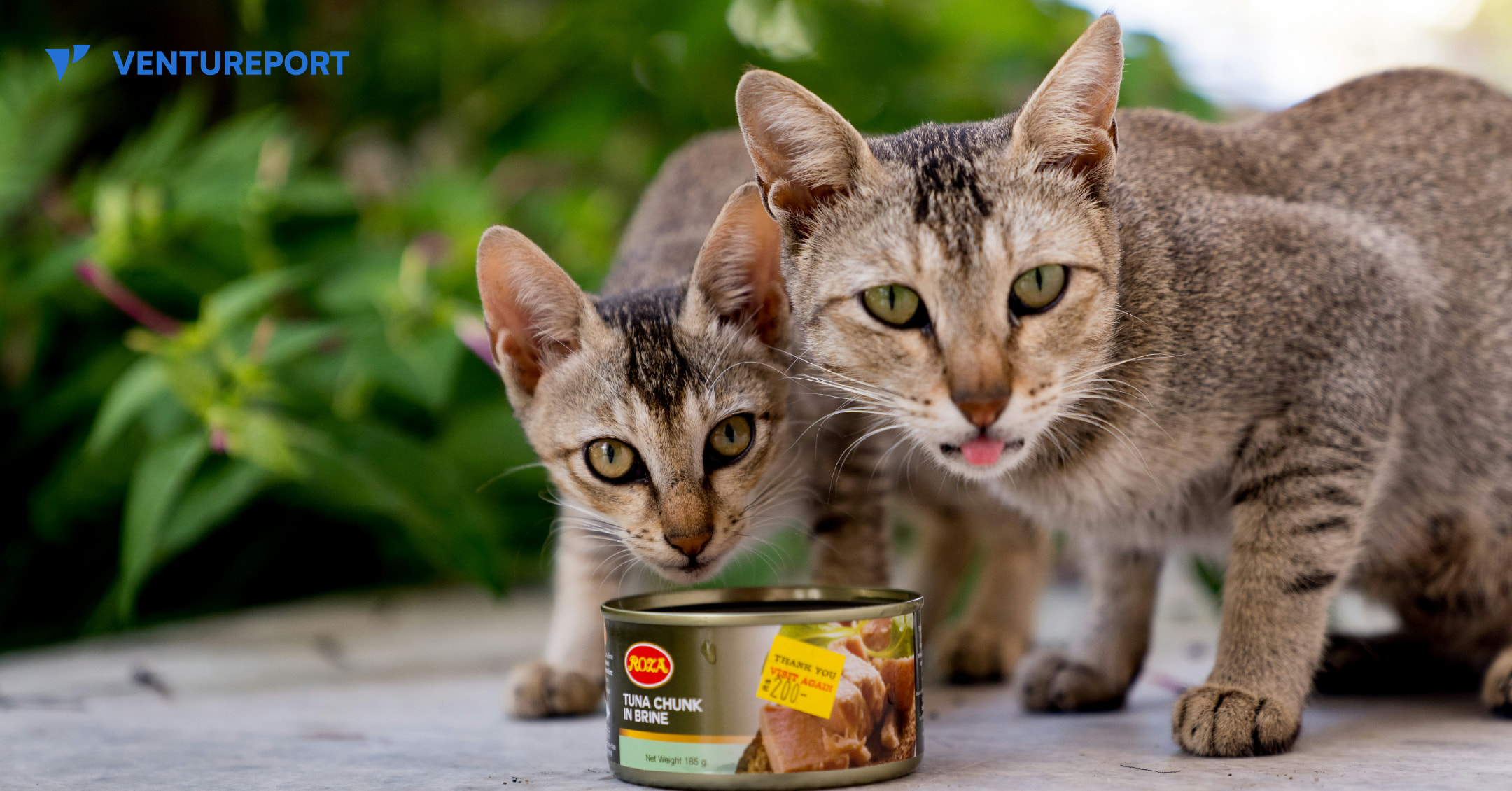
Cats having a jolly good time with a can of tuna. PHOTO: UNSPLASH
At a Silicon Valley pitch event crowded with AI, SaaS and deep-tech startups, the company that stood out was not selling software or algorithms. It was selling pet treats.
Eastseabrother, a premium pet food brand from South Korea, ranked first at a Plug and Play–hosted investor pitch competition in Sunnyvale. The product itself is simple: single-ingredient pet treats made from wild-caught seafood sourced from Korea’s East Sea. The company follows a principle it calls “Only What the Sea Allows”, working directly with regional fishermen while avoiding overfishing. With no additives and minimal processing, what sets Eastseabrother apart is not novelty, but control—over sourcing, supply chains and consistency.
That clarity helped the company walk away with both Best Product and Best Potential. “Investors asked detailed questions about repeat purchase rates and customer feedback, not just our technology or supply chain”, said Eunyul Kim, CEO of Eastseabrother. “That told us the market is shifting—real consumer trust now carries as much weight as a compelling tech narrative”.
What truly caught investors’ attention was not an ambitious vision of the future, but concrete evidence of traction today. Eastseabrother has already secured shelf space in specialty pet stores across California, New York and North Carolina, including an exclusive partnership with EarthWise Pet, a national specialty retail chain. At a consumer showcase at San Francisco’s Ferry Building, the brand recorded the highest on-site sales among all participating companies.
At its core, the pitch was built on simplicity: one ingredient, clear sourcing and a defined customer need. In a market saturated with complex products and abstract claims, that focus and transparency stood out.
The judges’ decision also reflects a broader shift in venture capital thinking. Not every successful startup is built on complex software or high-tech innovation. In categories like pet care—where trust, quality and transparency shape buying behavior—execution and credibility can matter more than technical sophistication.
Today, Eastseabrother has extended its reach beyond the U.S., expanding into Singapore and Hong Kong, with additional plans to grow further in North America as demand for premium pet food rises. And the broader takeaway from this pitch is not that consumer brands are overtaking tech startups. It is that investors are increasingly focused on fundamentals: who is buying, why they are returning and whether the business can sustain itself beyond the pitch deck.