
With Phia’s AI, the new luxury is knowing what’s worth buying
Updated
February 10, 2026 12:56 PM

Phoebe Gates and Sophia Kianni, founders of Phia. PHOTO: PHIA
AI has transformed how we shop—predicting trends, powering virtual try-ons and streamlining fashion logistics. Yet some of the biggest pain points remain: endless scrolling, too many tabs and never knowing if you’ve overpaid. That’s the gap Phia aims to close.
Co-founded by Phoebe Gates, daughter of Bill Gates, and climate activist Sophia Kianni, Phia was born in a Stanford dorm room and launched in April 2025. The app, available on mobile and as a browser extension, compares prices across over 40,000 retailers and thrift platforms to show what an item really costs. Its hallmark feature, “Should I Buy This?”, instantly flags whether something is overpriced, fair or a genuine deal.
The mission is simple: make shopping smarter, fairer and more sustainable. In just five months, Phia has attracted more than 500,000 users, indexed billions of products and built over 5,000 brand partnerships. It also secured a US$8 million seed round led by Kleiner Perkins, joined by Hailey Bieber, Kris Jenner, Sara Blakely and Sheryl Sandberg—investors who bridge tech, retail and culture. “Phia is redefining how people make purchase decisions,” said Annie Case, partner at Kleiner Perkins.
Phia’s AI engine scans real-time data from more than 250 million products across its network, including Vestiaire Collective, StockX, eBay and Poshmark. Beyond comparing prices, the app helps users discover cheaper or more sustainable options by displaying pre-owned items next to new ones—helping users see the full spectrum of choices before they buy. It also evaluates how different brands perform over time, analysing how well their products hold resale value. This insight helps shoppers judge whether a purchase is likely to last in value or if opting for a second-hand version makes more sense. The result is a platform that naturally encourages circular shopping—keeping items in use longer through resale, repair or recycling—and resonates strongly with Gen Z and millennial values of sustainability and mindful spending.
By encouraging transparency and smarter choices, Phia signals a broader shift in consumer technology: one where AI doesn’t just automate decisions but empowers users to understand them. Instead of merely digitizing the act of shopping, Phia embodies data-driven accountability—using intelligent search to help consumers make informed and ethical choices in markets long clouded by complexity. Retail analysts believe this level of visibility could push brands to maintain accurate and competitive pricing. Skeptics, however, argue that Phia must evolve beyond comparison to create emotional connection and loyalty. Still, one fact stands out: algorithms are no longer just recommending what we buy—they’re rewriting how we decide.
With new funding powering GPU expansion and advanced personalization tools, Phia’s next step is to build a true AI shopping agent—one that helps people buy better, live smarter and rethink what it means to shop with purpose.
Keep Reading
Bitmo Lab is testing an ultra-thin, bendable tracker built to fit inside items traditional trackers can’t
Updated
March 17, 2026 1:02 AM
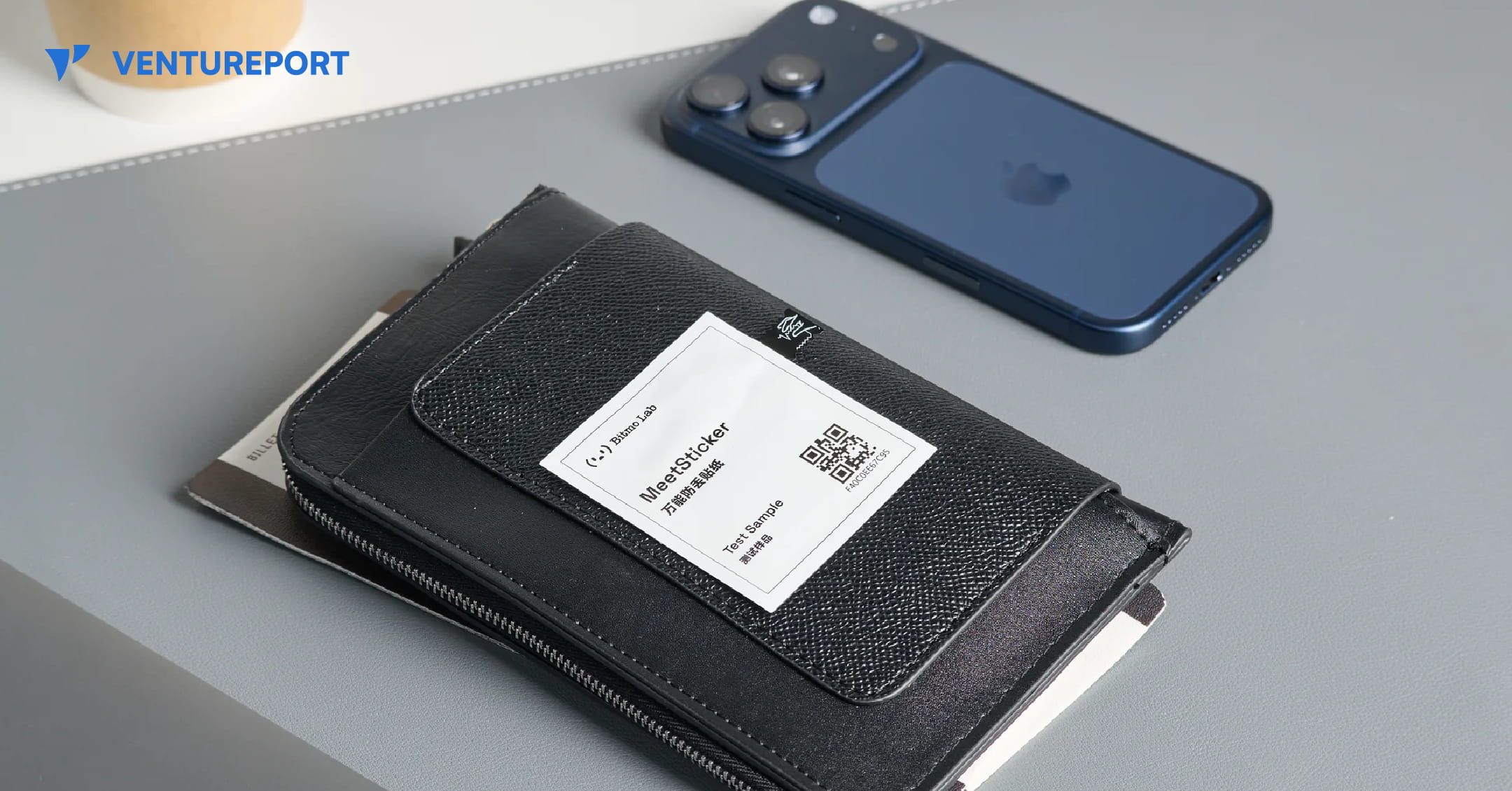
Bitmo Lab's MeetSticker tracker. PHOTO: BITMO LAB
Location trackers have become everyday accessories for keys, bags and luggage. But as personal items grow slimmer and more design-focused — from minimalist wallets to passport sleeves and specialised gear — tracking them has become less straightforward. Most trackers are built as small, rigid discs that assume the presence of space, loops or compartments. That assumption has created a growing mismatch between modern product design and the technology meant to secure it.
Hong Kong–based startup Bitmo Lab is attempting to address that gap with a device called MeetSticker. Instead of the solid plastic casing typical of most trackers, MeetSticker is engineered to be flexible and ultra-thin, measuring just 0.8 millimetres thick. The bendable design allows it to sit within narrow compartments or along curved surfaces without altering the shape of the object. Rather than attaching to an item externally, it is intended to integrate discreetly inside it.
That structural shift is the core of the product’s proposition. By removing the rigid shell that defines conventional tracking hardware, MeetSticker can be placed in items that previously had no practical way to accommodate a tracker. Bitmo Lab states that the device connects through a proprietary network and a companion application compatible with both iOS and Android, positioning it as a cross-platform solution rather than one tied to a single ecosystem.
The implications extend beyond form factor. Objects without obvious attachment points — such as compact travel accessories or specialised tools — could potentially be monitored without visible add-ons. In doing so, the device broadens the scope of tracking technology into categories where aesthetics, aerodynamics or compact design matter as much as functionality.
Before moving toward retail distribution, however, the company is focusing on validation. Bitmo Lab has launched a five-week global alpha testing programme beginning February 9. Sixty participants will receive a prototype unit and early access to the app. According to the company, the programme is designed to assess durability, usability and real-world performance before a wider commercial release. Participants who provide feedback will receive a retail unit upon launch.
Such testing is particularly relevant for flexible electronics. Unlike rigid devices, bendable hardware must withstand repeated flexing, daily handling and environmental exposure. Early user data can help refine manufacturing processes and software optimisation before scaling production.
As with other connected tracking devices, privacy considerations remain part of the equation. Bitmo Lab has stated that data collected during the alpha programme will be used strictly for testing purposes and deleted once the programme concludes.
Whether flexible trackers will redefine the category will depend on how they perform outside controlled testing environments. Still, the introduction of a near-invisible, bendable tracking device reflects a broader shift in consumer technology. As everyday products become thinner and more design-conscious, the tools built to protect them may need to adapt just as seamlessly.