
As global financial landscapes shift, Noah outlines a new AI-first approach to helping families protect and grow their wealth.
Updated
January 8, 2026 6:31 PM
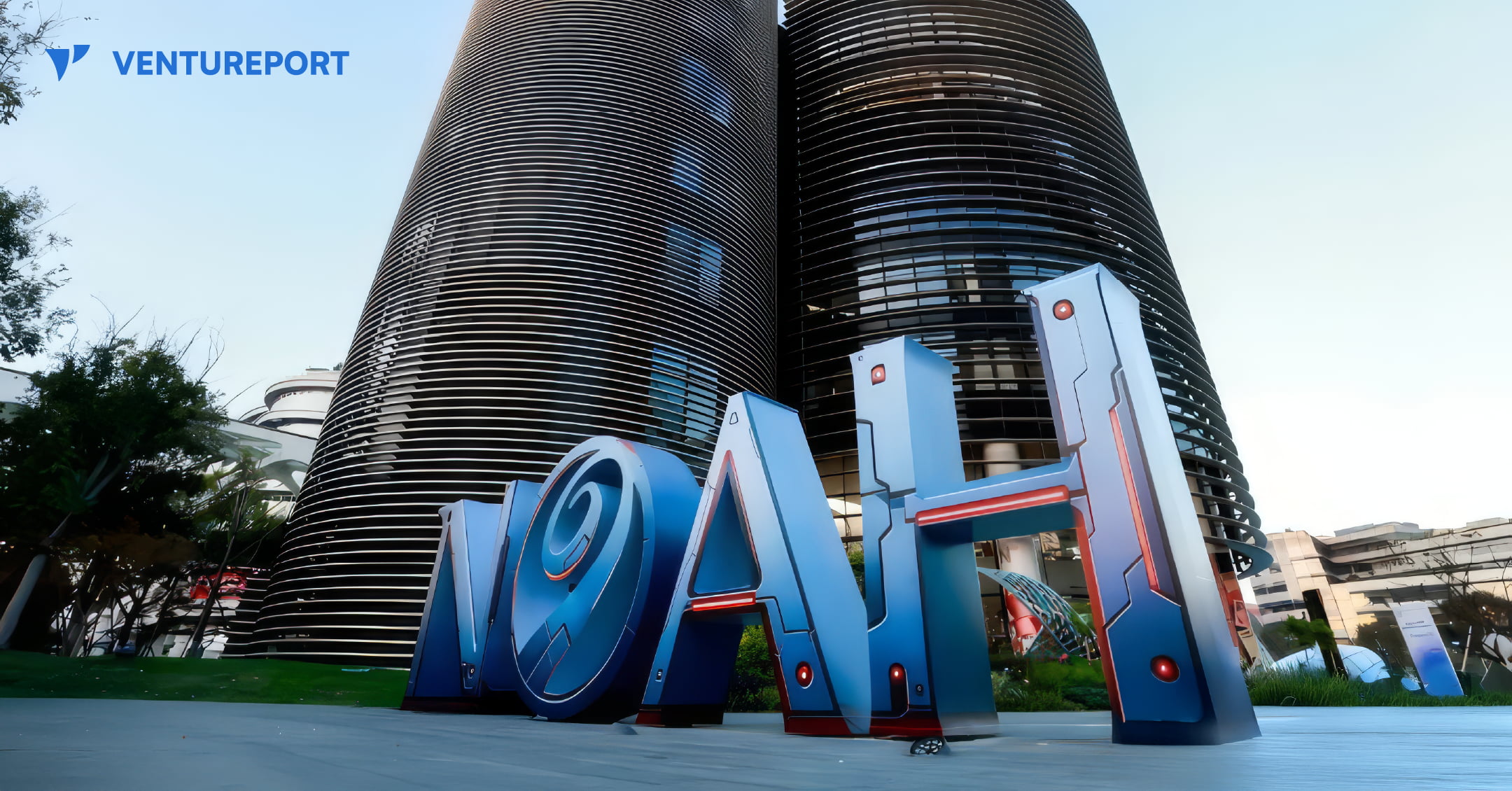
Noah’s Black Diamond Summit. PHOTO: ARK WEALTH
Noah Holdings, one of Asia’s leading wealth management firms serving global Chinese high-net-worth families, hosted its annual Black Diamond Summit in Macau from December 7–11. The city has become a significant gathering place for Noah’s community, where clients, partners, and experts converge each year to explore how global trends are transforming wealth and family life. This year’s theme, “AI Together, Co-Generating the Future”, set the tone for a conversation about how modern wealth management must adapt in an age defined by artificial intelligence.
More than 3,000 attendees joined discussions that connected technology, global mobility, and long-term family planning. The Summit built on earlier sessions held in Shanghai, creating a continuous dialogue around one central question: how can families prepare for a world that is becoming more digital, more complex and more interconnected?
A major moment came when Noah introduced “Noya”, its new AI Relationship Manager. Noya is now part of the upgraded iARK Hong Kong and Singapore apps. It is built to support licensed human advisors, not replace them. The goal is simple: combine human judgment with AI intelligence to help clients understand their wealth more clearly and manage it across borders. Noya offers real-time insights, deeper personalisation, cleaner access to global financial information, smoother coordination between regions, and end-to-end execution through Noah’s global booking centres.
The Summit’s tone shifted toward long-term thinking when Co-Founder and Chairwoman Norah Wang delivered her keynote, “From Chaos to Clarity: Building a Global Operating System for Wealth Management”. She reflected on twenty years of serving more than 400,000 clients and explained that families today face new pressures. As she put it, “The real pain point for Chinese families today is not investment performance, but navigating the growing complexities of a global lifestyle”. Her message was straightforward: wealth is no longer just about returns. It is about managing uncertainty in a world where technology, geopolitics, and mobility collide.
Wang described how two major shifts have shaped modern wealth—first the Internet Era, which changed how people built wealth, and now what she calls the AI Civilisation Era, which is changing how people must protect it. She outlined the forces that influence today’s decisions: geopolitical shifts, persistent inflation, the rising importance of security and supply-chain technologies, the spread of AI, and the need for stronger family governance across generations. Each of these factors adds complexity, and families need tools that help them see the bigger picture.
To respond to this reality, Noah presented its integrated global wealth infrastructure. It is built on three pillars:
Together, these pillars function as an AI-supported system designed to simplify global complexity and help families preserve long-term stability.
One of the most discussed conversations featured Noah’s CEO, Zander Yin, and Tony Shale, Co-Founder & Chairman of Asian Private Banker China. They spoke about how AI is transforming private banking in Asia. Their view was that wealth management is moving from a product-centred model to one led by insight, trust, and human-tech collaboration. AI may accelerate analysis, but human expertise will continue to guide judgment, relationships, and long-term strategy.
The closing message of the Summit centred on redefining what prosperity means in an AI-driven age. For Noah, wealth is no longer a destination. It is an ongoing journey through a world that is increasingly fast-moving and unpredictable. As Wang noted, “With AI reshaping the very foundations of civilisation, wealth and financial freedom represent not a static endpoint, but a continuous journey. Here, we find our purpose: to help global Chinese investors navigate an increasingly complex world and achieve true prosperity, supported by resilient wealth management infrastructure and deep human expertise”.
The Summit ended on that note—a reminder that the future of wealth is not only about financial assets, but about clarity, confidence and the ability to adapt as the world transforms.
Keep Reading
A closer look at the tech, AI, and open ecosystem behind Tien Kung 3.0’s real-world push
Updated
February 18, 2026 8:03 PM

Humanoid robots working in a warehouse. PHOTO: ADOBE STOCK
Humanoid robotics has advanced quickly in recent years. Machines can now walk, balance, and interact with their surroundings in ways that once seemed out of reach. Yet most deployments remain limited. Many robots perform well in controlled settings but struggle in real-world environments. Integration is often complex, hardware interfaces are closed, software tools are fragmented, and scaling across industries remains difficult.
Against this backdrop, X-Humanoid has introduced its latest general-purpose platform, Embodied Tien Kung 3.0. The company positions it not simply as another humanoid robot, but as a system designed to address the practical barriers that have slowed adoption, with a focus on openness and usability.
At the hardware level, Embodied Tien Kung 3.0 is built for mobility, strength, and stability. It is equipped with high-torque integrated joints that provide strong limb force for high-load applications. The company says it is the first full-size humanoid robot to achieve whole-body, high-dynamic motion control integrated with tactile interaction. In practice, this means the robot is designed to maintain balance and execute dynamic movements even in uneven or cluttered environments. It can clear one-meter obstacles, perform consecutive high-dynamic maneuvers, and carry out actions such as kneeling, bending, and turning with coordinated whole-body control.
Precision is also a focus. Through multi-degree-of-freedom limb coordination and calibrated joint linkage, the system is designed to achieve millimeter-level operational accuracy. This level of control is intended to support industrial-grade tasks that require consistent performance and minimal error across changing conditions.
But hardware is only part of the equation. The company pairs the robot with its proprietary Wise KaiWu general-purpose embodied AI platform. This system supports perception, reasoning, and real-time control through what the company describes as a coordinated “brain–cerebellum” architecture. It establishes a continuous perception–decision–execution loop, allowing the robot to operate with greater autonomy and reduced reliance on remote control.
For higher-level cognition, Wise KaiWu incorporates components such as a world model and vision-language models (VLM) to interpret visual scenes, understand language instructions, and break complex objectives into structured steps. For real-time execution, a vision-language-action (VLA) model and full autonomous navigation system manage obstacle avoidance and precise motion under variable conditions. The platform also supports multi-agent collaboration, enabling cross-platform compatibility, asynchronous task coordination, and centralized scheduling across multiple robots.
A central part of the platform is openness. The company states that the system is designed to address compatibility and adaptation challenges across both development and deployment layers. On the hardware side, Embodied Tien Kung 3.0 includes multiple expansion interfaces that support different end-effectors and tools, allowing faster adaptation to industrial manufacturing, specialized operations, and commercial service scenarios. On the software side, the Wise KaiWu ecosystem provides documentation, toolchains, and a low-code development environment. It supports widely adopted communication standards, including ROS2, MQTT, and TCP/IP, enabling partners to customize applications without rebuilding core systems.
The company also highlights its open-source approach. X-Humanoid has open-sourced key components from the Embodied Tien Kung and Wise KaiWu platforms, including the robot body architecture, motion control framework, world model, embodied VLM and cross-ontology VLA models, training toolchains, the RoboMIND dataset, and the ArtVIP simulation asset library. By opening access to these elements, the company aims to reduce development costs, lower technical barriers, and encourage broader participation from researchers, universities, and enterprises.
Embodied Tien Kung 3.0 enters a market where technical progress is visible but large-scale adoption remains uneven. The gap is not only about movement or strength. It is about integration, interoperability, and the ability to operate reliably and autonomously in everyday industrial and commercial settings. If platforms can reduce fragmentation and simplify deployment, humanoid robots may move beyond demonstrations and into sustained commercial use.
In that sense, the significance of Embodied Tien Kung 3.0 lies less in isolated technical claims and more in how its high-dynamic hardware, embodied AI system, open interfaces, and collaborative architecture are structured to work together. Whether that integrated approach can close the deployment gap will shape how quickly humanoid robotics becomes part of real-world operations.