
As global financial landscapes shift, Noah outlines a new AI-first approach to helping families protect and grow their wealth.
Updated
January 8, 2026 6:31 PM
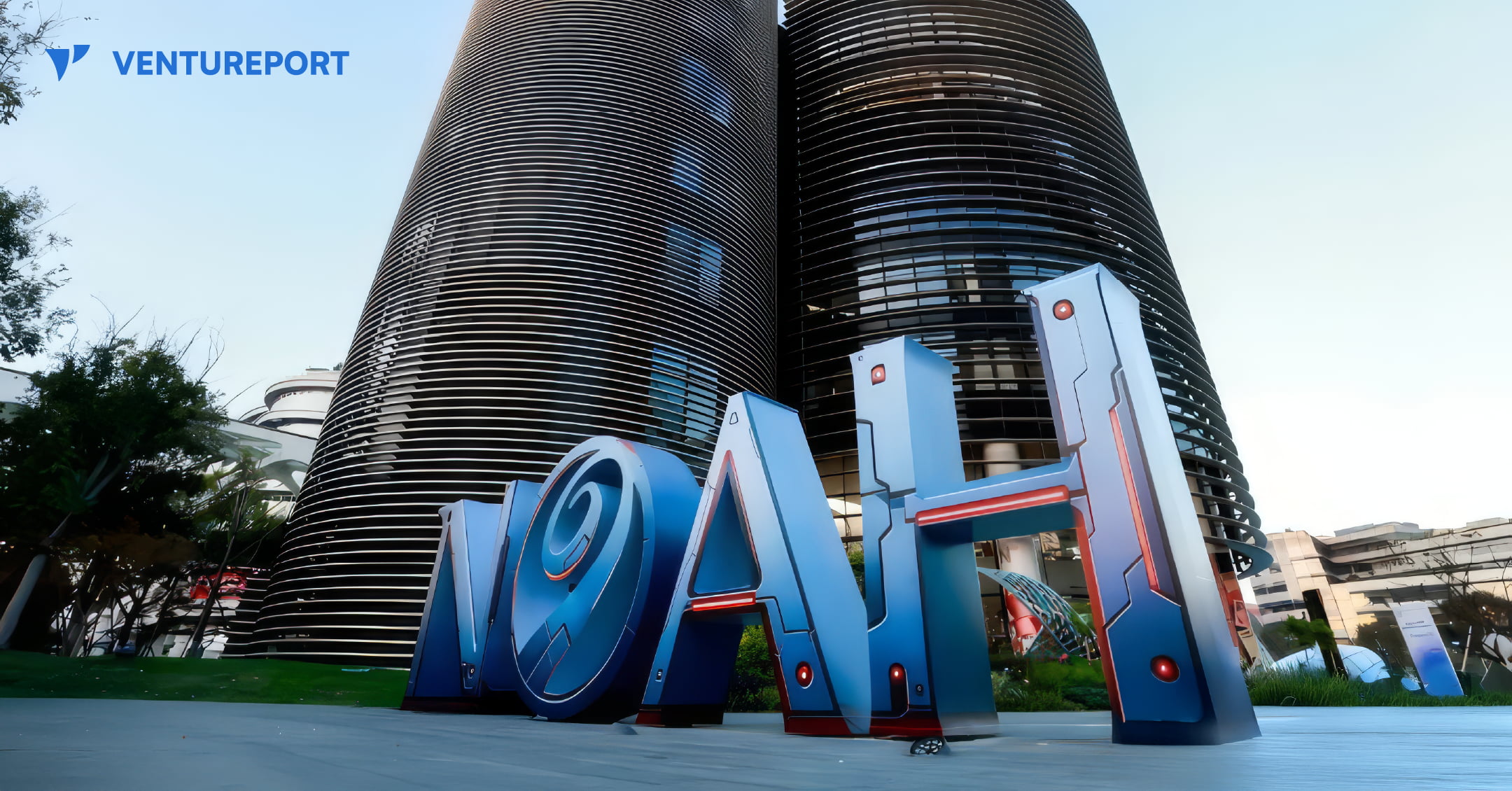
Noah’s Black Diamond Summit. PHOTO: ARK WEALTH
Noah Holdings, one of Asia’s leading wealth management firms serving global Chinese high-net-worth families, hosted its annual Black Diamond Summit in Macau from December 7–11. The city has become a significant gathering place for Noah’s community, where clients, partners, and experts converge each year to explore how global trends are transforming wealth and family life. This year’s theme, “AI Together, Co-Generating the Future”, set the tone for a conversation about how modern wealth management must adapt in an age defined by artificial intelligence.
More than 3,000 attendees joined discussions that connected technology, global mobility, and long-term family planning. The Summit built on earlier sessions held in Shanghai, creating a continuous dialogue around one central question: how can families prepare for a world that is becoming more digital, more complex and more interconnected?
A major moment came when Noah introduced “Noya”, its new AI Relationship Manager. Noya is now part of the upgraded iARK Hong Kong and Singapore apps. It is built to support licensed human advisors, not replace them. The goal is simple: combine human judgment with AI intelligence to help clients understand their wealth more clearly and manage it across borders. Noya offers real-time insights, deeper personalisation, cleaner access to global financial information, smoother coordination between regions, and end-to-end execution through Noah’s global booking centres.
The Summit’s tone shifted toward long-term thinking when Co-Founder and Chairwoman Norah Wang delivered her keynote, “From Chaos to Clarity: Building a Global Operating System for Wealth Management”. She reflected on twenty years of serving more than 400,000 clients and explained that families today face new pressures. As she put it, “The real pain point for Chinese families today is not investment performance, but navigating the growing complexities of a global lifestyle”. Her message was straightforward: wealth is no longer just about returns. It is about managing uncertainty in a world where technology, geopolitics, and mobility collide.
Wang described how two major shifts have shaped modern wealth—first the Internet Era, which changed how people built wealth, and now what she calls the AI Civilisation Era, which is changing how people must protect it. She outlined the forces that influence today’s decisions: geopolitical shifts, persistent inflation, the rising importance of security and supply-chain technologies, the spread of AI, and the need for stronger family governance across generations. Each of these factors adds complexity, and families need tools that help them see the bigger picture.
To respond to this reality, Noah presented its integrated global wealth infrastructure. It is built on three pillars:
Together, these pillars function as an AI-supported system designed to simplify global complexity and help families preserve long-term stability.
One of the most discussed conversations featured Noah’s CEO, Zander Yin, and Tony Shale, Co-Founder & Chairman of Asian Private Banker China. They spoke about how AI is transforming private banking in Asia. Their view was that wealth management is moving from a product-centred model to one led by insight, trust, and human-tech collaboration. AI may accelerate analysis, but human expertise will continue to guide judgment, relationships, and long-term strategy.
The closing message of the Summit centred on redefining what prosperity means in an AI-driven age. For Noah, wealth is no longer a destination. It is an ongoing journey through a world that is increasingly fast-moving and unpredictable. As Wang noted, “With AI reshaping the very foundations of civilisation, wealth and financial freedom represent not a static endpoint, but a continuous journey. Here, we find our purpose: to help global Chinese investors navigate an increasingly complex world and achieve true prosperity, supported by resilient wealth management infrastructure and deep human expertise”.
The Summit ended on that note—a reminder that the future of wealth is not only about financial assets, but about clarity, confidence and the ability to adapt as the world transforms.
Keep Reading
Humanoids are moving from research labs into real industries — and capital is finally catching up.
Updated
January 8, 2026 6:31 PM
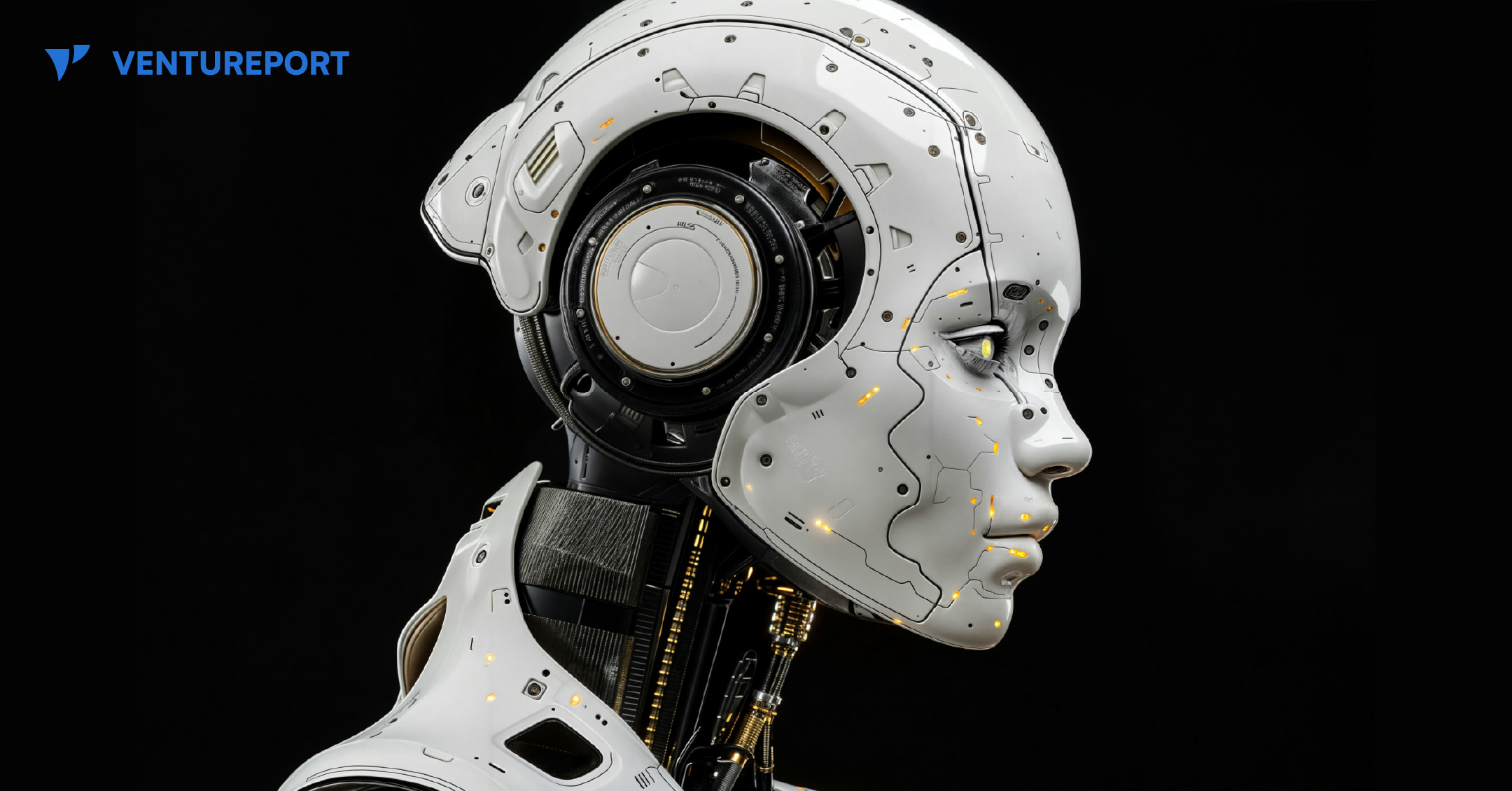
A face of a humanoid robot, side view on black background. PHOTO: UNSPLASH
Humanoid robots are shifting from sci-fi speculation to engineering reality, and the pace of progress is prompting investors to reassess how the next decade of physical automation will unfold. ALM Ventures has launched a new US$100 million early-stage fund aimed squarely at this moment—one where advances in robot control, embodied AI and spatial intelligence are beginning to converge into something commercially meaningful.
ALM Ventures Fund I, is designed for the earliest stages of company formation, targeting seed and pre-seed teams building the foundations of humanoid deployment. It’s a concentrated fund that seeks to take early ownership in a sector that many now consider the next major technological frontier.
For Founder and General Partner Modar Alaoui, the timing is not accidental. “After years of research, humanoids are finally entering a phase where performance, reliability and cost are converging toward commercial viability”, he said. “What the category needs now is focused capital and deep technical diligence to turn prototypes into scalable, enduring companies”.
That framing captures a shift happening across robotics: the field is moving out of the lab and into early commercial readiness. Improvements in perception systems, model-based reasoning and motion control are accelerating the transition. Advances in simulation are also lowering the complexity and cost of integrating humanoid platforms into real environments. As these systems become more capable, the gap between research prototypes and market-ready products is narrowing.
ALM Ventures is positioning itself at this inflection point. Fund I’s thesis centers on the core technologies required to scale humanoids safely and economically. This includes next-generation robot platforms, spatial reasoning engines, embodied intelligence models, world-modeling systems and the infrastructure needed for early deployment. Rather than chasing every robotics trend, the fund is concentrating on the essential layers that will determine whether humanoids can work reliably outside controlled settings.
The firm isn’t starting from zero. During the fund’s formation, ALM Ventures made ten early investments that directly align with its investment focus. The portfolio includes companies building at different layers of the humanoid stack, such as Sanctuary AI, Weave Robotics, Emancro, High Torque Robotics, MicroFactory, Mbodi, Adamo, Haptica Robotics, UMA and O-ID. The list reflects a broad but intentional spread, from hardware to intelligence to manufacturing approaches, all oriented toward enabling scalable physical AI.
Beyond capital, ALM Ventures has been shaping the ecosystem through its global Humanoids Summit series in Silicon Valley, London and Tokyo. The series gives the firm early visibility into emerging technologies, pre-incorporation teams and the senior leaders steering the global robotics landscape. That vantage point has helped the firm identify where commercialization is truly taking root and where bottlenecks still exist.
The rise of humanoids is often compared to the early days of self-driving cars: a long arc of research suddenly meeting an acceleration point. What separates this moment is that advances in embodied AI and spatial intelligence are giving robots a more intuitive understanding of the physical world, making them easier to deploy, teach and scale. ALM Ventures’ Fund I is an attempt to capture that transition while shaping the companies that could define the next technological era.
With US$100 million dedicated to the earliest builders in the space, ALM Ventures is signaling its belief that humanoids are not just another robotics cycle—they may be the next major platform shift in AI.