
A new bet on early heart failure detection and why women’s health is at the center.
Updated
January 8, 2026 6:28 PM
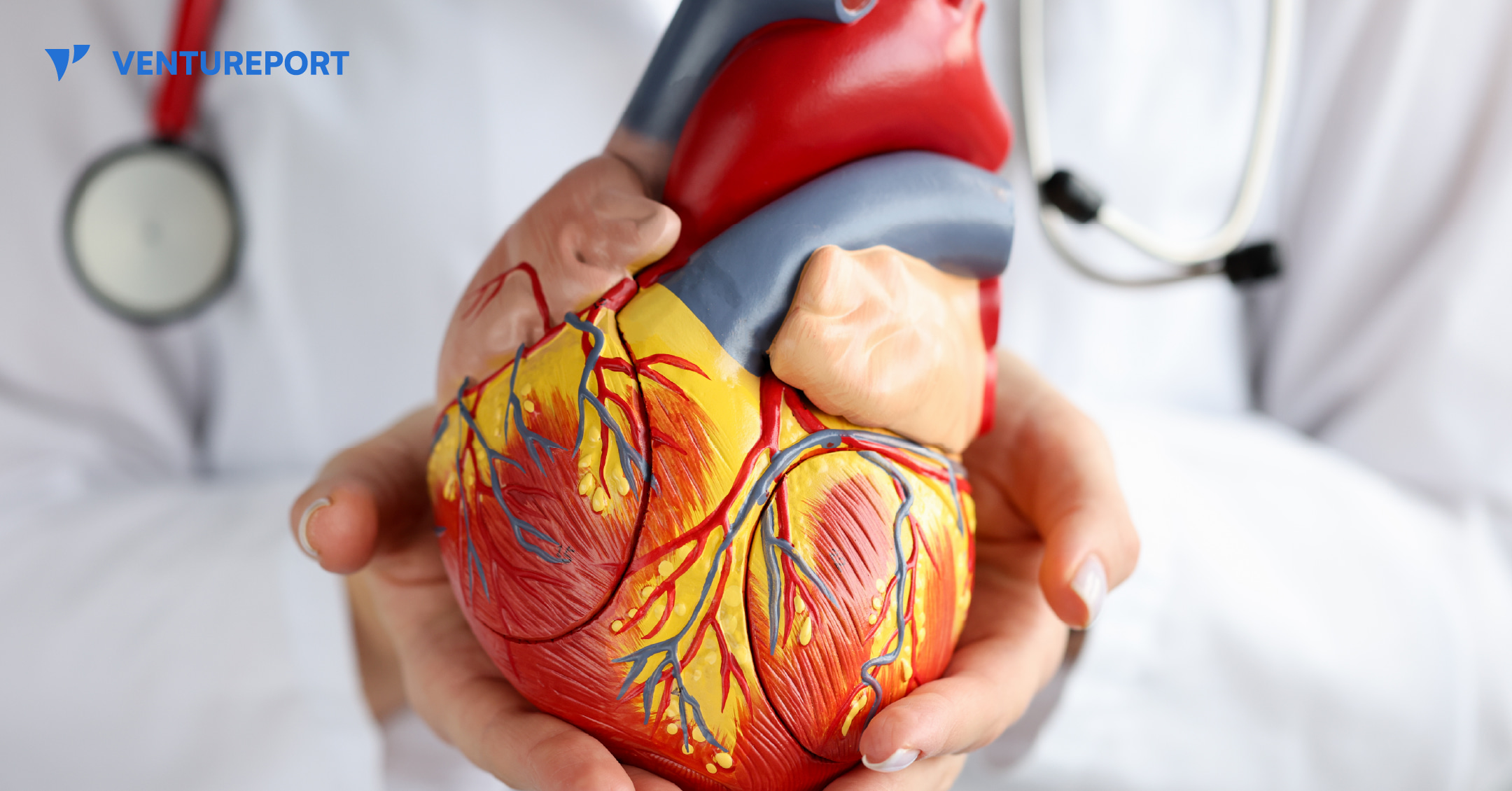
A doctor holding an artificial heart model. PHOTO: ADOBE STOCK
Heart disease does not always announce itself clearly, especially in women. Many of the symptoms are ordinary, including fatigue, shortness of breath and swelling. These signs are frequently dismissed or explained away. As a result, many women are diagnosed late, when treatment options are narrower and outcomes are worse. That diagnostic gap is the context behind a recent investment involving Ultromics and the American Heart Association’s Go Red for Women Venture Fund.
Ultromics is a health technology company that uses artificial intelligence to help doctors spot early signs of heart failure from routine heart scans. It has received a strategic investment from the American Heart Association’s Go Red for Women Venture Fund.
The focus of the investment is a long-standing blind spot in cardiac care. Heart failure with preserved ejection fraction, or HFpEF, affects millions of people worldwide, with women disproportionately impacted. It is one of the most common forms of heart failure, yet also one of the hardest to diagnose. Studies even show women are twice as likely as men to develop the condition and around 64% of cases go undiagnosed in routine clinical practice.
Ultromics works with a tool most patients already experience during heart care: the echocardiogram. There is no new scan and no added burden for patients. Its software analyzes standard heart ultrasound images and looks for subtle patterns that point to early heart failure. The goal is clarity. Give clinicians better signals earlier, before the disease advances.
“Heart failure with preserved ejection fraction is one of the most complex and overlooked diseases in cardiology. For too long, clinicians have been expected to diagnose it using tools that weren't built to detect it and as a result, many patients are identified too late,” said Ross Upton, PhD, CEO and Founder of Ultromics. “By augmenting physicians' decision making with EchoGo, we can help them recognize disease at an earlier stage and treat it more effectively.”
The stakes are high. Research suggests women are twice as likely as men to develop the condition and that a majority of cases are missed in routine clinical practice. That delay matters. New therapies can reduce hospitalizations and improve survival, but only if patients are diagnosed in time.
This is why early detection has become a priority for mission-driven investors. “Closing the diagnostic gap by recognizing disease before irreversible damage occurs is critical to improving health for women—and everyone,” said Tracy Warren, Senior Managing Director, Go Red for Women Venture Fund. “We are gratified to see technologies, such as this one, that are accepted by leading institutions as advances in the field of cardiovascular diagnostics. That's the kind of progress our fund was created to accelerate.”
Ultromics’ platform is already cleared by regulators for clinical use and is being deployed in hospitals across the US and UK. The company says its technology has analyzed hundreds of thousands of heart scans, helping clinicians reach clearer conclusions when traditional methods fall short.
Taken together, the investment reflects a broader shift in healthcare. Attention is shifting earlier—toward detection instead of reaction. Toward tools that fit into existing care rather than complicate it. In this case, the funding is not about introducing something new into the system. It is about seeing what has long been missed—and doing so in time.
Keep Reading
Turning computing heat into a practical heating solution for greenhouses.
Updated
January 23, 2026 10:41 AM

Inside of a workstation computer with red lighting. PHOTO: UNSPLASH
Most computing systems have one unavoidable side effect: they get hot. That heat is usually treated as a problem and pushed away using cooling systems. Canaan Inc., a technology company that builds high-performance computing machines, is now showing how that same heat can be reused instead of wasted.
In a pilot project in Manitoba, Canada, Canaan is working with greenhouse operator Bitforest Investment to recover heat generated by its computing systems. Rather than focusing only on computing output, the project looks at a more basic question—what happens to all the heat these machines produce and can it serve a practical purpose?
The idea is simple. Canaan’s computers run continuously and naturally generate heat. Instead of releasing that heat into the environment, the system captures it and uses it to warm water. That warm water is then fed into the greenhouse’s existing heating system. As a result, the greenhouse needs less additional energy to maintain the temperatures required for plant growth.
This is enabled through liquid cooling. Instead of using air to cool the machines, a liquid circulates through the system and absorbs heat more efficiently. Because liquid retains heat better than air, the recovered water reaches temperatures that are suitable for industrial use. In effect, the computing system supports greenhouse heating while continuing to perform its primary computing function.
What makes this approach workable is that it integrates with existing infrastructure. The recovered heat does not replace the greenhouse’s boilers but supplements them. By preheating the water that enters the boiler system, the overall energy demand is reduced. Based on current assumptions, Canaan estimates that a significant portion of the electricity used by the servers can be recovered as usable heat, though actual results will be confirmed once the system is fully operational.
This matters because heating is one of the largest energy expenses for commercial greenhouses, particularly in colder regions like Canada. Many facilities still rely heavily on fossil-fuel-based heating and policies such as carbon pricing are encouraging lower-emission alternatives. Reusing computing heat offers a way to improve efficiency without requiring a complete overhaul of existing systems.
The project is planned to run for an initial two-year period, allowing Canaan to evaluate real-world performance factors such as reliability, system stability and maintenance needs. These findings will help determine whether the model can be replicated in other agricultural or industrial settings.
More broadly, the initiative reflects a shift in how computing infrastructure can be designed. Instead of operating as energy-intensive systems isolated from everyday use, computing equipment can contribute to real-world applications. Canaan’s greenhouse pilot highlights how excess heat—often seen as a by-product—can become part of a more efficient and thoughtful energy loop.
In doing so, the project suggests that improving sustainability in technology is not only about reducing energy consumption, but also about finding smarter ways to reuse the energy already being generated.