
A closer look at how startups are turning local AI into global opportunity
Updated
March 24, 2026 6:25 PM
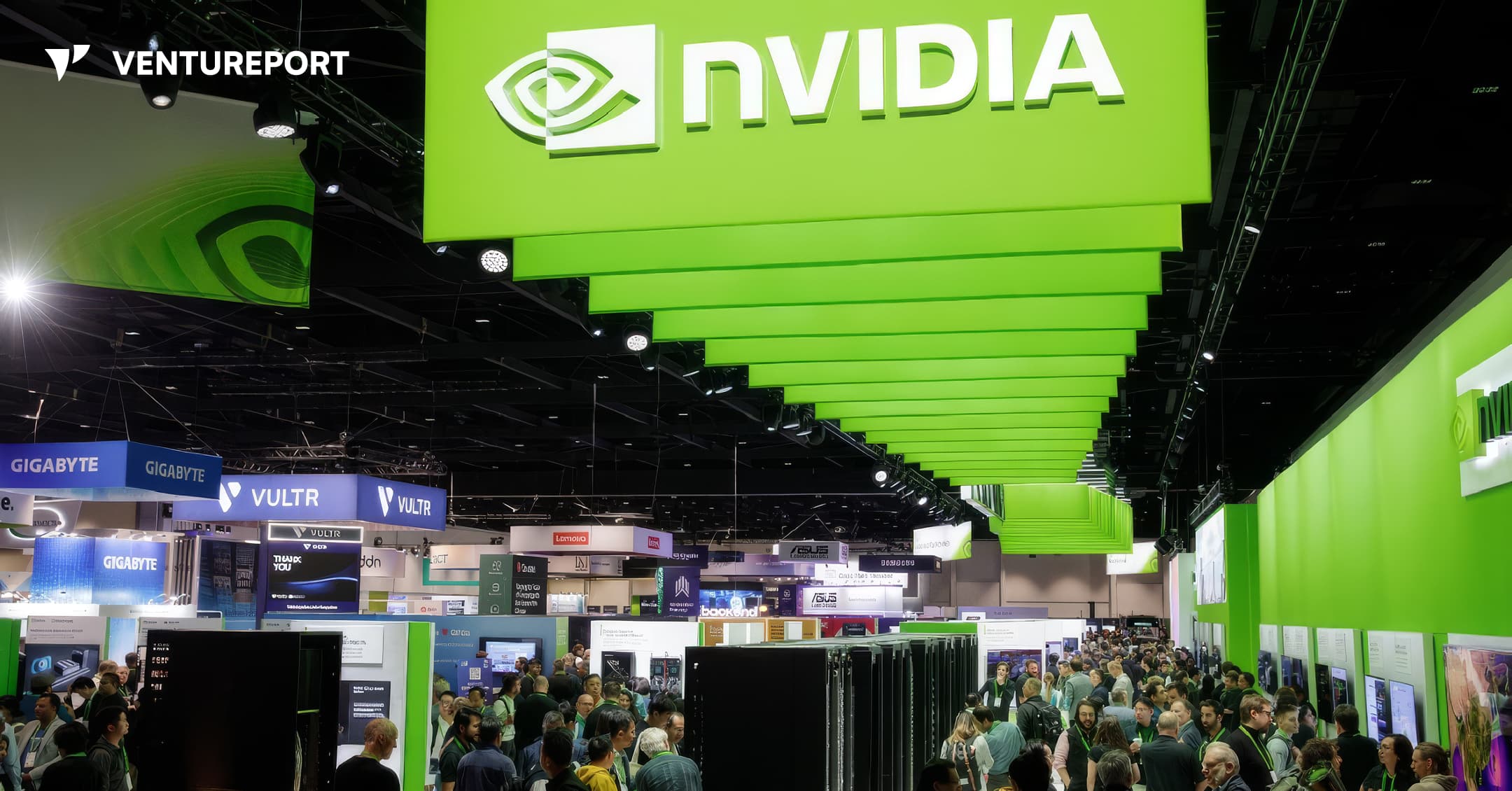
NVIDIA GTC 2026. PHOTO: NVIDIA
At NVIDIA GTC 2026 in Palo Alto, a group of 16 Taiwanese startups used the global AI stage to do more than showcase products—they tested how far their technologies could travel beyond domestic markets. The delegation, led by Startup Island TAIWAN Silicon Valley Hub with support from Taiwan’s National Development Council, reflected a broader shift in the country’s role within the AI ecosystem.
The startups represented a mix of emerging areas including digital twins, robotics, AI agents and healthcare, aligning closely with enterprise AI adoption trends. Some gained formal visibility within NVIDIA’s ecosystem, with companies such as MetAI and Spingence featured in the Inception Program, while six others presented their work in the conference’s poster gallery. These formats allowed them to engage directly with developers, enterprise users and potential partners rather than simply exhibiting technology.
A defining feature of Taiwan’s presence this year was how closely startups operated alongside established hardware companies such as ASUS, AAEON and Compal. This setup reflected a vertically integrated model where infrastructure and applications are developed together, offering a clearer path from product development to deployment. It also underscored Taiwan’s gradual shift from being primarily a hardware supplier to participating more actively across the full AI stack.
Activity around the conference extended well beyond the exhibition floor. A Taiwan Demo Day held during the week drew more than 1,000 registrations and nearly 600 in-person attendees, bringing startups into contact with close to 200 international investors. The event focused on structured introductions and deal flow, positioning startups in front of venture firms and corporate innovation teams looking for AI applications.
Alongside these formal sessions, Taiwan Startup Night provided a more informal but equally strategic setting. With over 100 curated participants, including founders, investors and corporate representatives, the gathering created space for early-stage conversations that could evolve into partnerships or market entry opportunities. These interactions, while less visible than on-stage presentations, are often where initial collaboration takes shape.
Taken together, the events around GTC point to a more coordinated approach to international expansion. Through platforms like Startup Island TAIWAN, the emphasis is not just on visibility but on building continuity—connecting startups with investors, partners and customers across multiple touchpoints in a single week. As AI development increasingly spans chips, systems and applications, Taiwan’s presence at GTC suggests a more integrated role, where the focus is as much on enabling global deployment as it is on developing the technology itself.
Keep Reading
Getting to the Moon was the first chapter. Interlune and Astrolab are working on how to operate there.
Updated
March 6, 2026 1:32 AM

Apollo 17 Astronaut's Snapshot of Taurus-Littrow Valley. PHOTO: UNSPLASH
As plans for a long-term human presence on the Moon pick up pace, the focus is shifting from landing there to working there. It is one thing to reach the surface. It is another to build roads, prepare sites and extract materials in a way that can support real activity.
That is where Interlune and Astrolab come in. Interlune is a space resources company. Astrolab builds planetary rovers. The two are now working together to mount Interlune’s lunar digging system onto Astrolab’s Flexible Logistics and Exploration (FLEX) rover. They have completed a concept study and are planning hardware testing in Houston.
The aim is straightforward: combine a rover that can move reliably across the Moon with equipment that can dig, collect and handle lunar soil. Interlune is focused on harvesting natural resources from the Moon, starting with helium-3. To do that at scale, the system cannot sit in one place. It has to move across the surface, handle dust and operate in harsh conditions. "Reliable, autonomous mobility is crucial to the Interlune harvesting system and broader lunar infrastructure development", said Rob Meyerson, co-founder and CEO of Interlune. "Astrolab's FLEX is the right vehicle for the job".
By fitting its digging and collection hardware onto FLEX, Interlune is working toward a mobile system that can gather large amounts of lunar soil and support future construction needs. Beyond helium-3, the same setup could help prepare base sites, level ground, build protective barriers and lay the groundwork for other structures. In simple terms, it is about turning a rover into a working machine for the Moon.
The partnership also connects to Interlune’s work with Vermeer Corporation to develop equipment for continuous, high-volume digging adapted to lunar conditions. Taken together, the goal is to build systems that can support both commercial and government missions — whether that means resource extraction or preparing land for future bases.
For Astrolab, the collaboration strengthens the role of FLEX as more than just a transport vehicle.
"Working with Interlune further differentiates FLEX as the rover of choice for commercial and government Moon missions", said Jaret Matthews, Astrolab founder and CEO. "Interlune's expertise in developing and testing highly specialized regolith simulant will further enhance FLEX's ability to mitigate dust and operate in extreme environments".
Testing will be centered in Houston, which is becoming an important hub for commercial space development. Astrolab was the first company to lease space at the Texas A&M University Space Institute, currently under construction at NASA’s Johnson Space Center. Interlune operates the Houston-based Interlune Research Lab, where it creates and tests simulated versions of lunar soil.
That detail matters. Moon dust is fine, abrasive and difficult to manage. Before any hardware flies, it needs to prove it can survive and function in those conditions. By testing their systems in realistic soil simulants, the companies can refine how the rover moves and how the digging system performs.
The Houston lab is partially funded by the Texas Space Commission, reflecting the growing role of regional space initiatives in supporting private companies building beyond Earth. Overall, the collaboration is not about grand promises. It is about integrating hardware, running real tests and taking practical steps toward operating on the Moon.