
A closer look at how startups are turning local AI into global opportunity
Updated
March 24, 2026 6:25 PM
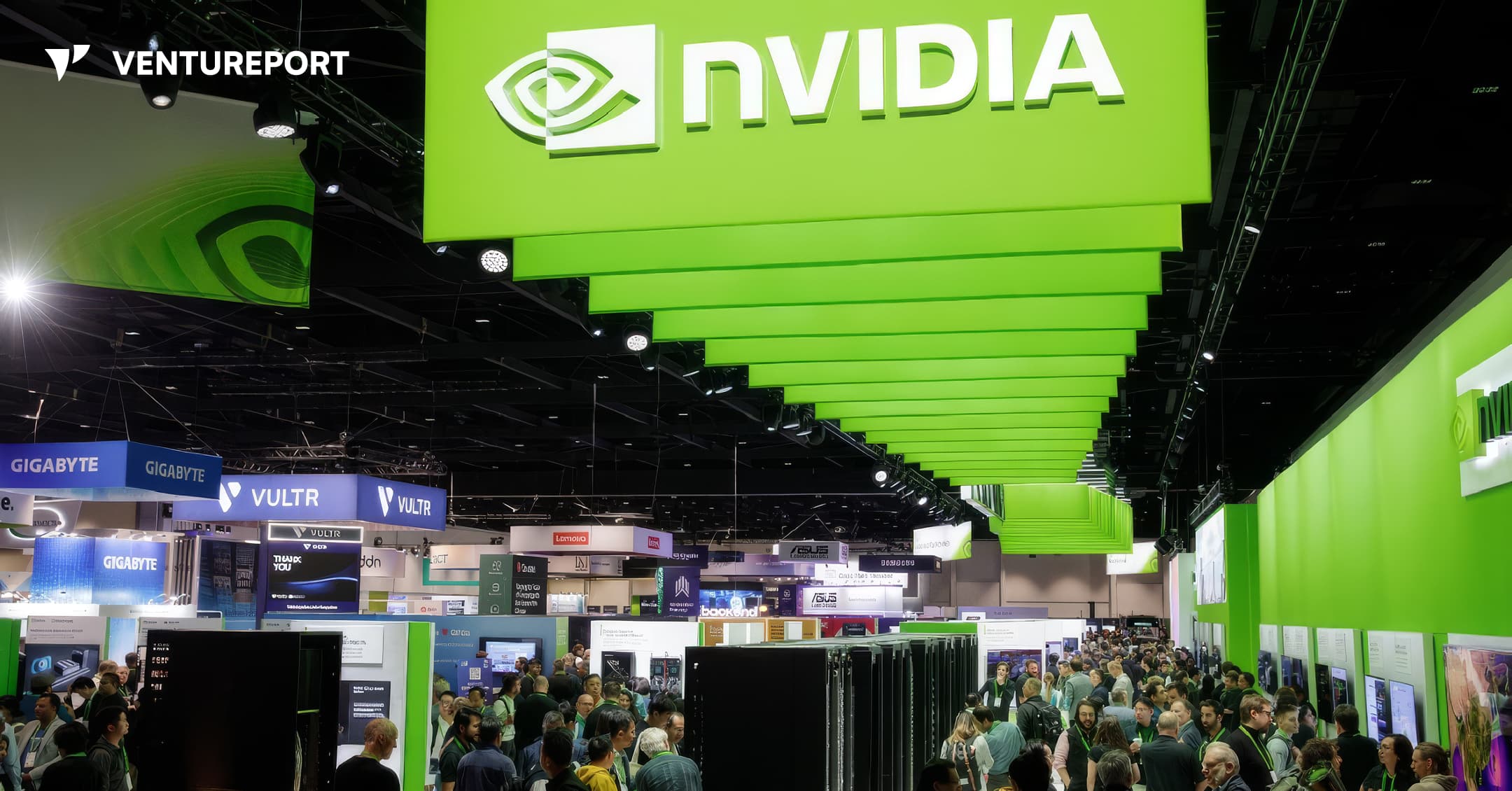
NVIDIA GTC 2026. PHOTO: NVIDIA
At NVIDIA GTC 2026 in Palo Alto, a group of 16 Taiwanese startups used the global AI stage to do more than showcase products—they tested how far their technologies could travel beyond domestic markets. The delegation, led by Startup Island TAIWAN Silicon Valley Hub with support from Taiwan’s National Development Council, reflected a broader shift in the country’s role within the AI ecosystem.
The startups represented a mix of emerging areas including digital twins, robotics, AI agents and healthcare, aligning closely with enterprise AI adoption trends. Some gained formal visibility within NVIDIA’s ecosystem, with companies such as MetAI and Spingence featured in the Inception Program, while six others presented their work in the conference’s poster gallery. These formats allowed them to engage directly with developers, enterprise users and potential partners rather than simply exhibiting technology.
A defining feature of Taiwan’s presence this year was how closely startups operated alongside established hardware companies such as ASUS, AAEON and Compal. This setup reflected a vertically integrated model where infrastructure and applications are developed together, offering a clearer path from product development to deployment. It also underscored Taiwan’s gradual shift from being primarily a hardware supplier to participating more actively across the full AI stack.
Activity around the conference extended well beyond the exhibition floor. A Taiwan Demo Day held during the week drew more than 1,000 registrations and nearly 600 in-person attendees, bringing startups into contact with close to 200 international investors. The event focused on structured introductions and deal flow, positioning startups in front of venture firms and corporate innovation teams looking for AI applications.
Alongside these formal sessions, Taiwan Startup Night provided a more informal but equally strategic setting. With over 100 curated participants, including founders, investors and corporate representatives, the gathering created space for early-stage conversations that could evolve into partnerships or market entry opportunities. These interactions, while less visible than on-stage presentations, are often where initial collaboration takes shape.
Taken together, the events around GTC point to a more coordinated approach to international expansion. Through platforms like Startup Island TAIWAN, the emphasis is not just on visibility but on building continuity—connecting startups with investors, partners and customers across multiple touchpoints in a single week. As AI development increasingly spans chips, systems and applications, Taiwan’s presence at GTC suggests a more integrated role, where the focus is as much on enabling global deployment as it is on developing the technology itself.
Keep Reading
Reimagining biodefense at the intersection of AI, biology and urgency.
Updated
January 8, 2026 6:34 PM

Through computational tools, Valthos analyzes biological data to design adaptive solutions against emerging threats. PHOTO: VALTHOS
Valthos has raised US$30 million in seed funding, led by the OpenAI Startup Fund, Lux Capital and Founders Fund, to advance its mission of building next-generation biodefense systems.
The company’s work comes at a time when biotechnology is evolving at an unprecedented pace. Biotechnology is moving at record speed. These new tools can lead to life-changing medical discoveries, but they also bring the risk of dangerous biological agents being developed faster than ever.
“The issue at the core of biodefense is asymmetry”, said Kathleen McMahon, co-founder of Valthos. “It’s easier to make a pathogen than a cure. We’re building tools to help experts at the frontlines of biodefense move as fast as the threats they face”. The gap Valthos aims to close is between the rapid rise of biological threats and the slower pace of developing cures. Therefore, the company is developing AI systems that can rapidly analyze biological sequences and significantly shorten the time needed to design medical countermeasures.
“In this new world, the only way forward is to be faster. So we set out to build a new tech stack for biodefense”, said Tess van Stekelenburg, co-founder of Valthos. “This software infrastructure strengthens biodefense today and lays the groundwork for the adaptive, precision therapeutics of tomorrow”.
The company was founded by van Stekelenburg, a partner at Lux Capital and McMahon, the former head of Palantir’s Life Sciences division. Together, they’ve built a multidisciplinary team of experts from Palantir, DeepMind, Stanford’s Arc Institute and MIT’s Broad Institute, bringing together deep experience in software engineering, machine learning and biotechnology.
“Technology is moving fast. An industrial ecosystem of builders, companies and solutions further democratizes AI to provide broad resilience, and ensures the U.S. continues to lead as AI increasingly powers everything around us. As AI and biotech rapidly advance, biodefense is one of the new industry verticals that helps maximize the benefits and minimize the risks”, said Jason Kwon, OpenAI’s Chief Strategy Officer. “Valthos is pushing the frontier of protection and defense in one of the most strategic intersections of multiple world-changing technologies, and with the team to do it”.
Looking ahead, Valthos plans to expand its engineering team and scale its software infrastructure for both government and commercial partners — moving closer to its goal of enabling faster, smarter and more adaptive biodefense capabilities.