
A closer look at how startups are turning local AI into global opportunity
Updated
March 24, 2026 6:25 PM
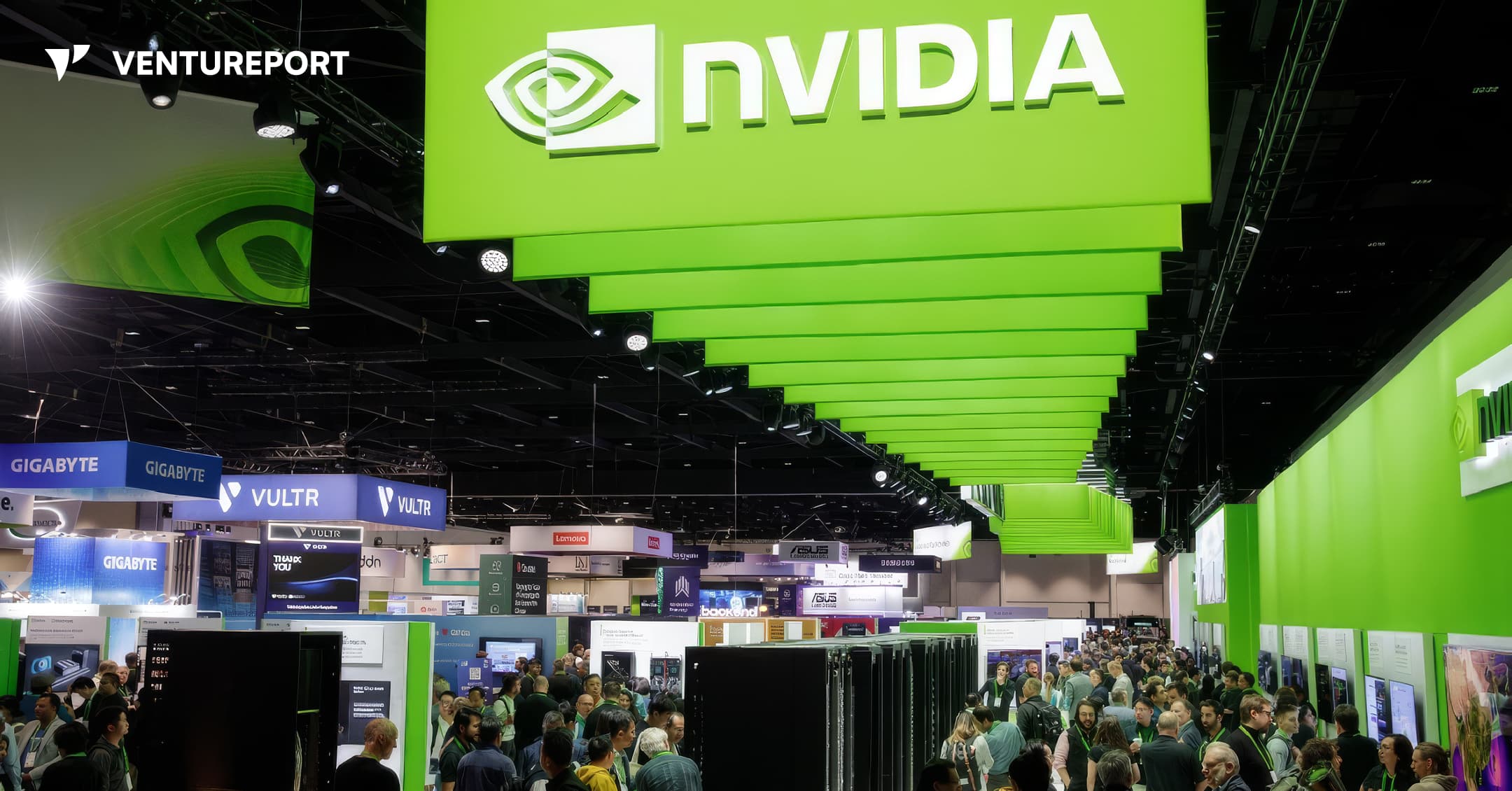
NVIDIA GTC 2026. PHOTO: NVIDIA
At NVIDIA GTC 2026 in Palo Alto, a group of 16 Taiwanese startups used the global AI stage to do more than showcase products—they tested how far their technologies could travel beyond domestic markets. The delegation, led by Startup Island TAIWAN Silicon Valley Hub with support from Taiwan’s National Development Council, reflected a broader shift in the country’s role within the AI ecosystem.
The startups represented a mix of emerging areas including digital twins, robotics, AI agents and healthcare, aligning closely with enterprise AI adoption trends. Some gained formal visibility within NVIDIA’s ecosystem, with companies such as MetAI and Spingence featured in the Inception Program, while six others presented their work in the conference’s poster gallery. These formats allowed them to engage directly with developers, enterprise users and potential partners rather than simply exhibiting technology.
A defining feature of Taiwan’s presence this year was how closely startups operated alongside established hardware companies such as ASUS, AAEON and Compal. This setup reflected a vertically integrated model where infrastructure and applications are developed together, offering a clearer path from product development to deployment. It also underscored Taiwan’s gradual shift from being primarily a hardware supplier to participating more actively across the full AI stack.
Activity around the conference extended well beyond the exhibition floor. A Taiwan Demo Day held during the week drew more than 1,000 registrations and nearly 600 in-person attendees, bringing startups into contact with close to 200 international investors. The event focused on structured introductions and deal flow, positioning startups in front of venture firms and corporate innovation teams looking for AI applications.
Alongside these formal sessions, Taiwan Startup Night provided a more informal but equally strategic setting. With over 100 curated participants, including founders, investors and corporate representatives, the gathering created space for early-stage conversations that could evolve into partnerships or market entry opportunities. These interactions, while less visible than on-stage presentations, are often where initial collaboration takes shape.
Taken together, the events around GTC point to a more coordinated approach to international expansion. Through platforms like Startup Island TAIWAN, the emphasis is not just on visibility but on building continuity—connecting startups with investors, partners and customers across multiple touchpoints in a single week. As AI development increasingly spans chips, systems and applications, Taiwan’s presence at GTC suggests a more integrated role, where the focus is as much on enabling global deployment as it is on developing the technology itself.
Keep Reading
Redefining sensor performance with advanced physical AI and signal processing.
Updated
January 8, 2026 6:32 PM
.jpg)
Robot with human features, equipped with a visual sensor. PHOTO: UNSPLASH
Atomathic, the company once known as Neural Propulsion Systems, is stepping into the spotlight with a bold claim: its new AI platforms can help machines “see the invisible”. With the commercial launch of AIDAR™ and AISIR™, the company says it is opening a new chapter for physical AI, AI sensing and advanced sensor technology across automotive, aviation, defense, robotics and semiconductor manufacturing.
The idea behind these platforms is simple yet ambitious. Machines gather enormous amounts of signal data, yet they still struggle to understand the faint, fast or hidden details that matter most when making decisions. Atomathic says its software closes that gap. By applying AI signal processing directly to raw physical signals, the company aims to help sensors pick up subtle patterns that traditional systems miss, enabling faster reactions and more confident autonomous system performance.
"To realize the promise of physical AI, machines must achieve greater autonomy, precision and real-time decision-making—and Atomathic is defining that future," said Dr. Behrooz Rezvani, Founder and CEO of Atomathic. "We make the invisible visible. Our technology fuses the rigor of mathematics with the power of AI to transform how sensors and machines interact with the world—unlocking capabilities once thought to be theoretical. What can be imagined mathematically can now be realized physically."
This technical shift is powered by Atomathic’s deeper mathematical framework. The core of its approach is a method called hyperdefinition technology, which uses the Atomic Norm and fast computational techniques to map sparse physical signals. In simple terms, it pulls clarity out of chaos. This enables ultra-high-resolution signal visualization in real time—something the company claims has never been achieved at this scale in real-time sensing.
AIDAR and AISIR are already being trialled and integrated across multiple sectors and they’re designed to work with a broad range of hardware. That hardware-agnostic design is poised to matter even more as industries shift toward richer, more detailed sensing. Analysts expect the automotive sensor market to surge in the coming years, with radar imaging, next-gen ADAS systems and high-precision machine perception playing increasingly central roles.
Atomathic’s technology comes from a tight-knit team with deep roots in mathematics, machine intelligence and AI research, drawing talent from institutions such as Caltech, UCLA, Stanford and the Technical University of Munich. After seven years of development, the company is ready to show its progress publicly, starting with demonstrations at CES 2026 in Las Vegas.
Suppose the future of autonomy depends on machines perceiving the world with far greater fidelity. In that case, Atomathic is betting that the next leap forward won’t come from more hardware, but from rethinking the math behind the signal—and redefining what physical AI can do.