
A closer look at how startups are turning local AI into global opportunity
Updated
March 24, 2026 6:25 PM
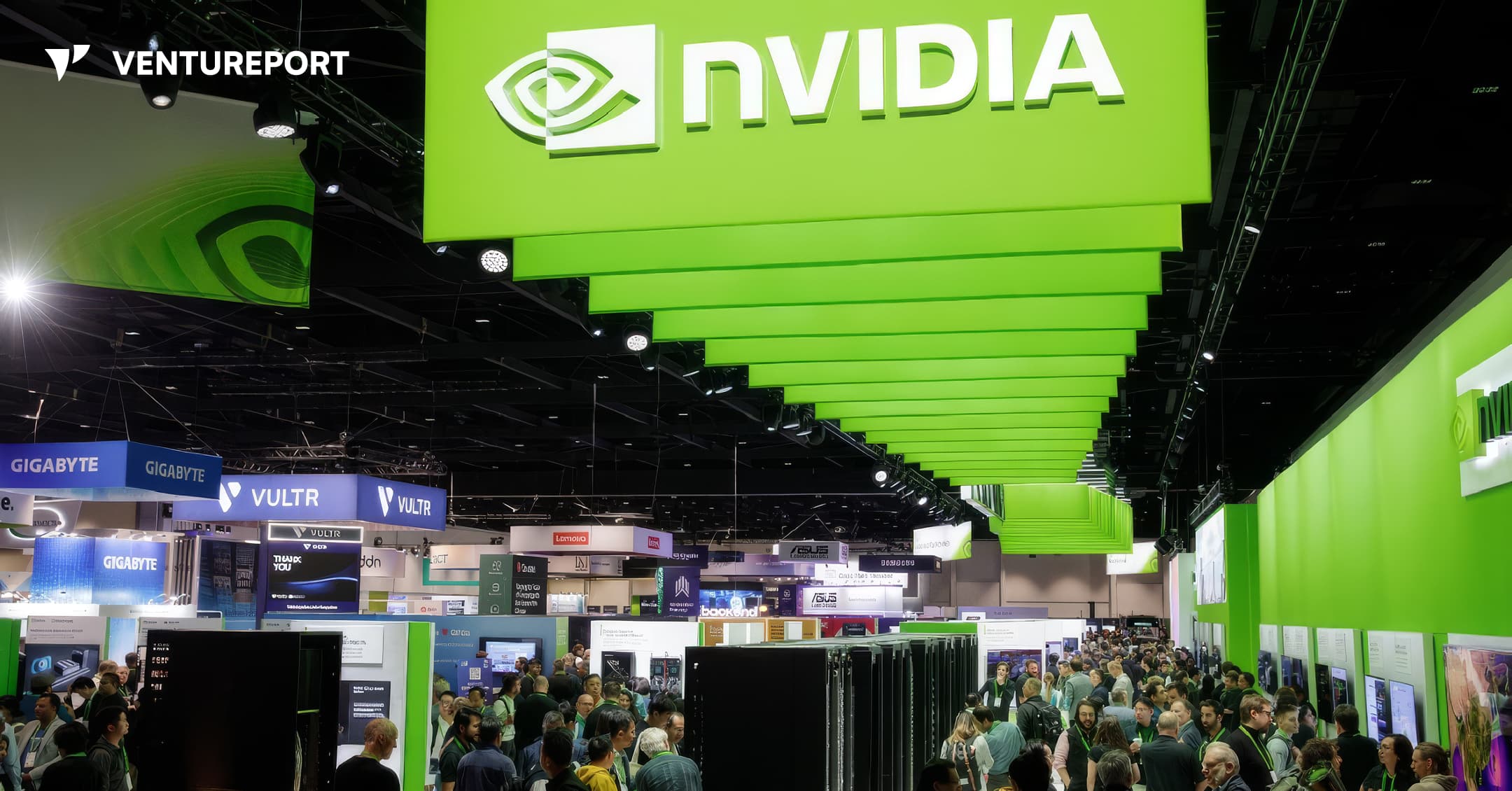
NVIDIA GTC 2026. PHOTO: NVIDIA
At NVIDIA GTC 2026 in Palo Alto, a group of 16 Taiwanese startups used the global AI stage to do more than showcase products—they tested how far their technologies could travel beyond domestic markets. The delegation, led by Startup Island TAIWAN Silicon Valley Hub with support from Taiwan’s National Development Council, reflected a broader shift in the country’s role within the AI ecosystem.
The startups represented a mix of emerging areas including digital twins, robotics, AI agents and healthcare, aligning closely with enterprise AI adoption trends. Some gained formal visibility within NVIDIA’s ecosystem, with companies such as MetAI and Spingence featured in the Inception Program, while six others presented their work in the conference’s poster gallery. These formats allowed them to engage directly with developers, enterprise users and potential partners rather than simply exhibiting technology.
A defining feature of Taiwan’s presence this year was how closely startups operated alongside established hardware companies such as ASUS, AAEON and Compal. This setup reflected a vertically integrated model where infrastructure and applications are developed together, offering a clearer path from product development to deployment. It also underscored Taiwan’s gradual shift from being primarily a hardware supplier to participating more actively across the full AI stack.
Activity around the conference extended well beyond the exhibition floor. A Taiwan Demo Day held during the week drew more than 1,000 registrations and nearly 600 in-person attendees, bringing startups into contact with close to 200 international investors. The event focused on structured introductions and deal flow, positioning startups in front of venture firms and corporate innovation teams looking for AI applications.
Alongside these formal sessions, Taiwan Startup Night provided a more informal but equally strategic setting. With over 100 curated participants, including founders, investors and corporate representatives, the gathering created space for early-stage conversations that could evolve into partnerships or market entry opportunities. These interactions, while less visible than on-stage presentations, are often where initial collaboration takes shape.
Taken together, the events around GTC point to a more coordinated approach to international expansion. Through platforms like Startup Island TAIWAN, the emphasis is not just on visibility but on building continuity—connecting startups with investors, partners and customers across multiple touchpoints in a single week. As AI development increasingly spans chips, systems and applications, Taiwan’s presence at GTC suggests a more integrated role, where the focus is as much on enabling global deployment as it is on developing the technology itself.
Keep Reading
A step forward that could influence how smart contracts are designed and verified.
Updated
January 8, 2026 6:32 PM
ChainGPT's robot mascot. IMAGE: CHAINGPT
A new collaboration between ChainGPT, an AI company specialising in blockchain development tools and Secret Network, a privacy-focused blockchain platform, is redefining how developers can safely build smart contracts with artificial intelligence. Together, they’ve achieved a major industry first: an AI model trained exclusively to write and audit Solidity code is now running inside a Trusted Execution Environment (TEE). For the blockchain ecosystem, this marks a turning point in how AI, privacy and on-chain development can work together.
For years, smart-contract developers have faced a trade-off. AI assistants could speed up coding and security reviews, but only if developers uploaded their most sensitive source code to external servers. That meant exposing intellectual property, confidential logic and even potential vulnerabilities. In an industry where trust is everything, this risk held many teams back from using AI at all.
ChainGPT’s Solidity-LLM aims to solve that problem. It is a specialised large language model trained on over 650,000 curated Solidity contracts, giving it a deep understanding of how real smart contracts are structured, optimised and secured. And now, by running inside SecretVM, the Confidential Virtual Machine that powers Secret Network’s encrypted compute layer, the model can assist developers without ever revealing their code to outside parties.
“Confidential computing is no longer an abstract concept,” said Luke Bowman, COO of the Secret Network Foundation. “We've shown that you can run a complex AI model, purpose-built for Solidity, inside a fully encrypted environment and that every inference can be verified on-chain. This is a real milestone for both privacy and decentralised infrastructure”.
SecretVM makes this workflow possible by using hardware-backed encryption to protect all data while computations take place. Developers don’t interact with the underlying hardware or cryptography. Instead, they simply work inside a private, sealed environment where their code stays invisible to everyone except them—even node operators. For the first time, developers can generate, test and analyse smart contracts with AI while keeping every detail confidential.
This shift opens new possibilities for the broader blockchain community. Developers gain a private coding partner that can streamline contract logic or catch vulnerabilities without risking leaks. Auditors can rely on AI-assisted analysis while keeping sensitive audit material protected. Enterprises working in finance, healthcare or governance finally have a path to adopt AI-driven blockchain automation without raising compliance concerns. Even decentralised organisations can run smart-contract agents that make decisions privately, without exposing internal logic on a public chain.
The system also supports secure model training and fine-tuning on encrypted datasets. This enables collaborative AI development without forcing anyone to share raw data—a meaningful step toward decentralised and privacy-preserving AI at scale.
By combining specialised AI with confidential computing, ChainGPT and Secret Network are shifting the trust model of on-chain development. Instead of relying on centralised cloud AI services, developers now have a verifiable, encrypted environment where they keep full control of their code, their data and their workflow. It’s a practical solution to one of blockchain’s biggest challenges: using powerful AI tools without sacrificing privacy.
As the technology evolves, the roadmap includes confidential model fine-tuning, multi-agent AI systems and cross-chain use cases. But the core advancement is already clear: developers now have a way to use AI for smart contract development that is fast, private and verifiable—without compromising the security standards that decentralised systems rely on.