
A closer look at how startups are turning local AI into global opportunity
Updated
March 24, 2026 6:25 PM
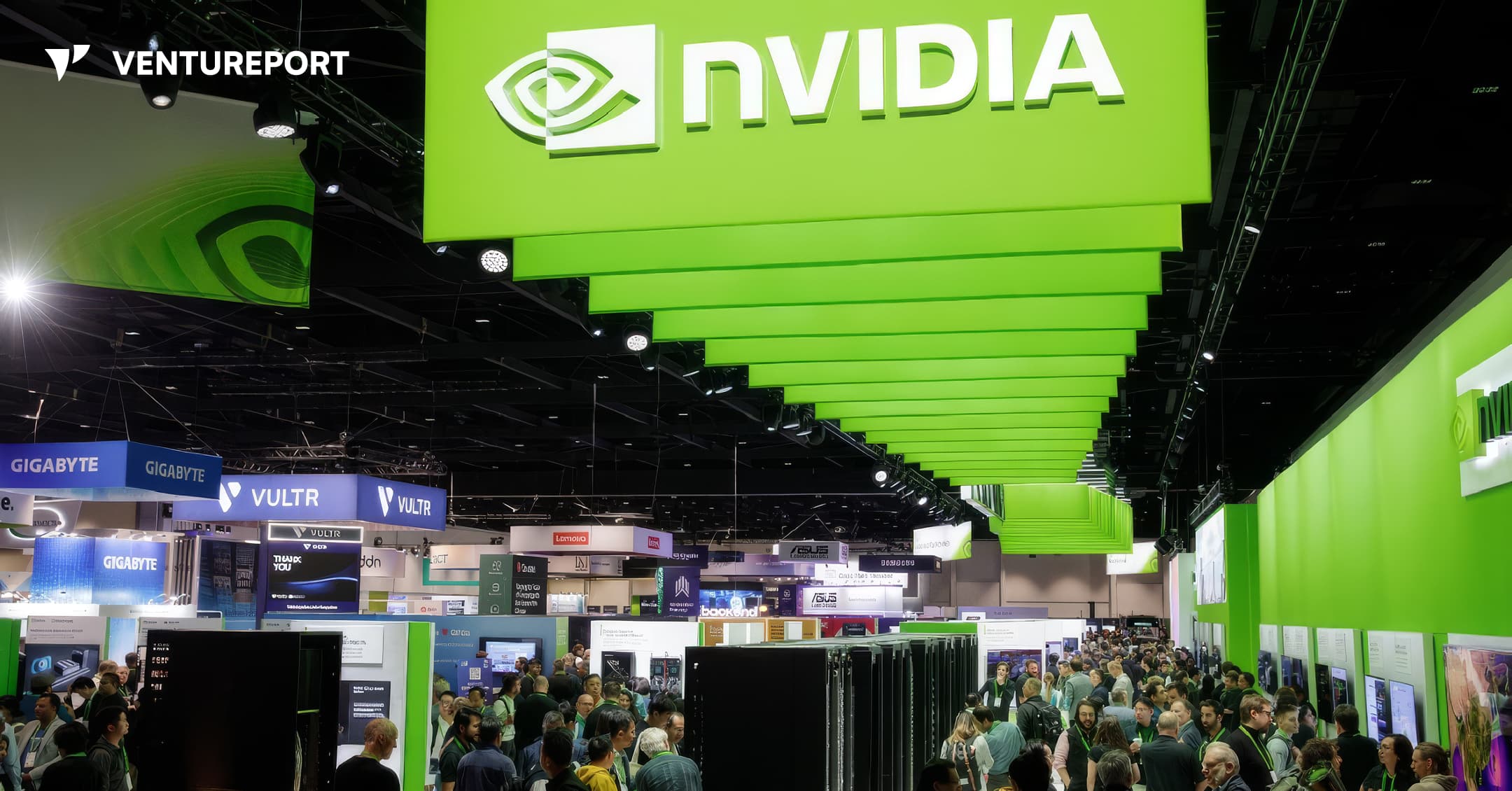
NVIDIA GTC 2026. PHOTO: NVIDIA
At NVIDIA GTC 2026 in Palo Alto, a group of 16 Taiwanese startups used the global AI stage to do more than showcase products—they tested how far their technologies could travel beyond domestic markets. The delegation, led by Startup Island TAIWAN Silicon Valley Hub with support from Taiwan’s National Development Council, reflected a broader shift in the country’s role within the AI ecosystem.
The startups represented a mix of emerging areas including digital twins, robotics, AI agents and healthcare, aligning closely with enterprise AI adoption trends. Some gained formal visibility within NVIDIA’s ecosystem, with companies such as MetAI and Spingence featured in the Inception Program, while six others presented their work in the conference’s poster gallery. These formats allowed them to engage directly with developers, enterprise users and potential partners rather than simply exhibiting technology.
A defining feature of Taiwan’s presence this year was how closely startups operated alongside established hardware companies such as ASUS, AAEON and Compal. This setup reflected a vertically integrated model where infrastructure and applications are developed together, offering a clearer path from product development to deployment. It also underscored Taiwan’s gradual shift from being primarily a hardware supplier to participating more actively across the full AI stack.
Activity around the conference extended well beyond the exhibition floor. A Taiwan Demo Day held during the week drew more than 1,000 registrations and nearly 600 in-person attendees, bringing startups into contact with close to 200 international investors. The event focused on structured introductions and deal flow, positioning startups in front of venture firms and corporate innovation teams looking for AI applications.
Alongside these formal sessions, Taiwan Startup Night provided a more informal but equally strategic setting. With over 100 curated participants, including founders, investors and corporate representatives, the gathering created space for early-stage conversations that could evolve into partnerships or market entry opportunities. These interactions, while less visible than on-stage presentations, are often where initial collaboration takes shape.
Taken together, the events around GTC point to a more coordinated approach to international expansion. Through platforms like Startup Island TAIWAN, the emphasis is not just on visibility but on building continuity—connecting startups with investors, partners and customers across multiple touchpoints in a single week. As AI development increasingly spans chips, systems and applications, Taiwan’s presence at GTC suggests a more integrated role, where the focus is as much on enabling global deployment as it is on developing the technology itself.
Keep Reading
A closer look at how reading, conversation, and AI are being combined
Updated
February 7, 2026 2:18 PM

Assorted plush character toys piled inside a glass claw machine. PHOTO: ADOBE STOCK
In the past, “educational toys” usually meant flashcards, prerecorded stories or apps that asked children to tap a screen. ChooChoo takes a different approach. It is designed not to instruct children at them, but to talk with them.
ChooChoo is an AI-powered interactive reading companion built for children aged three to six. Instead of playing stories passively, it engages kids in conversation while reading. It asks questions, reacts to answers, introduces new words in context and adjusts the story flow based on how the child responds. The goal is not entertainment alone, but language development through dialogue.
That idea is rooted in research, not novelty. ChooChoo is inspired by dialogic reading methods from Yale’s early childhood language development work, which show that children learn language faster when stories become two-way conversations rather than one-way narration. Used consistently, this approach has been shown to improve vocabulary, comprehension and confidence within weeks.
The project was created by Dr. Diana Zhu, who holds a PhD from Yale and focused her work on how children acquire language. Her aim with ChooChoo was to turn academic insight into something practical and warm enough to live in a child’s room. The result is a device that listens, responds and adapts instead of simply playing content on command.
What makes this possible is not just AI, but where that AI runs.
Unlike many smart toys that rely heavily on the cloud, ChooChoo is built on RiseLink’s edge AI platform. That means much of the intelligence happens directly on the device itself rather than being sent back and forth to remote servers. This design choice has three major implications.
First, it reduces delay. Conversations feel natural because the toy can respond almost instantly. Second, it lowers power consumption, allowing the device to stay “always on” without draining the battery quickly. Third, it improves privacy. Sensitive interactions are processed locally instead of being continuously streamed online.
RiseLink’s hardware, including its ultra-low-power AI system-on-chip designs, is already used at large scale in consumer electronics. The company ships hundreds of millions of connected chips every year and works with global brands like LG, Samsung, Midea and Hisense. In ChooChoo’s case, that same industrial-grade reliability is being applied to a child’s learning environment.
The result is a toy that behaves less like a gadget and more like a conversational partner. It engages children in back-and-forth discussion during stories, introduces new vocabulary in natural context, pays attention to comprehension and emotional language and adjusts its pace and tone based on each child’s interests and progress. Parents can also view progress through an optional app that shows what words their child has learned and how the system is adjusting over time.
What matters here is not that ChooChoo is “smart,” but that it reflects a shift in how technology enters early education. Instead of replacing teachers or parents, tools like this are designed to support human interaction by modeling it. The emphasis is on listening, responding and encouraging curiosity rather than testing or drilling.
That same philosophy is starting to shape the future of companion robots more broadly. As edge AI improves and hardware becomes smaller and more energy efficient, we are likely to see more devices that live alongside people instead of in front of them. Not just toys, but helpers, tutors and assistants that operate quietly in the background, responding when needed and staying out of the way when not.
In that sense, ChooChoo is less about novelty and more about direction. It shows what happens when AI is designed not for spectacle, but for presence. Not for control, but for conversation.
If companion robots become part of daily life in the coming years, their success may depend less on how powerful they are and more on how well they understand when to speak, when to listen and how to grow with the people who use them.