
A closer look at how startups are turning local AI into global opportunity
Updated
March 24, 2026 6:25 PM
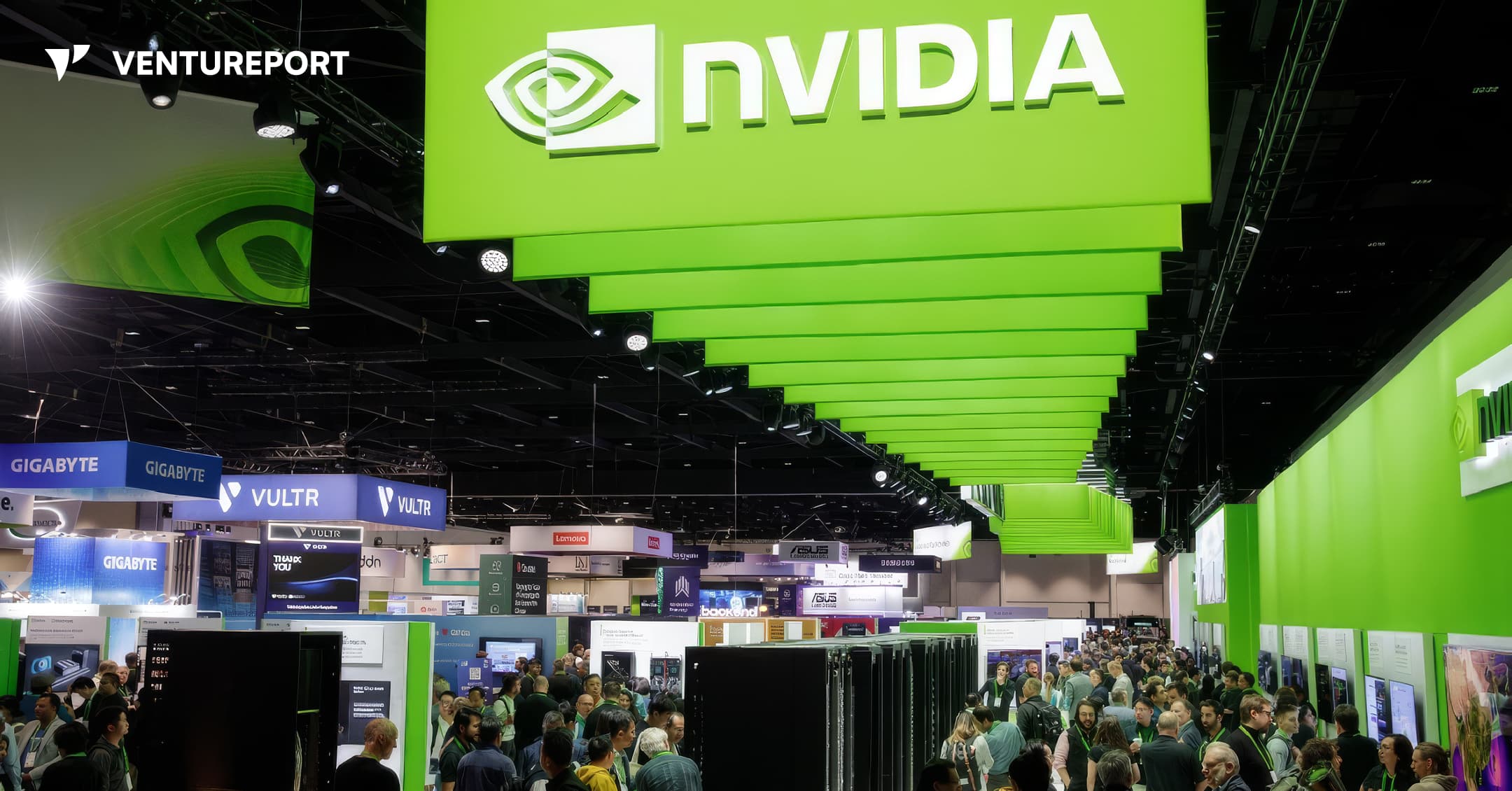
NVIDIA GTC 2026. PHOTO: NVIDIA
At NVIDIA GTC 2026 in Palo Alto, a group of 16 Taiwanese startups used the global AI stage to do more than showcase products—they tested how far their technologies could travel beyond domestic markets. The delegation, led by Startup Island TAIWAN Silicon Valley Hub with support from Taiwan’s National Development Council, reflected a broader shift in the country’s role within the AI ecosystem.
The startups represented a mix of emerging areas including digital twins, robotics, AI agents and healthcare, aligning closely with enterprise AI adoption trends. Some gained formal visibility within NVIDIA’s ecosystem, with companies such as MetAI and Spingence featured in the Inception Program, while six others presented their work in the conference’s poster gallery. These formats allowed them to engage directly with developers, enterprise users and potential partners rather than simply exhibiting technology.
A defining feature of Taiwan’s presence this year was how closely startups operated alongside established hardware companies such as ASUS, AAEON and Compal. This setup reflected a vertically integrated model where infrastructure and applications are developed together, offering a clearer path from product development to deployment. It also underscored Taiwan’s gradual shift from being primarily a hardware supplier to participating more actively across the full AI stack.
Activity around the conference extended well beyond the exhibition floor. A Taiwan Demo Day held during the week drew more than 1,000 registrations and nearly 600 in-person attendees, bringing startups into contact with close to 200 international investors. The event focused on structured introductions and deal flow, positioning startups in front of venture firms and corporate innovation teams looking for AI applications.
Alongside these formal sessions, Taiwan Startup Night provided a more informal but equally strategic setting. With over 100 curated participants, including founders, investors and corporate representatives, the gathering created space for early-stage conversations that could evolve into partnerships or market entry opportunities. These interactions, while less visible than on-stage presentations, are often where initial collaboration takes shape.
Taken together, the events around GTC point to a more coordinated approach to international expansion. Through platforms like Startup Island TAIWAN, the emphasis is not just on visibility but on building continuity—connecting startups with investors, partners and customers across multiple touchpoints in a single week. As AI development increasingly spans chips, systems and applications, Taiwan’s presence at GTC suggests a more integrated role, where the focus is as much on enabling global deployment as it is on developing the technology itself.
Keep Reading
A turbine-inspired generator shows how overlooked industrial airflow could quietly become a new source of usable power
Updated
February 12, 2026 4:43 PM

Campus building of Chung-Ang University. PHOTO: CHUNG-ANG UNIVERSITY
Compressed air is used across factories, data centers and industrial plants to move materials, cool systems and power tools. Once it has done that job, the air is usually released — and its remaining energy goes unused.
That everyday waste is what caught the attention of a research team at Chung-Ang University in South Korea. They are investigating how this overlooked airflow can be harnessed to generate electricity instead of disappearing into the background.
Most of the world’s power today comes from systems like turbines, which turn moving fluids into energy or solar cells, which convert sunlight into electricity. The Chung-Ang team has built a device that uses compressed air to generate electricity without relying on traditional blades or sunlight.
At the center of the work is a simple question: what happens when high-pressure air spins through a specially shaped device at very high speed? The answer lies in the air itself. The researchers found that tiny particles naturally present in the air carry an electric charge. When that air moves rapidly across certain surfaces, it can transfer charge without physical contact. This creates electricity through a process known as the “particulate static effect.”
To use that effect, the team designed a generator based on a Tesla turbine. Unlike conventional turbines with blades, a Tesla turbine uses smooth rotating disks and relies on the viscosity of air to create motion. Compressed air enters the device, spins the disks at high speed and triggers charge buildup on specially layered surfaces inside.
What makes this approach different is that the system does not depend on friction between parts rubbing together. Instead, the charge comes from particles in the air interacting with the surfaces as they move past. This reduces wear and allows the generator to operate at very high speeds. And those speeds translate into real output.
In lab tests, the device produced strong electrical power. The researchers also showed that this energy could be used in practical ways. It ran small electronic devices, helped pull moisture from the air and removed dust particles from its surroundings.
The problem this research is addressing is straightforward.
Compressed air is already everywhere in industry, but its leftover energy is usually ignored. This system is designed to capture part of that unused motion and convert it into electricity without adding complex equipment or major safety risks.
Earlier methods of harvesting static electricity from particles showed promise, but they came with dangers. Uncontrolled discharge could cause sparks or even ignition. By using a sealed, turbine-based structure, the Chung-Ang University team offers a safer and more stable way to apply the same physical effect.
As a result, the technology is still in the research stage, but its direction is easy to see. It points toward a future where energy is not only generated in power plants or stored in batteries, but also recovered from everyday industrial processes.