
A closer look at how startups are turning local AI into global opportunity
Updated
March 24, 2026 6:25 PM
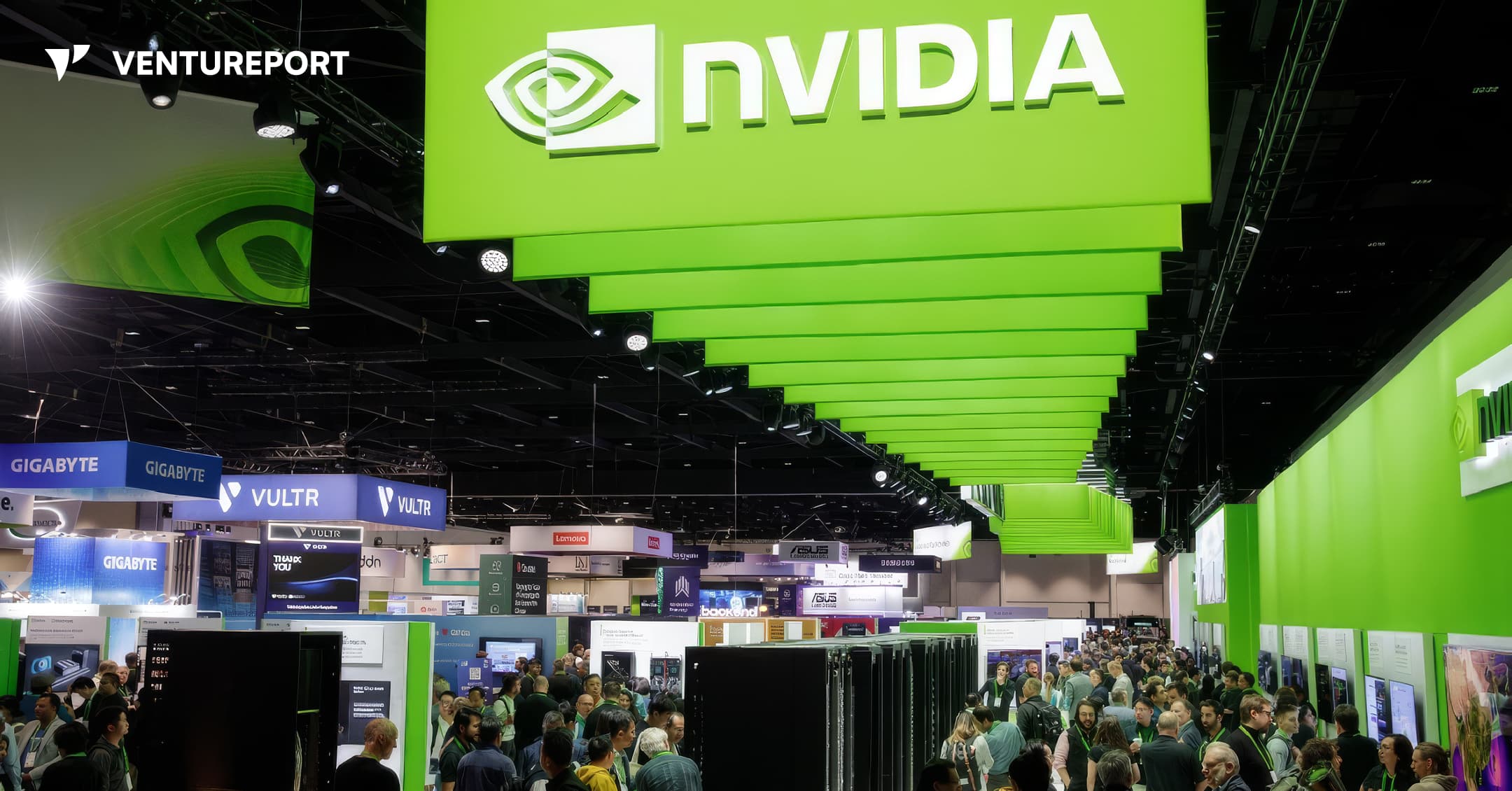
NVIDIA GTC 2026. PHOTO: NVIDIA
At NVIDIA GTC 2026 in Palo Alto, a group of 16 Taiwanese startups used the global AI stage to do more than showcase products—they tested how far their technologies could travel beyond domestic markets. The delegation, led by Startup Island TAIWAN Silicon Valley Hub with support from Taiwan’s National Development Council, reflected a broader shift in the country’s role within the AI ecosystem.
The startups represented a mix of emerging areas including digital twins, robotics, AI agents and healthcare, aligning closely with enterprise AI adoption trends. Some gained formal visibility within NVIDIA’s ecosystem, with companies such as MetAI and Spingence featured in the Inception Program, while six others presented their work in the conference’s poster gallery. These formats allowed them to engage directly with developers, enterprise users and potential partners rather than simply exhibiting technology.
A defining feature of Taiwan’s presence this year was how closely startups operated alongside established hardware companies such as ASUS, AAEON and Compal. This setup reflected a vertically integrated model where infrastructure and applications are developed together, offering a clearer path from product development to deployment. It also underscored Taiwan’s gradual shift from being primarily a hardware supplier to participating more actively across the full AI stack.
Activity around the conference extended well beyond the exhibition floor. A Taiwan Demo Day held during the week drew more than 1,000 registrations and nearly 600 in-person attendees, bringing startups into contact with close to 200 international investors. The event focused on structured introductions and deal flow, positioning startups in front of venture firms and corporate innovation teams looking for AI applications.
Alongside these formal sessions, Taiwan Startup Night provided a more informal but equally strategic setting. With over 100 curated participants, including founders, investors and corporate representatives, the gathering created space for early-stage conversations that could evolve into partnerships or market entry opportunities. These interactions, while less visible than on-stage presentations, are often where initial collaboration takes shape.
Taken together, the events around GTC point to a more coordinated approach to international expansion. Through platforms like Startup Island TAIWAN, the emphasis is not just on visibility but on building continuity—connecting startups with investors, partners and customers across multiple touchpoints in a single week. As AI development increasingly spans chips, systems and applications, Taiwan’s presence at GTC suggests a more integrated role, where the focus is as much on enabling global deployment as it is on developing the technology itself.
Keep Reading
AutoFlight’s five-tonne Matrix bets on heavy payloads and regional range to prove the case for electric flight
Updated
March 17, 2026 1:02 AM

A multiroter flying through a blue sky. PHOTO: UNSPLASH
The nascent industry of electric vertical takeoff and landing (eVTOL) aircraft has long been defined by a specific set of limitations: small payloads, short distances and a primary focus on urban air taxis. AutoFlight, a Chinese aviation startup, recently moved to shift that narrative by unveiling "Matrix," a five-tonne aircraft that represents a significant leap in scale for electric aviation.
In a demonstration at the company’s flight test center, the Matrix completed a full transition flight—the technically demanding process of switching from vertical lift-off to forward wing-born flight and back to a vertical landing. While small-scale drones and four-seat prototypes have become increasingly common, this marks the first time an electric aircraft of this mass has successfully executed the maneuver.
The sheer scale of the Matrix places it in a different category than the "flying cars" currently being tested for hops over city traffic. With a maximum takeoff weight of 5,700 kilograms (roughly 12,500 pounds), the aircraft has the footprint of a traditional regional turboprop, boasting a 20-meter wingspan. Its size allows for configurations that the industry has previously struggled to accommodate, including a ten-seat business class cabin or a cargo hold capable of carrying 1,500 kilograms of freight.
This increased capacity is more than just a feat of engineering; it is a direct attempt to solve the financial hurdles that have plagued the sector, specifically addressing the skepticism industry analysts have often expressed regarding the economic viability of smaller eVTOLs. These critics frequently cite the high cost of operation relative to the low passenger count as a barrier to entry.
AutoFlight’s founder and CEO, Tian Yu, suggested the Matrix is a direct response to those concerns. “Matrix is not just a rising star in the aviation industry, but also an ambitious disruptor,” Yu stated. “It will eliminate the industry perception that eVTOL = short-haul, low payload and reshape the rules of eVTOL routes. Through economies of scale, it significantly reduces transportation costs per seat-kilometer and per ton-kilometer, thus revolutionizing costs and driving profitability.”
To achieve this, the aircraft utilizes a "lift and cruise" configuration. In simple terms, this means the plane uses one set of dedicated rotors to lift it off the ground like a helicopter, but once it reaches a certain speed, it uses a separate propeller to fly forward like a traditional airplane, allowing the wings to provide the lift. This design is paired with a distinctive "triplane" layout—three layers of wings—and a six-arm structure to keep the massive frame stable.
These features allow the Matrix to serve a variety of roles. For the "low-altitude economy" being promoted by Chinese regulators, the startup is offering a pure electric model with a 250-kilometer range for regional hops, alongside a hybrid-electric version capable of traveling 1,500 kilometers. The latter version, equipped with a forward-opening door to fit standard air freight containers, targets a logistics sector still heavily reliant on carbon-intensive trucking.
However, the road to commercial flight remains a steep one. Despite the successful flight demonstration, AutoFlight faces the same formidable headwinds as its competitors, such as a complex global regulatory landscape and the rigorous demands of airworthiness certification. While the Matrix validates the company's high-power propulsion, moving from a test-center demonstration to a commercial fleet will require years of safety data.
Nevertheless, the debut of the Matrix signals a maturation of the startup’s ambitions. Having previously developed smaller models for autonomous logistics and urban mobility, AutoFlight is now betting that the future of electric flight isn't just in avoiding gridlock, but in hauling the weight of regional commerce. Whether the infrastructure and regulators are ready to accommodate a five-tonne electric disruptor remains the industry's unanswered question.