
A closer look at how startups are turning local AI into global opportunity
Updated
March 24, 2026 6:25 PM
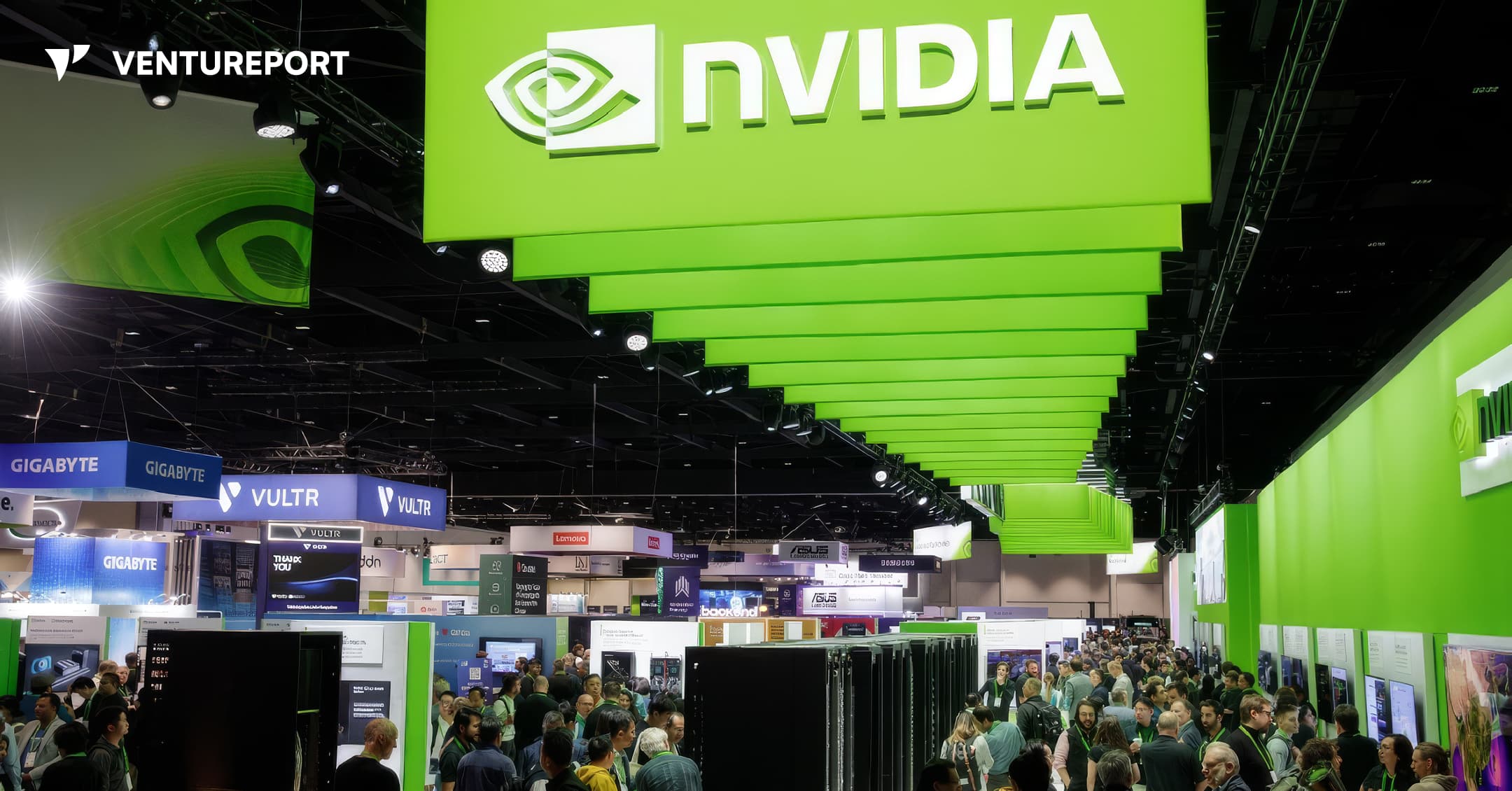
NVIDIA GTC 2026. PHOTO: NVIDIA
At NVIDIA GTC 2026 in Palo Alto, a group of 16 Taiwanese startups used the global AI stage to do more than showcase products—they tested how far their technologies could travel beyond domestic markets. The delegation, led by Startup Island TAIWAN Silicon Valley Hub with support from Taiwan’s National Development Council, reflected a broader shift in the country’s role within the AI ecosystem.
The startups represented a mix of emerging areas including digital twins, robotics, AI agents and healthcare, aligning closely with enterprise AI adoption trends. Some gained formal visibility within NVIDIA’s ecosystem, with companies such as MetAI and Spingence featured in the Inception Program, while six others presented their work in the conference’s poster gallery. These formats allowed them to engage directly with developers, enterprise users and potential partners rather than simply exhibiting technology.
A defining feature of Taiwan’s presence this year was how closely startups operated alongside established hardware companies such as ASUS, AAEON and Compal. This setup reflected a vertically integrated model where infrastructure and applications are developed together, offering a clearer path from product development to deployment. It also underscored Taiwan’s gradual shift from being primarily a hardware supplier to participating more actively across the full AI stack.
Activity around the conference extended well beyond the exhibition floor. A Taiwan Demo Day held during the week drew more than 1,000 registrations and nearly 600 in-person attendees, bringing startups into contact with close to 200 international investors. The event focused on structured introductions and deal flow, positioning startups in front of venture firms and corporate innovation teams looking for AI applications.
Alongside these formal sessions, Taiwan Startup Night provided a more informal but equally strategic setting. With over 100 curated participants, including founders, investors and corporate representatives, the gathering created space for early-stage conversations that could evolve into partnerships or market entry opportunities. These interactions, while less visible than on-stage presentations, are often where initial collaboration takes shape.
Taken together, the events around GTC point to a more coordinated approach to international expansion. Through platforms like Startup Island TAIWAN, the emphasis is not just on visibility but on building continuity—connecting startups with investors, partners and customers across multiple touchpoints in a single week. As AI development increasingly spans chips, systems and applications, Taiwan’s presence at GTC suggests a more integrated role, where the focus is as much on enabling global deployment as it is on developing the technology itself.
Keep Reading
Quantara AI launches a continuous platform designed to estimate the financial impact of cyber risk as companies move beyond periodic assessments
Updated
March 17, 2026 1:02 AM

A person tightrope walking between two cliffs. PHOTO: UNSPLASH
Cyber risk is increasingly treated as a financial issue. Boards want to know how much a cyber incident could cost the company, how it could affect earnings, and whether current security spending is justified.
Yet many organizations still measure cyber risk through periodic reviews. These assessments are often conducted once or twice a year, supported by consultants and spreadsheet models. By the time the report reaches senior leadership, the company’s systems may have changed and new threats may have emerged. The way risk is measured does not always match how quickly it evolves.
This gap is where Quantara AI is positioning its new platform. Quantara AI, a Boise-based cybersecurity startup, has introduced what it describes as the industry’s first persistent AI-powered cyber risk solution. The system is designed to run continuously rather than rely on occasional assessments.
The company’s core argument is straightforward: not every security weakness carries the same financial consequence. Instead of ranking issues only by technical severity, the platform analyzes active threats, identifies which company systems are exposed, and estimates how much money a successful attack could cost. It uses statistical models, including Value at Risk (VaR), to calculate potential losses. It also estimates how specific security improvements could reduce that projected loss.
The timing aligns with a broader market shift. International Data Corporation (IDC) projects that by 2028, 40% of enterprises will adopt AI-based cyber risk quantification platforms. These tools convert security data into financial estimates that can guide budgeting and investment decisions. The forecast reflects growing pressure on security leaders to present risk in terms that boards and regulators understand.
Traditional compliance and risk management systems often focus on meeting regulatory standards. Vulnerability management programs typically score weaknesses based on technical characteristics. Consultant-led risk studies provide detailed analysis, but they are usually performed at set intervals. In fast-changing threat environments, that model can leave decision-makers working with outdated information.
Quantara’s platform attempts to replace that periodic process with continuous measurement. It brings together threat data, internal system information and financial modeling in one system. The goal is to show, at any given time, which specific weaknesses could lead to the largest financial losses.
Cyber risk quantification as a concept is not new. What is changing is the expectation that these calculations be updated regularly and tied directly to financial decision-making. As cyber incidents carry clearer monetary consequences, companies are looking for ways to measure exposure with greater precision.
The broader question is whether enterprises will shift fully toward continuous, AI-driven risk analysis or continue relying on periodic external assessments. What is clear is that cybersecurity discussions are moving closer to financial reporting — and tools that estimate potential loss in dollar terms are becoming central to that shift.