
What Overstory’s vegetation intelligence reveals about wildfire and outage risk.
Updated
January 15, 2026 8:03 PM

Aerial photograph of a green field. PHOTO: UNSPLASH
Managing vegetation around power lines has long been one of the biggest operational challenges for utilities. A single tree growing too close to electrical infrastructure can trigger outages or, in the worst cases, spark fires. With vast service territories, shifting weather patterns and limited visibility into changing landscape conditions, utilities often rely on inspections and broad wildfire-risk maps that provide only partial insight into where the most serious threats actually are.
Overstory, a company specializing in AI-powered vegetation intelligence, addresses this visibility gap with a platform that uses high-resolution satellite imagery and machine-learning models to interpret vegetation conditions in detail.Instead of assessing risk by region, terrain type or outdated maps, the system evaluates conditions tree by tree. This helps utilities identify precisely where hazards exist and which areas demand immediate intervention—critical in regions where small variations in vegetation density, fuel type or moisture levels can influence how quickly a spark might spread.
At the core of this technology is Overstory’s proprietary Fuel Detection Model, designed to identify vegetation most likely to ignite or accelerate wildfire spread. Unlike broad, publicly available fire-risk maps, the model analyzes the specific fuel conditions surrounding electrical infrastructure. By pinpointing exact locations where certain fuel types or densities create elevated risk, utilities can plan targeted wildfire-mitigation work rather than relying on sweeping, resource-heavy maintenance cycles.
This data-driven approach is reshaping how utilities structure vegetation-management programs. Having visibility into where risks are concentrated—and which trees or areas pose the highest threat—allows teams to prioritize work based on measurable evidence. For many utilities, this shift supports more efficient crew deployment, reduces unnecessary trims and builds clearer justification for preventive action. It also offers a path to strengthening grid reliability without expanding operational budgets.
Overstory’s recent US$43 million Series B funding round, led by Blume Equity with support from Energy Impact Partners and existing investors, reflects growing interest in AI tools that translate environmental data into actionable wildfire-prevention intelligence. The investment will support further development of Overstory’s risk models and help expand access to its vegetation-intelligence platform.
Yet the company’s focus remains consistent: giving utilities sharper, real-time visibility into the landscapes they manage. By converting satellite observations into clear and actionable insights, Overstory’s AI system provides a more informed foundation for decisions that impact grid safety and community resilience. In an environment where a single missed hazard can have far-reaching consequences, early and precise detection has become an essential tool for preventing wildfires before they start.
Keep Reading
How Korea is trying to take control of its AI future.
Updated
January 13, 2026 10:56 AM
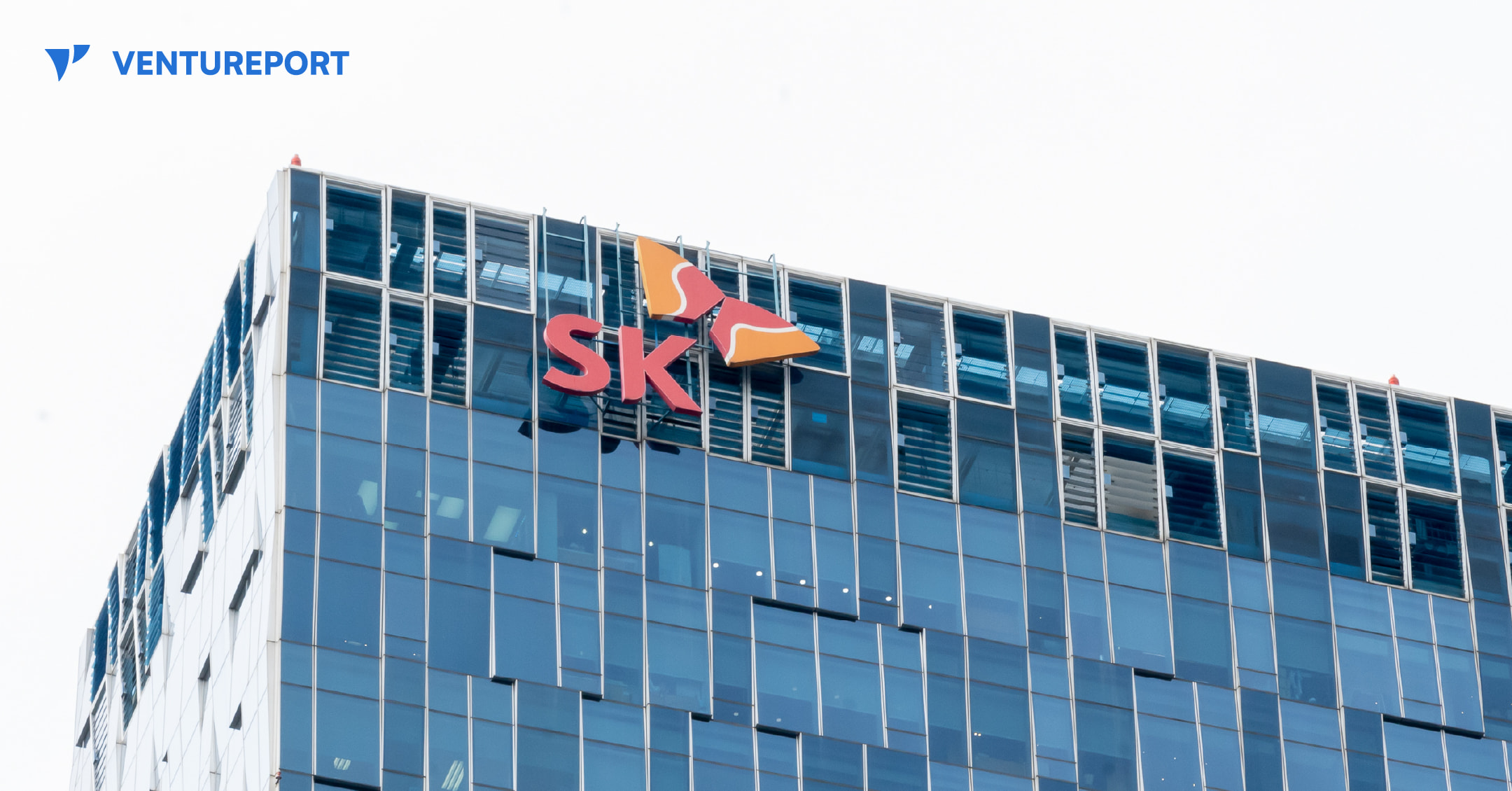
SK Telecom Headquarters in Seoul, South Korea. PHOTO: ADOBE STOCK
SK Telecom, South Korea’s largest mobile operator, has unveiled A.X K1, a hyperscale artificial intelligence model with 519 billion parameters. The model sits at the center of a government-backed effort to build advanced AI systems and domestic AI infrastructure within Korea. This comes at a time when companies in the United States and China largely dominate the development of the most powerful large language models.
Rather than framing A.X K1 as just another large language model, SK Telecom is positioning it as part of a broader push to build sovereign AI capacity from the ground up. The model is being developed as part of the Korean government’s Sovereign AI Foundation Model project, which aims to ensure that core AI systems are built, trained and operated within the country. In simple terms, the initiative focuses on reducing reliance on foreign AI platforms and cloud-based AI infrastructure, while giving Korea more control over how artificial intelligence is developed and deployed at scale.
One of the gaps this approach is trying to address is how AI knowledge flows across a national ecosystem. Today, the most powerful AI foundation models are often closed, expensive and concentrated within a small number of global technology companies. A.X K1 is designed to function as a “teacher model,” meaning it can transfer its capabilities to smaller, more specialized AI systems. This allows developers, enterprises and public institutions to build tailored AI tools without starting from scratch or depending entirely on overseas AI providers.
That distinction matters because most real-world applications of artificial intelligence do not require massive models operating independently. They require focused, reliable AI systems designed for specific use cases such as customer service, enterprise search, manufacturing automation or mobility. By anchoring those systems to a large, domestically developed foundation model, SK Telecom and its partners are aiming to create a more resilient and self-sustaining AI ecosystem.
The effort also reflects a shift in how AI is being positioned for everyday use. SK Telecom plans to connect A.X K1 to services that already reach millions of users, including its AI assistant platform A., which operates across phone calls, messaging, web services and mobile applications. The broader goal is to make advanced AI feel less like a distant research asset and more like an embedded digital infrastructure that supports daily interactions.
This approach extends beyond consumer-facing services. Members of the SKT consortium are testing how the hyperscale AI model can support industrial and enterprise applications, including manufacturing systems, game development, robotics and autonomous technologies. The underlying logic is that national competitiveness in artificial intelligence now depends not only on model performance, but on whether those models can be deployed, adapted and validated in real-world environments.
There is also a hardware dimension to the project. Operating an AI model at the 500-billion-parameter scale places heavy demands on computing infrastructure, particularly memory performance and communication between processors. A.X K1 is being used to test and validate Korea’s semiconductor and AI chip capabilities under real workloads, linking large-scale AI software development directly to domestic semiconductor innovation.
The initiative brings together technology companies, universities and research institutions, including Krafton, KAIST and Seoul National University. Each contributes specialized expertise ranging from data validation and multimodal AI research to system scalability. More than 20 institutions have already expressed interest in testing and deploying the model, reinforcing the idea that A.X K1 is being treated as shared national AI infrastructure rather than a closed commercial product.
Looking ahead, SK Telecom plans to release A.X K1 as open-source AI software, alongside APIs and portions of the training data. If fully implemented, the move could lower barriers for developers, startups and researchers across Korea’s AI ecosystem, enabling them to build on top of a large-scale foundation model without incurring the cost and complexity of developing one independently.