
The quiet infrastructure shift powering the next generation of data centers
Updated
February 12, 2026 1:21 PM

Peripheral Component Interconnect Express (PCIe) port on a motherboard, coloured yellow. PHOTO: UNSPLASH
Modern data centers operate on a simple yet fundamental principle: computers require the ability to share data extremely quickly. As AI and cloud systems grow, servers are no longer confined to a single rack. They are spread across many racks, sometimes across entire rooms. When that happens, moving data quickly and cleanly becomes harder.
Montage Technology, a Shanghai-based semiconductor company, builds the chips and connection systems that help servers exchange data without delays. This week, the company announced a new Active Electrical Cable (AEC) solution based on PCIe 6.x and CXL 3.x — two important standards used to connect CPUs, GPUs, network cards and storage inside modern data centers.
In simple terms, Montage’s new AEC product helps different parts of a data center “talk” to each other faster and more reliably, even when those parts are physically far apart.
As data centers grow to support AI and cloud workloads, their architecture is changing. Instead of everything sitting inside one rack, systems now stretch across multiple racks and even multiple rows. This creates a new problem: the longer the distance between machines, the harder it is to keep data signals clean and fast.
This is where Active Electrical Cables come in. Unlike regular copper cables, AECs include small electronic components inside the cable itself. These components strengthen and clean up the data signal as it travels, so information can move farther without getting distorted or delayed.
Montage’s solution uses its own retimer chip based on PCIe 6.x and CXL 3.x. A “retimer” refreshes the data signal so it arrives accurately at the other end. This allows servers, GPUs, storage devices and network cards to stay tightly connected even across longer distances inside large data centers.
The company also uses high-density cable designs and built-in monitoring tools so operators can track performance and fix issues faster. That makes large data centers easier to deploy and maintain.
According to Montage, the solution has already passed interoperability tests with CPUs, xPUs, PCIe switches and network cards. It has also been jointly developed with cable manufacturers in China and validated at the system level.
What makes this development important is not just speed. It is about scale. AI models, cloud services and real-time applications demand massive amounts of data to move continuously between machines. If that movement slows down, everything else slows with it.
By improving how machines connect across racks, Montage’s AEC solution supports the kind of infrastructure that next-generation AI and cloud systems depend on.
Looking ahead, the company plans to expand its high-speed interconnect products further, including work on PCIe 7.0 and Ethernet retimer technologies.
Quietly, in the background of every AI system and cloud service, there is a network of cables and chips doing the hard work of moving data. Montage’s latest launch focuses on making that hidden layer faster, cleaner and ready for the scale that modern computing now demands.
Keep Reading
A humanoid robot being escorted away by police in Macau has gone viral online, prompting jokes about what some called the world’s first “robot arrest.”
Updated
March 17, 2026 12:53 AM
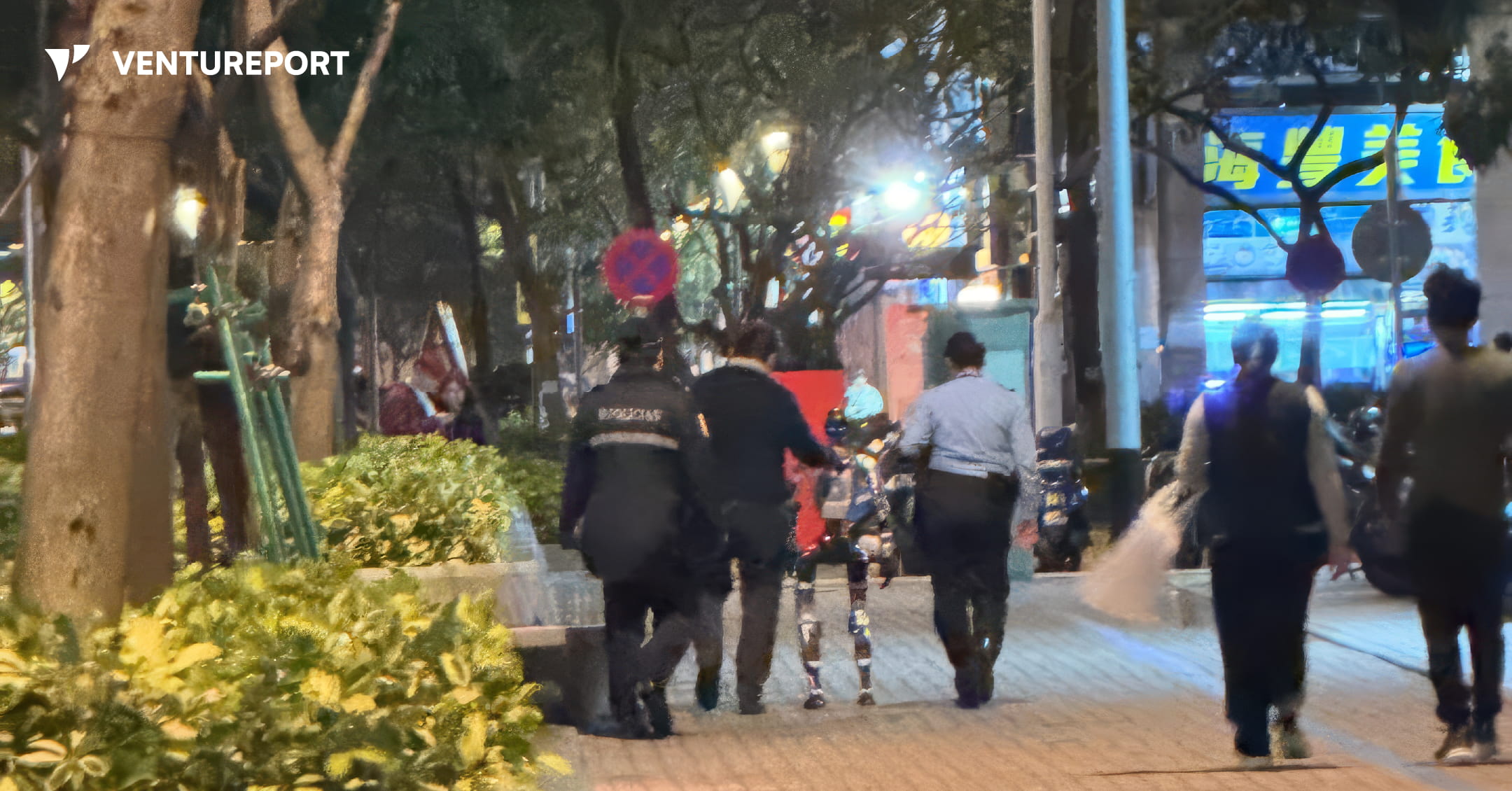
Macau police officer accompanying the humanoid robot. PHOTO: THREADS@BOXOF_CHOCOLATE
Police in Macau recently detained a humanoid robot after it frightened an elderly woman on a public street. The unusual encounter quickly spread online, prompting jokes about what some called the world’s first “robot arrest”.
On the evening of March 5, the robot was taken away by officers after the encounter triggered alarm among bystanders. Videos circulating on social media show an elderly woman confronting the robot on a sidewalk, visibly distressed and shouting that her “heart is pounding” while demanding to know why such “nonsense” was happening on the street. In the clip, the robot raises both hands toward the woman after she lashes out in fear — a gesture many viewers interpreted as a sign of apology.
Shortly afterwards, two officers from the Macau Public Security Police Force were seen escorting the robot and a man believed to be its operator away from the area. An officer is seen placing his right hand on the robot’s shoulder — the same posture police often use when presenting arrested suspects in official photographs.
That scene quickly spread online, fuelling jokes about what some called the world’s first “robot arrest”.
Photos shared online show a humanoid robot with long limbs and exposed mechanical joints, built from a black metallic frame without an outer shell. In dim lighting, several commenters said it resembled a “moving skeleton” — a striking sight for pedestrians encountering it unexpectedly on the street.
Witnesses said the woman appeared severely shaken and an ambulance was eventually called to take her to the hospital.
The incident also sparked discussion online about robots operating in public spaces. Some commenters argued that experimental technologies should be tested in controlled environments, while others said machines moving through public areas should have clearer designs or safety measures to avoid alarming pedestrians.
It remains unclear who deployed the robot or what purpose it was serving in the area at the time of the incident. Authorities have not released further details about the device or whether any action was taken following the encounter.