
Inside Mercuryo’s Visa Partnership
Updated
February 10, 2026 11:18 PM

Close up of Visa credit cards. PHOTO: ADOBE STOCK
Mercuryo is a fintech startup that builds the infrastructure to enable money to move seamlessly between crypto and traditional banking systems. In simple terms, it works on the problem of turning digital assets into usable cash.
As more people hold crypto through wallets and exchanges, one practical issue keeps arising: how do you actually withdraw that money and use it in the real world? For many users, converting tokens into local currency is still slow, confusing or expensive. That gap between “owning” crypto and being able to spend it is where Mercuryo operates.
The company’s latest step forward is a partnership with Visa to improve what is known as “off-ramping” — the process of converting crypto into fiat currency like dollars or euros. Until now, this has often been slow, expensive and confusing for users. Mercuryo is using Visa Direct, Visa’s real-time payments system, to make that process faster and more direct.
With this integration, users can convert their digital tokens into local currency and send the money straight to a Visa debit or credit card. The transaction happens through systems that already power global card payments, which means the money can arrive in near real time instead of days later.
Technically, this connects two very different worlds. On one side is blockchain-based crypto, which moves value on decentralised networks. On the other side is the traditional payment system, which runs on banks, cards and regulated rails. Mercuryo’s platform sits between the two and handles the conversion and movement of funds.
Instead of users leaving their wallet or exchange to cash out, Mercuryo allows the conversion to happen inside the apps and platforms they already use. The user does not need to understand the plumbing behind it. They just see that crypto becomes spendable money on their card.
This matters because access is what makes any financial system usable. If people cannot easily move their money, they treat it as locked or risky. Faster off-ramps make digital assets more practical, not just speculative.
Mercuryo’s work is not about creating new tokens or trading tools. It is about building the pipes that let money move smoothly between Web3 and the traditional financial world. The Visa partnership strengthens those pipes by using a global, trusted payments network that already works at scale.
Visa also framed the partnership as a bridge between systems. Anastasia Serikova, Head of Visa Direct, Europe, said: "By leveraging Visa Direct's capabilities, Mercuryo is not only making converting to fiat faster, simpler and more accessible than ever—it's building bridges between the crypto space and the traditional financial system. This integration empowers users to seamlessly convert digital assets into fiat in near real time, creating a more connected and convenient payment experience".
Over time, this kind of infrastructure is what determines whether crypto remains niche or becomes part of everyday finance. Not through headlines, but through systems that quietly reduce friction.
Mercuryo’s direction is clear: make digital assets easier to use, easier to exit and easier to connect to the money systems people already rely on.
Keep Reading
Rethinking 3D modelling for a world that generates too much, too quickly.
Updated
January 8, 2026 6:32 PM
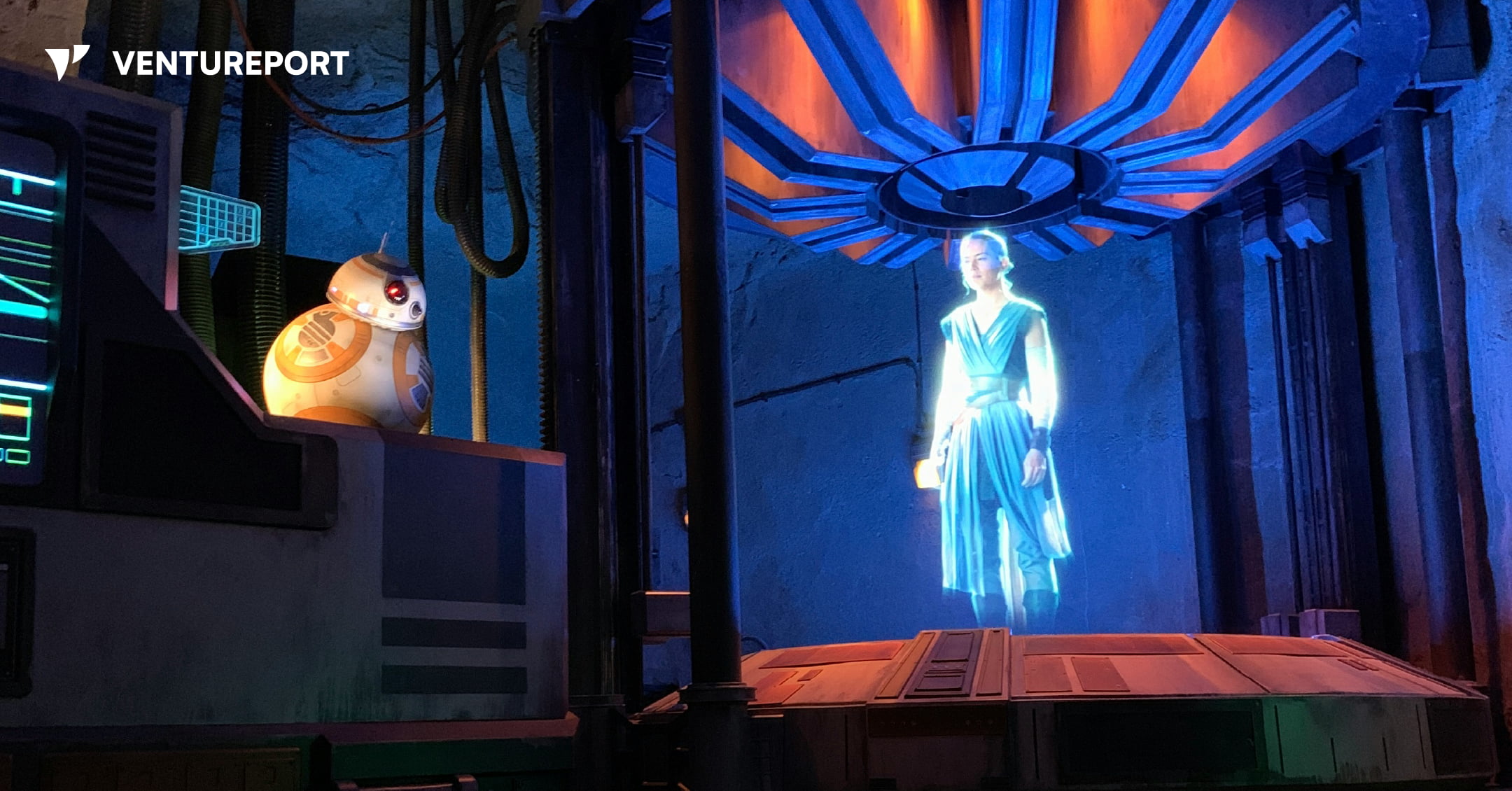
A hologram in the franchise Star Wars, in Walt Disney World Resort, Orlando. PHOTO: UNSPLASH
MicroCloud Hologram Inc. (NASDAQ: HOLO), a technology service provider recognized for its holography and imaging systems, is now expanding into a more advanced realm: a quantum-driven 3D intelligent model. The goal is to generate detailed 3D models and images with far less manual effort — a need that has only grown as industries flood the world with more visual data every year.
The concept is straightforward, even if the technology behind it isn’t. Traditional 3D modeling workflows are slow, fragmented and depend on large teams to clean datasets, train models, adjust parameters and fine-tune every output. HOLO is trying to close that gap by combining quantum computing with AI-powered 3D modeling, enabling the system to process massive datasets quickly and automatically produce high-precision 3D assets with much less human involvement.
To achieve this, the company developed a distributed architecture comprising of several specialized subsystems. One subsystem collects and cleans raw visual data from different sources. Another uses quantum deep learning to understand patterns in that data. A third converts the trained model into ready-to-use 3D assets based on user inputs. Additional modules manage visualization, secure data storage and system-wide protection — all supported by quantum-level encryption. Each subsystem runs in its own container and communicates through encrypted interfaces, allowing flexible upgrades and scaling without disrupting the entire system.
Why this matters: Industries ranging from gaming and film to manufacturing, simulation and digital twins are rapidly increasing their reliance on 3D content. The real bottleneck isn’t creativity — it’s time. Producing accurate, high-quality 3D assets still requires a huge amount of manual processing. HOLO’s approach attempts to lighten that workload by utilizing quantum tools to speed up data processing, model training, generation and scaling, while keeping user data secure.
According to the company, the system’s biggest advantages include its ability to handle massive datasets more efficiently, generate precise 3D models with fewer manual steps, and scale easily thanks to its modular, quantum-optimized design. Whether quantum computing will become a mainstream part of 3D production remains an open question. Still, the model shows how companies are beginning to rethink traditional 3D workflows as demand for high-quality digital content continues to surge.