
Inside Mercuryo’s Visa Partnership
Updated
February 10, 2026 11:18 PM

Close up of Visa credit cards. PHOTO: ADOBE STOCK
Mercuryo is a fintech startup that builds the infrastructure to enable money to move seamlessly between crypto and traditional banking systems. In simple terms, it works on the problem of turning digital assets into usable cash.
As more people hold crypto through wallets and exchanges, one practical issue keeps arising: how do you actually withdraw that money and use it in the real world? For many users, converting tokens into local currency is still slow, confusing or expensive. That gap between “owning” crypto and being able to spend it is where Mercuryo operates.
The company’s latest step forward is a partnership with Visa to improve what is known as “off-ramping” — the process of converting crypto into fiat currency like dollars or euros. Until now, this has often been slow, expensive and confusing for users. Mercuryo is using Visa Direct, Visa’s real-time payments system, to make that process faster and more direct.
With this integration, users can convert their digital tokens into local currency and send the money straight to a Visa debit or credit card. The transaction happens through systems that already power global card payments, which means the money can arrive in near real time instead of days later.
Technically, this connects two very different worlds. On one side is blockchain-based crypto, which moves value on decentralised networks. On the other side is the traditional payment system, which runs on banks, cards and regulated rails. Mercuryo’s platform sits between the two and handles the conversion and movement of funds.
Instead of users leaving their wallet or exchange to cash out, Mercuryo allows the conversion to happen inside the apps and platforms they already use. The user does not need to understand the plumbing behind it. They just see that crypto becomes spendable money on their card.
This matters because access is what makes any financial system usable. If people cannot easily move their money, they treat it as locked or risky. Faster off-ramps make digital assets more practical, not just speculative.
Mercuryo’s work is not about creating new tokens or trading tools. It is about building the pipes that let money move smoothly between Web3 and the traditional financial world. The Visa partnership strengthens those pipes by using a global, trusted payments network that already works at scale.
Visa also framed the partnership as a bridge between systems. Anastasia Serikova, Head of Visa Direct, Europe, said: "By leveraging Visa Direct's capabilities, Mercuryo is not only making converting to fiat faster, simpler and more accessible than ever—it's building bridges between the crypto space and the traditional financial system. This integration empowers users to seamlessly convert digital assets into fiat in near real time, creating a more connected and convenient payment experience".
Over time, this kind of infrastructure is what determines whether crypto remains niche or becomes part of everyday finance. Not through headlines, but through systems that quietly reduce friction.
Mercuryo’s direction is clear: make digital assets easier to use, easier to exit and easier to connect to the money systems people already rely on.
Keep Reading
Humanoids are moving from research labs into real industries — and capital is finally catching up.
Updated
January 8, 2026 6:31 PM
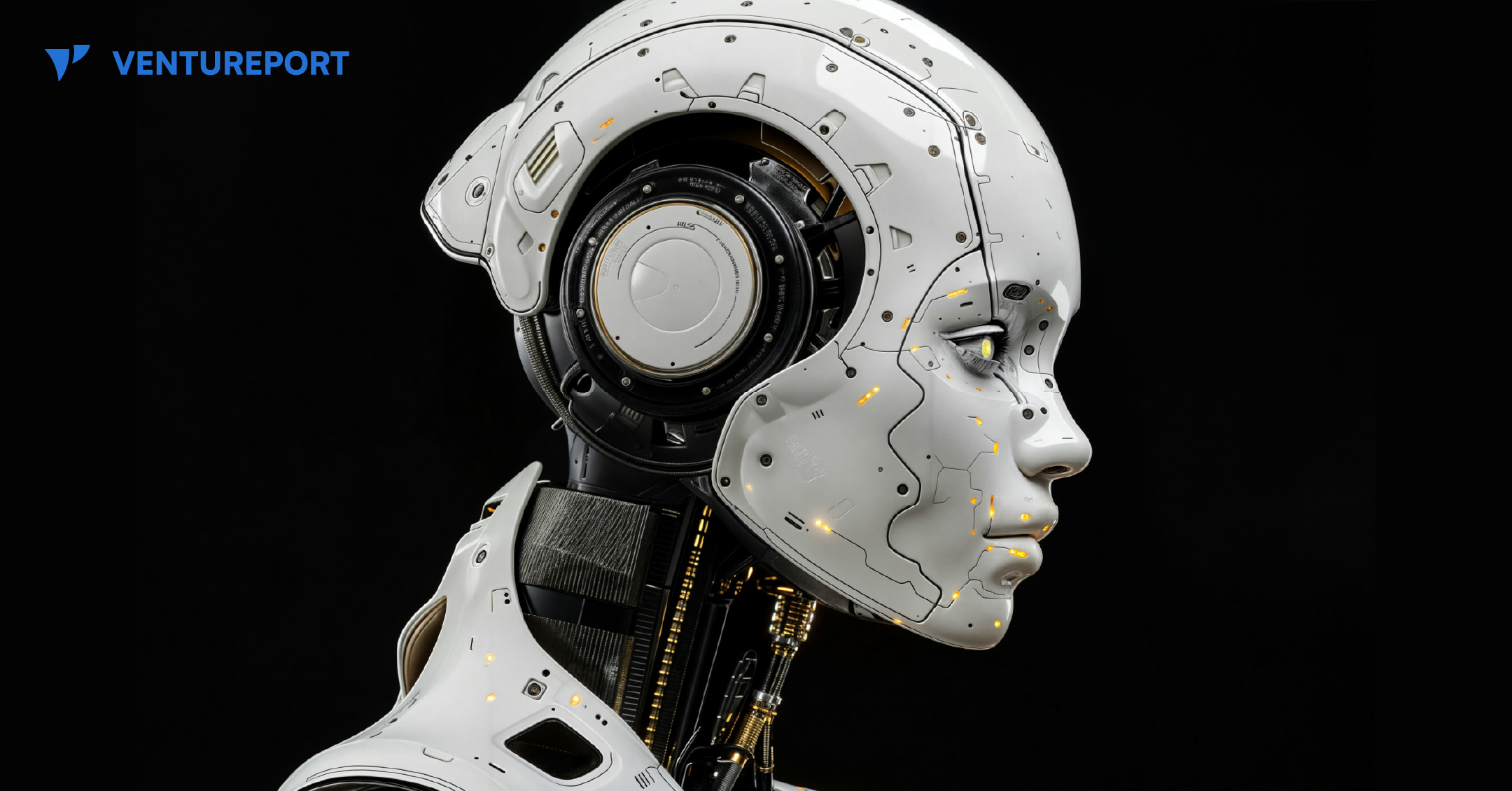
A face of a humanoid robot, side view on black background. PHOTO: UNSPLASH
Humanoid robots are shifting from sci-fi speculation to engineering reality, and the pace of progress is prompting investors to reassess how the next decade of physical automation will unfold. ALM Ventures has launched a new US$100 million early-stage fund aimed squarely at this moment—one where advances in robot control, embodied AI and spatial intelligence are beginning to converge into something commercially meaningful.
ALM Ventures Fund I, is designed for the earliest stages of company formation, targeting seed and pre-seed teams building the foundations of humanoid deployment. It’s a concentrated fund that seeks to take early ownership in a sector that many now consider the next major technological frontier.
For Founder and General Partner Modar Alaoui, the timing is not accidental. “After years of research, humanoids are finally entering a phase where performance, reliability and cost are converging toward commercial viability”, he said. “What the category needs now is focused capital and deep technical diligence to turn prototypes into scalable, enduring companies”.
That framing captures a shift happening across robotics: the field is moving out of the lab and into early commercial readiness. Improvements in perception systems, model-based reasoning and motion control are accelerating the transition. Advances in simulation are also lowering the complexity and cost of integrating humanoid platforms into real environments. As these systems become more capable, the gap between research prototypes and market-ready products is narrowing.
ALM Ventures is positioning itself at this inflection point. Fund I’s thesis centers on the core technologies required to scale humanoids safely and economically. This includes next-generation robot platforms, spatial reasoning engines, embodied intelligence models, world-modeling systems and the infrastructure needed for early deployment. Rather than chasing every robotics trend, the fund is concentrating on the essential layers that will determine whether humanoids can work reliably outside controlled settings.
The firm isn’t starting from zero. During the fund’s formation, ALM Ventures made ten early investments that directly align with its investment focus. The portfolio includes companies building at different layers of the humanoid stack, such as Sanctuary AI, Weave Robotics, Emancro, High Torque Robotics, MicroFactory, Mbodi, Adamo, Haptica Robotics, UMA and O-ID. The list reflects a broad but intentional spread, from hardware to intelligence to manufacturing approaches, all oriented toward enabling scalable physical AI.
Beyond capital, ALM Ventures has been shaping the ecosystem through its global Humanoids Summit series in Silicon Valley, London and Tokyo. The series gives the firm early visibility into emerging technologies, pre-incorporation teams and the senior leaders steering the global robotics landscape. That vantage point has helped the firm identify where commercialization is truly taking root and where bottlenecks still exist.
The rise of humanoids is often compared to the early days of self-driving cars: a long arc of research suddenly meeting an acceleration point. What separates this moment is that advances in embodied AI and spatial intelligence are giving robots a more intuitive understanding of the physical world, making them easier to deploy, teach and scale. ALM Ventures’ Fund I is an attempt to capture that transition while shaping the companies that could define the next technological era.
With US$100 million dedicated to the earliest builders in the space, ALM Ventures is signaling its belief that humanoids are not just another robotics cycle—they may be the next major platform shift in AI.