
Inside Mercuryo’s Visa Partnership
Updated
February 10, 2026 11:18 PM

Close up of Visa credit cards. PHOTO: ADOBE STOCK
Mercuryo is a fintech startup that builds the infrastructure to enable money to move seamlessly between crypto and traditional banking systems. In simple terms, it works on the problem of turning digital assets into usable cash.
As more people hold crypto through wallets and exchanges, one practical issue keeps arising: how do you actually withdraw that money and use it in the real world? For many users, converting tokens into local currency is still slow, confusing or expensive. That gap between “owning” crypto and being able to spend it is where Mercuryo operates.
The company’s latest step forward is a partnership with Visa to improve what is known as “off-ramping” — the process of converting crypto into fiat currency like dollars or euros. Until now, this has often been slow, expensive and confusing for users. Mercuryo is using Visa Direct, Visa’s real-time payments system, to make that process faster and more direct.
With this integration, users can convert their digital tokens into local currency and send the money straight to a Visa debit or credit card. The transaction happens through systems that already power global card payments, which means the money can arrive in near real time instead of days later.
Technically, this connects two very different worlds. On one side is blockchain-based crypto, which moves value on decentralised networks. On the other side is the traditional payment system, which runs on banks, cards and regulated rails. Mercuryo’s platform sits between the two and handles the conversion and movement of funds.
Instead of users leaving their wallet or exchange to cash out, Mercuryo allows the conversion to happen inside the apps and platforms they already use. The user does not need to understand the plumbing behind it. They just see that crypto becomes spendable money on their card.
This matters because access is what makes any financial system usable. If people cannot easily move their money, they treat it as locked or risky. Faster off-ramps make digital assets more practical, not just speculative.
Mercuryo’s work is not about creating new tokens or trading tools. It is about building the pipes that let money move smoothly between Web3 and the traditional financial world. The Visa partnership strengthens those pipes by using a global, trusted payments network that already works at scale.
Visa also framed the partnership as a bridge between systems. Anastasia Serikova, Head of Visa Direct, Europe, said: "By leveraging Visa Direct's capabilities, Mercuryo is not only making converting to fiat faster, simpler and more accessible than ever—it's building bridges between the crypto space and the traditional financial system. This integration empowers users to seamlessly convert digital assets into fiat in near real time, creating a more connected and convenient payment experience".
Over time, this kind of infrastructure is what determines whether crypto remains niche or becomes part of everyday finance. Not through headlines, but through systems that quietly reduce friction.
Mercuryo’s direction is clear: make digital assets easier to use, easier to exit and easier to connect to the money systems people already rely on.
Keep Reading
How a Korean biotech startup is using AI to move drug discovery from trial-and-error to precision design
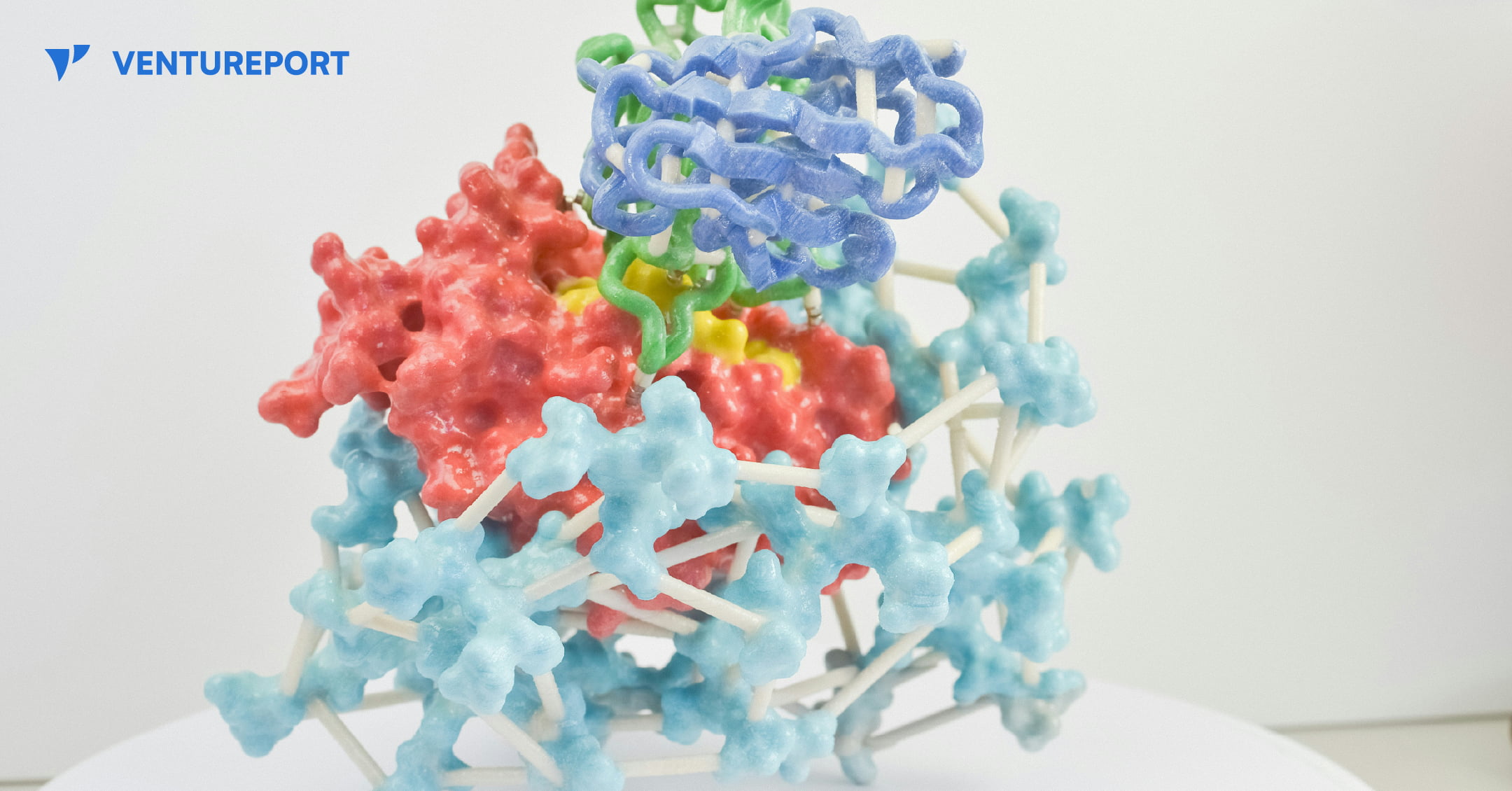
A close up of a protein structure model. PHOTO: UNSPLASH
For decades, drug discovery has relied on trial and error, with scientists testing thousands of molecules to find one that works. Galux, a South Korean biotech startup, is changing that by using AI to design proteins from scratch. This method, called “de novo” design, makes it possible to build precise new therapies instead of searching through existing ones.
The company recently announced a US$29 million Series B funding round, bringing its total capital to US$47 million.This significant investment attracted a substantial roster of institutional backers, including the Korea Development Bank (KDB), Yuanta Investment, SL Investment and NCORE Ventures. These firms joined existing investors such as InterVest, DAYLI Partners and PATHWAY Investment, as well as new participants including SneakPeek Investments, Korea Investment & Securities and Mirae Asset Securities.
At the core of the company’s work is a platform called GaluxDesign. Unlike many AI tools that only predict how existing proteins fold, this system uses deep learning and physics to create entirely new therapeutic antibodies. This “from scratch” approach lets the team go after so-called “undruggable” proteins. These are targets that traditional small-molecule drugs can’t reach because they lack clear binding pockets. By designing proteins to fit these complex shapes, Galux aims to unlock treatments that have stayed out of reach for decades. And that’s exactly why investors are paying attention.
The pharmaceutical industry is actively looking for faster and more efficient ways to develop new drugs, and Galux is built for exactly that. The company connects its AI platform directly to its own wet lab, where designs can be tested in real time. Each result feeds straight back into the system, sharpening the next round of models. This continuous loop speeds up discovery and improves precision at every step. It’s also why partners like Celltrion, LG Chem and Boehringer Ingelheim are already working with Galux.
Galux is no longer just trying to make drugs that stick to a target. The company now wants its AI to design medicines that actually work in the body and can be made at scale. In simple terms, a drug has to do more than bind to a disease—it must be stable, safe and strong enough to change how the illness behaves. Galux is moving into tougher targets such as ion channels and GPCRs. These play key roles in heart function and sensory signals. Ultimately, the goal is to show that AI-driven design can turn complex biology into real treatments. And instead of hunting blindly for a solution, the team is building exactly what they need.