
Can innovation truly deliver affordable housing to those who need it most?
Updated
January 8, 2026 6:35 PM
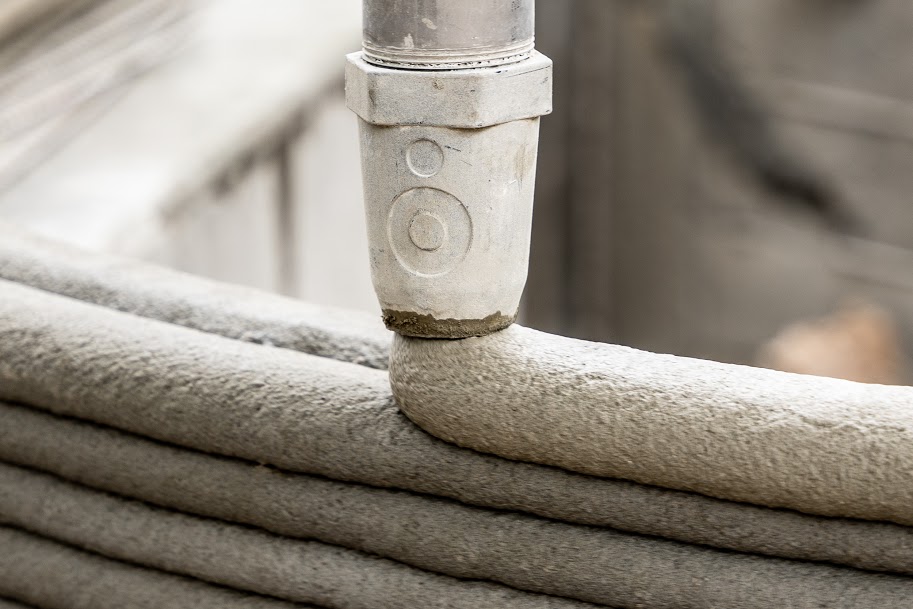
Close up of a 3D printer nozzle pouring concrete. PHOTO: ICON
The affordable housing crisis has become one of the most pressing challenges of our time. Across the globe, millions of people are struggling to secure a roof over their heads. In cities like San Francisco, housing prices are so high that even middle-income families find themselves shut out of the market.
The root of this crisis lies in a persistent imbalance: the supply of housing has failed to keep pace with growing demand. Factors such as high construction costs, bureaucratic hurdles, and limited available land in urban areas have made it increasingly difficult to build enough homes quickly and affordably. The result is a market where housing remains inaccessible to millions, even as the need becomes more urgent.
Technology is now stepping in to address these challenges in ways that were unimaginable just a decade ago. From streamlining construction processes to introducing new financing models and data-driven tools, tech innovations are rethinking how homes are built, financed, and accessed. But while these advancements offer hope, they also raise important questions: can they truly address the root causes of the housing crisis, or are they simply patching up a fractured system?
The housing crisis begins with supply shortage: we simply aren’t building enough homes. Traditional construction methods are expensive, slow, and reliant on labor that is increasingly hard to find. This is where technology is making its most significant impact. Startups likeICON and Veev are leading the charge, using cutting-edge solutions to make housing more efficient and affordable.
ICON, for instance, uses 3D printing to build homes faster and at a lower cost. By printing the structure of a house directly on-site, ICON reduces waste, labor requirements, and construction time. Entire neighborhoods of 3D-printed homes are already being built, showcasing how this technology can scale.
Veev, on the other hand, focuses on prefabricated construction. By manufacturing high-quality components like walls and steel frames in a controlled factory environment, Veev eliminates inefficiencies associated with on-site building. These components are then assembled on location, drastically reducing construction time and costs. This approach mirrors the principles of mass production seen in industries like automotive manufacturing, where efficiency and scalability are key.
While building more homes is essential, access to housing often depend son financing. For many people, especially those with low or irregular incomes, the traditional mortgage system presents insurmountable barriers. Fintech innovations are stepping in to make housing financing more inclusive and flexible.
Access to affordable housing often hinges on financing, and innovative financial technology (fintech) solutions are beginning to change the landscape. Some platforms are offering new ways for individuals to transition from renting to owning, while others are introducing shared equity models that reduce the traditional barriers of large down payments and strict credit requirements. For example, companies like Point use shared-equity financing, where homeowners receive funds in exchange for a percentage of their home’s future value instead of taking on traditional debt. Meanwhile, startups are building tools that automate and simplify and revolutionizing the mortgage process, making it easier for underserved populations to access loans tailored to their needs.
Blockchain technology is also changing the game. By digitizing land titles and creating secure records of financial transactions, blockchain reduces the complexity and difficulty of accessing credit, especially for those with limited traditional credit. This is particularly impactful in regions where informal economies dominate and traditional proof of income is scarce. These tools create a pathway to homeownership for individuals who would otherwise be excluded from the system.
Beyond building and financing, technology is transforming how we understand and address housing needs. Artificial intelligence (AI) is revolutionizing risk assessment in the mortgage industry by analyzing a broader range of financial behaviors, such as rent and utility payments, to provide a more inclusive picture of creditworthiness.
At the same time, AI and big data are helping policymakers and developers make smarter decisions about where and how to build. By analyzing population trends, commuting patterns, and infrastructure needs, these tools ensure that new housing developments are built in the right places, reducing wasteful construction and improving urban planning.
For example, startups are using 3D scanning and machine learning to map informal settlements and identify buildings at risk of collapse. These insights not only improve safety but also guide investment toward areas where housing is most desperately needed.
The housing crisis is one of the most complex challenges of our time, and technology alone cannot solve it. But it can provide powerful tools to address specific pain points, from streamlining construction to expanding access to financing. Startups like ICON, Veev, and Landis are proving that innovation can lower costs, improve efficiency, and make housing more inclusive.
However, the ultimate solution lies in a combination of technology, policy reform, and community engagement. Governments must work alongside tech innovators to create urban environments that prioritize affordability, sustainability, and accessibility.
The future of housing isn’t just about building more homes; it’s about building smarter, greener, and fairer cities where everyone has a place to call home. By integrating cutting-edge technologies with forward-thinking policies, we can move closer to a world where affordable housing is not an aspiration but a reality.
The question is no longer whether technology can solve the housing crisis—it’s how we will use it wisely to create lasting change.
Keep Reading
From driving social change to making luxury affordable — Lessons from The Body Shop India
Updated
January 30, 2026 11:43 AM
.jpg)
The Body Shop's storefront. PHOTO: ADOBE STOCK
The Body Shop, known worldwide for its ethical values and cruelty-free beauty products, has had very different results in two of its major markets. In the United States, challenges such as shifting retail trends and tougher competition led to the closure of most physical stores in early 2024. Meanwhile, in India, The Body Shop has risen to become one of its top five global markets. After reaching customers in more than 1,500 Indian cities through its omnichannel network, the company now plans to double its 200-store footprint over the next three to five years.
So what did The Body Shop do in India that proved harder to pull off in the U.S.? Below, we break down why The Body Shop struggled in the U.S., what’s driving The Body Shop India’s growth and what startup founders can learn from the contrast.
In March 2024, The Body Shop’s U.S. unit filed for Chapter 7 bankruptcy and stopped operating its roughly 50 stores. That move effectively ended its brick-and-mortar presence in the country.
A big part of the story is that the U.S. beauty market moved faster than The Body Shop did. Prestige beauty kept growing, and shoppers increasingly gravitated to retailers and brands that feel current and have a strong online presence. Paul Dodd, Chief Innovation Officer at e-commerce fulfilment partner Huboo, have pointed to The Body Shop’s slow approach to digital growth as a major factor behind its decline. With U.S. prestige beauty sales reaching about US$33.9 billion in 2024 and growing at 7% year over year, the demand is clearly there. The brands that stand out and get rewarded were the ones that matched how people now discover products and buy them.
The company also leaned too heavily on stores at a time when stores were getting harder to run. When foot traffic drops and rents rise, the pressure shows up quickly. Shoppers also had more places to go, including Sephora, Ulta, Amazon and direct-to-consumer sites. A similar pattern played out in Canada, where restructuring included store closures and halted e-commerce. It was another sign that North America had become an operational headache, not just a marketing challenge.
Then there’s the branding issue: its “ethical pioneer” position simply stopped being a moat in the U.S. market. Today, cruelty-free and vegan claims are now table stakes across many newer brands, and “clean beauty” messaging is everywhere. “Initially, the purpose-driven brand was revolutionary, so much so that competitors like Drunk Elephant have adopted a similar ethos,” says Dan Hocking, Chief Operating Officer at advertising agency TroubleMaker. “It was a concept that rightly earned success in the 80s and 90s, but The Body Shop didn’t adapt to changing consumer habits and preferences”. Meanwhile, competitors like Lush have kept people talking through stronger creator/influencer marketing, faster product cycles and more immersive in-store experiences.
Internal disruption likely made the turnaround even harder. Reporting on the U.S. bankruptcy points to instability, including the U.S. unit saying it did not have advance notice of decisions tied to the U.K. parent’s restructuring. When leadership decisions land without warning, it becomes harder to plan inventory, fund marketing and commit to a clear digital roadmap.
1. Expansion into tier 2 and 3 cities
For years, India’s beauty industry focused mainly on metropolitan cities. Today, however, increasing internet penetration, rising disposable incomes, exposure to global beauty trends and an appetite for ethical, sustainable brands have fuelled demand in smaller towns. That tailwind matters because India’s beauty and personal care market is expected to reach a gross merchandise value (GMV) of US$30 billion by 2027 and is projected to grow at roughly an 10% CAGR. There’s plenty of room for both premium and “affordable luxury” players that can meet consumer where they are.
The Body Shop has leaned into this shift. Harmeet Singh, Chief Brand Officer of The Body Shop Asia South, has said the brand is expanding into Tier 2 and Tier 3 cities with a focus on central and Northeast India. Reports also point to a clear advantage here: more than 200 stores across dozens of cities, plus online reach into over 1,500 cities. That foundation makes non-metro expansion feel like the next move, not a risky leap.
2. Omni-channel retail strategy for beauty shoppers
Unlike its U.S. front, The Body Shop India has put effort into digital and distribution. Besides its own online store, customers can find the brand on big beauty and retail platforms like Nykaa, Amazon, Flipkart, Tatacliq and Myntra. It has also built more direct routes to purchase through WhatsApp, social commerce, expert chats and live video consultations. For even faster access, it’s on quick-commerce apps like Blinkit and Swiggy.
This strategy is already showing up in the numbers. Nearly 30% of The Body Shop India’s business came from digital channels as of June 2025. Rahul Shanker, Chief Executive of The Body Shop India, has said the brand wants to lift online revenue to 45–50% of total sales by 2030.
This approach lines up with what’s happening in the market. NielsenIQ data found beauty e-commerce and quick-commerce sales in India rose 39% in value between June and November 2024, with offline growth over the same period being just 3%. The logic is simple: if the market is moving online, you want to be easy to buy online.
3. Inclusivity, accessibility and social impact
The Body Shop’s people-first approach shows up not just in its marketing, but in how it runs the business day to day. Inside the company, it has pushed gender sensitivity across teams. Out of 600 employees, it has 10 staff members who are part of the LGBTQA+ spectrum.
In stores, the brand has worked on improving accessibility. In 2024, The Body Shop India launched a Braille initiative for visually impaired customers. The programme introduced Braille category callouts in select locations so shoppers can navigate more independently.
On the sustainability side, the brand ties its message to its supply chain. An example is its long-term partnership with Plastics for Change, a Bengaluru-based social enterprise, to source “Community Fair Trade” recycled plastic for packaging. The collaboration has resulted in more predictable income, safer work and better access to social services and housing and education projects for the waste picker communities, which often include marginalized groups and women.
The same intent can also be seen in its physical retail. The Body Shop India has been converting stores into its “Activist Workshop” format, where everything is made from recycled materials, including store fixtures and interiors. By mid-2024, it had around 20 Activist Workshop stores in India.
4. Pricing that fits the Indian beauty market
In April 2025, The Body Shop India launched its “More Love for Less” campaign to make products more accessible. Through the campaign, the company lowered the prices of more than 60 best-sellers by 28–30%. The goal was to remove a clear barrier for many shoppers while maintaining the same quality.
The company has also positioned this as a pricing reset, not a short-term discount push. It’s meant to widen the funnel, especially among younger consumers aged 18–25, where price has been a major hurdle. That matters even more as the brand expands deeper into Tier 2 and Tier 3 cities, where value is often front and centre.
5. Local marketing that feels made for India
The Body Shop India has leaned into localized marketing in a way that feels specific, not generic. In late 2024, it launched “The India Edit”, a collection inspired by native ingredients like lotus, hibiscus, pomegranate and black grape. The tagline, “Only in India, for You,” makes the intent clear: India is not a copy-paste market. This approach matters because India is one of the most competitive beauty battlegrounds right now, with ongoing entry from global beauty brands. When everyone is fighting for attention, local storytelling helps The Body Shop stand out and feel closer to the customer.
The Body Shop’s story in the U.S. and India shows how differently a global beauty brand can perform depending on local strategy. In the U.S., it ran into a tough mix of fast-changing consumer habits, heavy competition and a liquidation process that left little room to rebuild. In India, the brand is riding big tailwinds in beauty retail growth, plus the shift to e-commerce and quick commerce. It has also put real effort into localization, pricing and omnichannel distribution.
If you’re trying to scale a consumer brand, there’s a clear takeaway here. Understand how your market shops, build strong digital distribution and make the brand feel local. The Body Shop India’s playbook is a useful example of how to do it.