
As airports grow more complex, the real innovation lies in making their systems simpler, faster, and easier to act on
Updated
March 24, 2026 5:55 PM

An airplane parked at Josep Tarradellas Barcelona-El Prat Airport. PHOTO: UNSPLASH
Airports are some of the most complex systems in the world. Every day, they manage thousands of flights, passengers, crew schedules, gates and ground operations—all moving at the same time. But much of this still runs on older software that doesn’t connect well, making simple decisions harder than they need to be.
This is the gap companies like AirportLabs are trying to address. Instead of relying on multiple disconnected systems, their approach brings airport operations into one cloud-based platform. The goal is straightforward: take scattered data and turn it into something teams can actually use in real time.
In practice, this means combining core systems like flight databases, resource management and display systems into a single interface. When everything is connected, airport staff can respond faster—whether it’s adjusting gate assignments, managing delays, or coordinating ground crews. Rather than reacting late, decisions can be made as situations unfold.
Another shift is how this technology is built. Traditional airport systems often require heavy on-site infrastructure and long deployment timelines. In contrast, cloud-based platforms remove much of that complexity. Updates are faster, systems are easier to scale and teams spend less time maintaining servers and more time improving operations.
What stands out is the speed of adoption. Instead of multi-year rollouts, newer systems can be implemented in weeks, allowing airports to see improvements much sooner.
At a broader level, this reflects a familiar pattern seen across industries. As operations become more data-heavy, the advantage shifts to those who can simplify complexity. In aviation, that doesn’t just mean better technology—it means making the entire system easier to run.
Keep Reading
How a Korean biotech startup is using AI to move drug discovery from trial-and-error to precision design
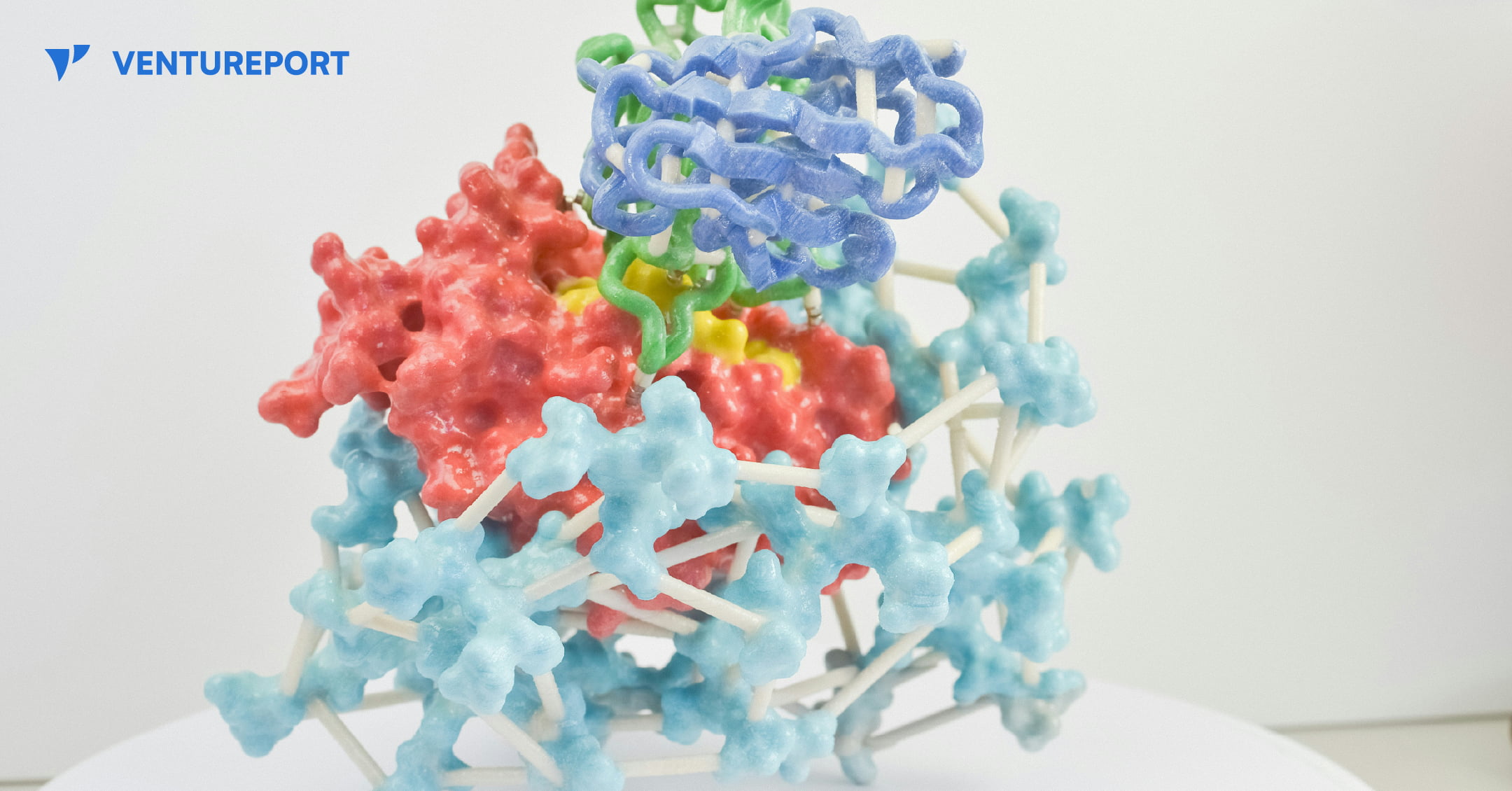
A close up of a protein structure model. PHOTO: UNSPLASH
For decades, drug discovery has relied on trial and error, with scientists testing thousands of molecules to find one that works. Galux, a South Korean biotech startup, is changing that by using AI to design proteins from scratch. This method, called “de novo” design, makes it possible to build precise new therapies instead of searching through existing ones.
The company recently announced a US$29 million Series B funding round, bringing its total capital to US$47 million.This significant investment attracted a substantial roster of institutional backers, including the Korea Development Bank (KDB), Yuanta Investment, SL Investment and NCORE Ventures. These firms joined existing investors such as InterVest, DAYLI Partners and PATHWAY Investment, as well as new participants including SneakPeek Investments, Korea Investment & Securities and Mirae Asset Securities.
At the core of the company’s work is a platform called GaluxDesign. Unlike many AI tools that only predict how existing proteins fold, this system uses deep learning and physics to create entirely new therapeutic antibodies. This “from scratch” approach lets the team go after so-called “undruggable” proteins. These are targets that traditional small-molecule drugs can’t reach because they lack clear binding pockets. By designing proteins to fit these complex shapes, Galux aims to unlock treatments that have stayed out of reach for decades. And that’s exactly why investors are paying attention.
The pharmaceutical industry is actively looking for faster and more efficient ways to develop new drugs, and Galux is built for exactly that. The company connects its AI platform directly to its own wet lab, where designs can be tested in real time. Each result feeds straight back into the system, sharpening the next round of models. This continuous loop speeds up discovery and improves precision at every step. It’s also why partners like Celltrion, LG Chem and Boehringer Ingelheim are already working with Galux.
Galux is no longer just trying to make drugs that stick to a target. The company now wants its AI to design medicines that actually work in the body and can be made at scale. In simple terms, a drug has to do more than bind to a disease—it must be stable, safe and strong enough to change how the illness behaves. Galux is moving into tougher targets such as ion channels and GPCRs. These play key roles in heart function and sensory signals. Ultimately, the goal is to show that AI-driven design can turn complex biology into real treatments. And instead of hunting blindly for a solution, the team is building exactly what they need.