
As airports grow more complex, the real innovation lies in making their systems simpler, faster, and easier to act on
Updated
March 24, 2026 5:55 PM

An airplane parked at Josep Tarradellas Barcelona-El Prat Airport. PHOTO: UNSPLASH
Airports are some of the most complex systems in the world. Every day, they manage thousands of flights, passengers, crew schedules, gates and ground operations—all moving at the same time. But much of this still runs on older software that doesn’t connect well, making simple decisions harder than they need to be.
This is the gap companies like AirportLabs are trying to address. Instead of relying on multiple disconnected systems, their approach brings airport operations into one cloud-based platform. The goal is straightforward: take scattered data and turn it into something teams can actually use in real time.
In practice, this means combining core systems like flight databases, resource management and display systems into a single interface. When everything is connected, airport staff can respond faster—whether it’s adjusting gate assignments, managing delays, or coordinating ground crews. Rather than reacting late, decisions can be made as situations unfold.
Another shift is how this technology is built. Traditional airport systems often require heavy on-site infrastructure and long deployment timelines. In contrast, cloud-based platforms remove much of that complexity. Updates are faster, systems are easier to scale and teams spend less time maintaining servers and more time improving operations.
What stands out is the speed of adoption. Instead of multi-year rollouts, newer systems can be implemented in weeks, allowing airports to see improvements much sooner.
At a broader level, this reflects a familiar pattern seen across industries. As operations become more data-heavy, the advantage shifts to those who can simplify complexity. In aviation, that doesn’t just mean better technology—it means making the entire system easier to run.
Keep Reading
Bitmo Lab is testing an ultra-thin, bendable tracker built to fit inside items traditional trackers can’t
Updated
March 17, 2026 1:02 AM
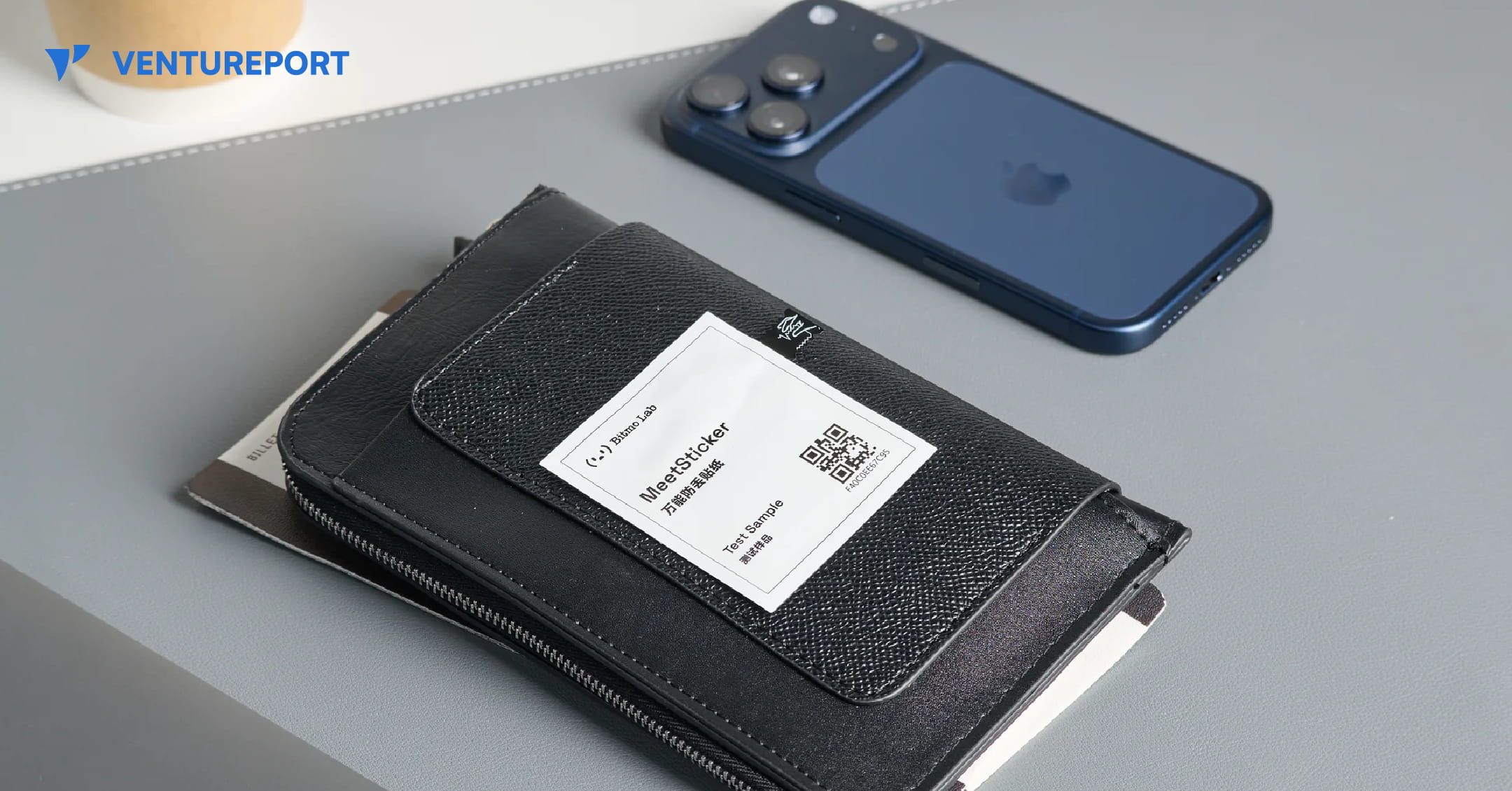
Bitmo Lab's MeetSticker tracker. PHOTO: BITMO LAB
Location trackers have become everyday accessories for keys, bags and luggage. But as personal items grow slimmer and more design-focused — from minimalist wallets to passport sleeves and specialised gear — tracking them has become less straightforward. Most trackers are built as small, rigid discs that assume the presence of space, loops or compartments. That assumption has created a growing mismatch between modern product design and the technology meant to secure it.
Hong Kong–based startup Bitmo Lab is attempting to address that gap with a device called MeetSticker. Instead of the solid plastic casing typical of most trackers, MeetSticker is engineered to be flexible and ultra-thin, measuring just 0.8 millimetres thick. The bendable design allows it to sit within narrow compartments or along curved surfaces without altering the shape of the object. Rather than attaching to an item externally, it is intended to integrate discreetly inside it.
That structural shift is the core of the product’s proposition. By removing the rigid shell that defines conventional tracking hardware, MeetSticker can be placed in items that previously had no practical way to accommodate a tracker. Bitmo Lab states that the device connects through a proprietary network and a companion application compatible with both iOS and Android, positioning it as a cross-platform solution rather than one tied to a single ecosystem.
The implications extend beyond form factor. Objects without obvious attachment points — such as compact travel accessories or specialised tools — could potentially be monitored without visible add-ons. In doing so, the device broadens the scope of tracking technology into categories where aesthetics, aerodynamics or compact design matter as much as functionality.
Before moving toward retail distribution, however, the company is focusing on validation. Bitmo Lab has launched a five-week global alpha testing programme beginning February 9. Sixty participants will receive a prototype unit and early access to the app. According to the company, the programme is designed to assess durability, usability and real-world performance before a wider commercial release. Participants who provide feedback will receive a retail unit upon launch.
Such testing is particularly relevant for flexible electronics. Unlike rigid devices, bendable hardware must withstand repeated flexing, daily handling and environmental exposure. Early user data can help refine manufacturing processes and software optimisation before scaling production.
As with other connected tracking devices, privacy considerations remain part of the equation. Bitmo Lab has stated that data collected during the alpha programme will be used strictly for testing purposes and deleted once the programme concludes.
Whether flexible trackers will redefine the category will depend on how they perform outside controlled testing environments. Still, the introduction of a near-invisible, bendable tracking device reflects a broader shift in consumer technology. As everyday products become thinner and more design-conscious, the tools built to protect them may need to adapt just as seamlessly.