
AI actor Tilly Norwood releases a musical video arguing that artificial intelligence can expand creativity in film
Updated
March 13, 2026 2:18 PM

AI Actor Tilly Norwood. PHOTO: INSTAGRAM@TILLYNORWOOD
As Hollywood prepares for this weekend’s Oscars, a different kind of performer is stepping into the spotlight — one that doesn’t physically exist.
Tilly Norwood, described as the world’s first AI actor, has released her debut musical comedy video, Take the Lead. The project arrives at a moment when artificial intelligence has become one of the most contentious topics in the film industry.
The message of the song is simple. AI should not be seen as a threat to actors. Instead, it can become another creative tool. The release also offers a first look at what Norwood’s creators call the “Tillyverse”. It is envisioned as a cloud-based entertainment world where AI characters can live, interact and perform.
Behind the character is actor and producer Eline van der Velden. She is the CEO of production company Particle6 and AI talent studio Xicoia. Van der Velden created Tilly as a way to experiment with how artificial intelligence could be used in storytelling.
The timing is not accidental. The entertainment industry has spent the past few years debating the role AI should play in filmmaking and acting. Questions about digital replicas, automated performances and creative ownership continue to divide artists and studios.
Norwood’s musical video enters that debate with a different tone. Instead of warning about AI replacing actors, the project suggests that the technology could expand what performers are able to do.
The video itself also serves as a technical experiment. The song Take the Lead was generated using the AI music platform Suno. The video was then produced using a combination of widely available AI tools and Particle6’s own creative process.
One of the newer techniques used in the project is performance capture. Van der Velden physically acted out Tilly’s movements and expressions so the digital character could mirror a human performance. But the production was far from automated. According to Particle6, a team of 18 people worked on the video. The group included a director, editor, production designer, costume designer, comedy writer and creative technologist. In other words, the project still relied heavily on human creativity.
“Tilly has always been a vehicle to test the creative capabilities and boundaries of AI,” van der Velden said. “It’s not about taking anyone’s job”. She added that even with powerful tools, good AI content still takes time, taste and creative direction.
The project also reflects how quickly production technology is evolving. Tools that once required large studios are now accessible to smaller creative teams experimenting with AI-driven storytelling.
For Particle6, the character of Tilly Norwood acts as a testing ground. Each project explores how AI performers might be developed, directed and integrated into entertainment. Whether audiences embrace digital actors remains an open question. Many in the industry are still wary of how AI could reshape creative work.
But projects like Take the Lead show another possibility. Instead of replacing performers, artificial intelligence could become part of the creative process itself. In that sense, Tilly Norwood may represent something more than a virtual performer. She is also an experiment in how humans and machines might collaborate in the future of entertainment.
Keep Reading
A humanoid robot being escorted away by police in Macau has gone viral online, prompting jokes about what some called the world’s first “robot arrest.”
Updated
March 13, 2026 2:04 PM
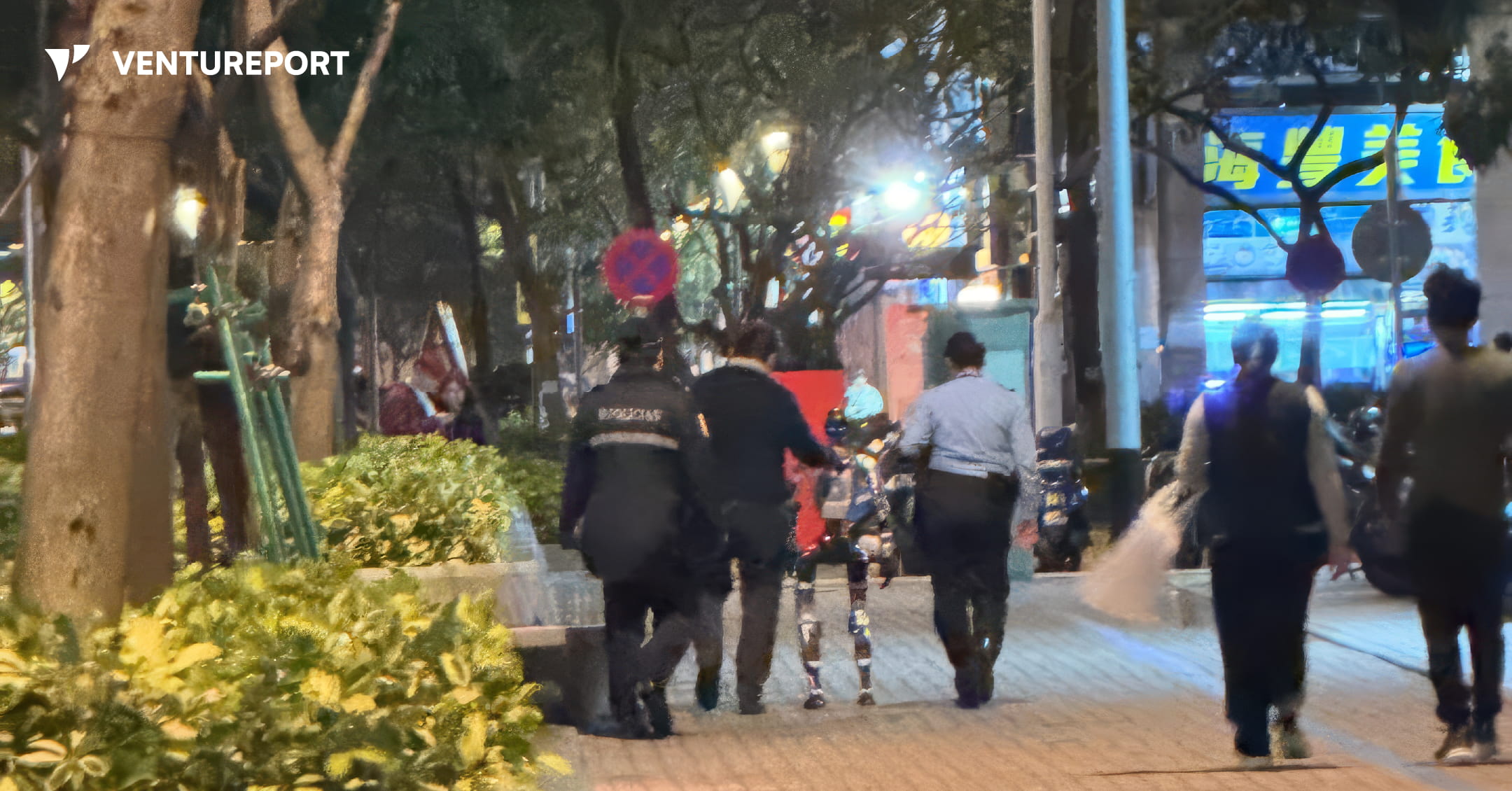
Macau police officer accompanying the humanoid robot. PHOTO: THREADS@BOXOF_CHOCOLATE
Police in Macau recently detained a humanoid robot after it frightened an elderly woman on a public street. The unusual encounter quickly spread online, prompting jokes about what some called the world’s first “robot arrest”.
On the evening of March 5, the robot was taken away by officers after the encounter triggered alarm among bystanders. Videos circulating on social media show an elderly woman confronting the robot on a sidewalk, visibly distressed and shouting that her “heart is pounding” while demanding to know why such “nonsense” was happening on the street. In the clip, the robot raises both hands toward the woman after she lashes out in fear — a gesture many viewers interpreted as a sign of apology.
Shortly afterwards, two officers from the Macau Public Security Police Force were seen escorting the robot and a man believed to be its operator away from the area. An officer is seen placing his right hand on the robot’s shoulder — the same posture police often use when presenting arrested suspects in official photographs.
That scene quickly spread online, fuelling jokes about what some called the world’s first “robot arrest”.
Photos shared online show a humanoid robot with long limbs and exposed mechanical joints, built from a black metallic frame without an outer shell. In dim lighting, several commenters said it resembled a “moving skeleton” — a striking sight for pedestrians encountering it unexpectedly on the street.
Witnesses said the woman appeared severely shaken and an ambulance was eventually called to take her to the hospital.
The incident also sparked discussion online about robots operating in public spaces. Some commenters argued that experimental technologies should be tested in controlled environments, while others said machines moving through public areas should have clearer designs or safety measures to avoid alarming pedestrians.
It remains unclear who deployed the robot or what purpose it was serving in the area at the time of the incident. Authorities have not released further details about the device or whether any action was taken following the encounter.