
Clinically grounded, game-based and always available — MIRDC’s AI system is redefining how children learn to communicate.
Updated
January 8, 2026 6:32 PM

A child practicing with a speech therapist. PHOTO: FREEPIK
Speech and language delays are common, yet access to therapy remains limited. In Taiwan, only about 2,200 licensed speech-language pathologists serve hundreds of thousands of children who need support—especially those with autism spectrum disorders or significant communication challenges. As a result, many children miss crucial periods of language development simply because help isn’t available soon enough.
MIRDC’s new AI-powered interactive speech therapy system aims to close that gap. Instead of focusing solely on articulation, it targets a wider range of language skills that many children struggle with: oral expression, comprehension, sentence building and conversational ability. This makes it a more complete tool for childhood speech and language development.
The system combines game-based learning, AI-driven guidance and automated language assessment into one platform that can be used both in clinics and at home. This integrated design helps children practice more consistently, providing therapists and parents with clearer insight into their progress.
The interactive game modules are built around clinically validated therapy methods. Imitation exercises, picture cards, storybooks and conversational prompts are turned into structured game levels, each aligned with a specific developmental goal. This step-by-step approach helps children move from simple naming tasks to more complex comprehension and response skills, all within a sequenced curriculum.
A key differentiator is the system’s real-time AI speech interpretation. As the child talks, the AI analyzes the response and generates tailored therapeutic cues—such as imitation, modeling, expansion or extension—based on the conversation. These are the same strategies used by speech-language pathologists, but now children can access them continuously, supporting more effective at-home practice and reducing long gaps between sessions.
After each session, the system automatically conducts a data-driven language assessment using 20 objective indicators across semantics, syntax and pragmatics. This provides clinicians and families with measurable, easy-to-understand reports that show how the child is progressing and which skills need more attention—something many traditional tools do not offer.
By offering a personalized, scalable and clinically grounded solution, MIRDC’s AI therapy system helps address the ongoing shortage of speech-language services. It doesn’t replace therapists; instead, it extends their reach, allows for more consistent practice and helps families support their child’s communication at home.
As an added recognition of its impact, the system recently earned two R&D 100 Awards, including the Silver Award for Corporate Social Responsibility. But at its core, the project remains focused on a simple mission: making high-quality speech therapy accessible to every child who needs a voice.
Keep Reading
The collaboration between Oversonic Robotics and STMicroelectronics highlights how robotics is beginning to fill gaps traditional automation cannot.
Updated
January 8, 2026 6:28 PM
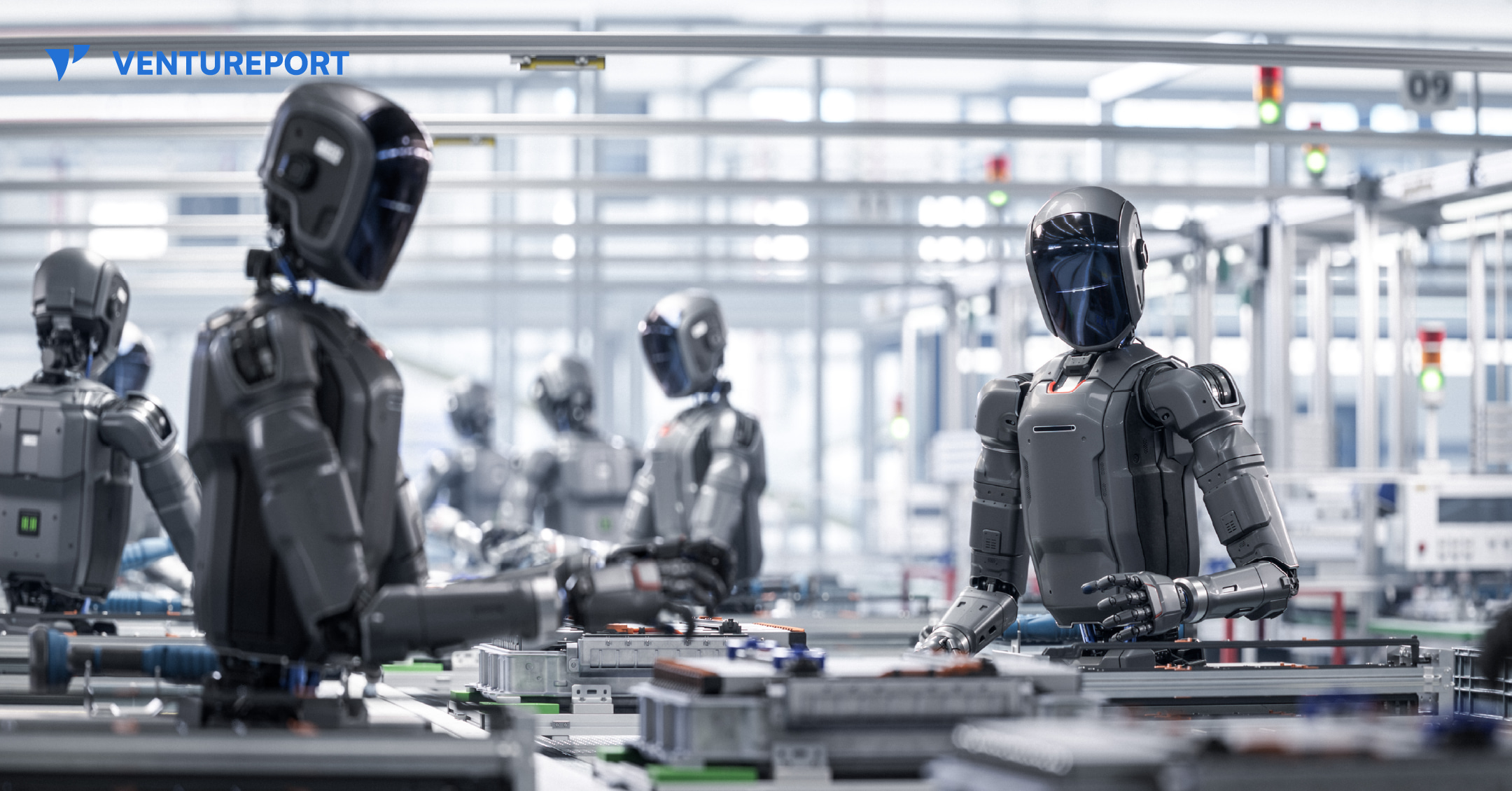
3D render of humanoid robots working in a factory assembly line. PHOTO: ADOBE STOCK
Oversonic Robotics, an Italian company known for building cognitive humanoid robots, has signed an agreement with STMicroelectronics, one of the world’s largest semiconductor manufacturers, to deploy humanoid robots inside semiconductor plants.
According to the companies, this is the first time cognitive humanoid robots will be used operationally inside semiconductor manufacturing facilities. And the first deployment has already taken place at ST’s advanced packaging and test plant in Malta.
At the center of the collaboration is RoBee, Oversonic’s humanoid robot. RoBee is designed to carry out support tasks within industrial environments, particularly where flexibility and interaction with human workers are required. In ST’s factories, the robots will assist with complex manufacturing and logistics flows linked to new semiconductor products. They are intended to work alongside existing automation systems, not replace them.
RoBee is notable for its ability to operate in environments shared with people. It is currently the only humanoid robot certified for use in both industrial and healthcare settings and is already in operation within several Italian companies. The robot is also being used in experimental hospital programs. That background helped position RoBee for deployment in tightly controlled manufacturing environments such as semiconductor plants.
Fabio Puglia, President of Oversonic Robotics, described the agreement as a milestone for deploying humanoid robots in complex industrial settings: “The partnership with STMicroelectronics is a great source of pride for us because it embodies the vision of cognitive robotics that Oversonic has brought to the industrial and healthcare markets. Being the first to introduce cognitive humanoid robots in a sophisticated production context such as semiconductors means measuring ourselves against the highest standards in terms of reliability, safety and operational continuity. This agreement represents a fundamental milestone for Oversonic and, more generally, for the industrial challenges these new machines are called to face in innovative and highly complex environments, alongside people and supporting their quality of work”.
From STMicroelectronics’ side, the use of humanoid robots is framed as part of a broader effort to manage growing manufacturing complexity. he company said RoBee will support complex tasks and help manage the intricate production flows required by newer semiconductor products. It is also expected to contribute to improved product quality and shorter manufacturing cycle times. The robots are designed to integrate with existing automation and software systems, helping improve safety and operational continuity.
In semiconductor manufacturing, precision and reliability leave little room for experimentation. Therefore, introducing humanoid robots into this environment signals a practical shift. It shows how robotics is starting to fill gaps that traditional automation has struggled to address.