
Bitmo Lab is testing an ultra-thin, bendable tracker built to fit inside items traditional trackers can’t
Updated
February 12, 2026 4:43 PM
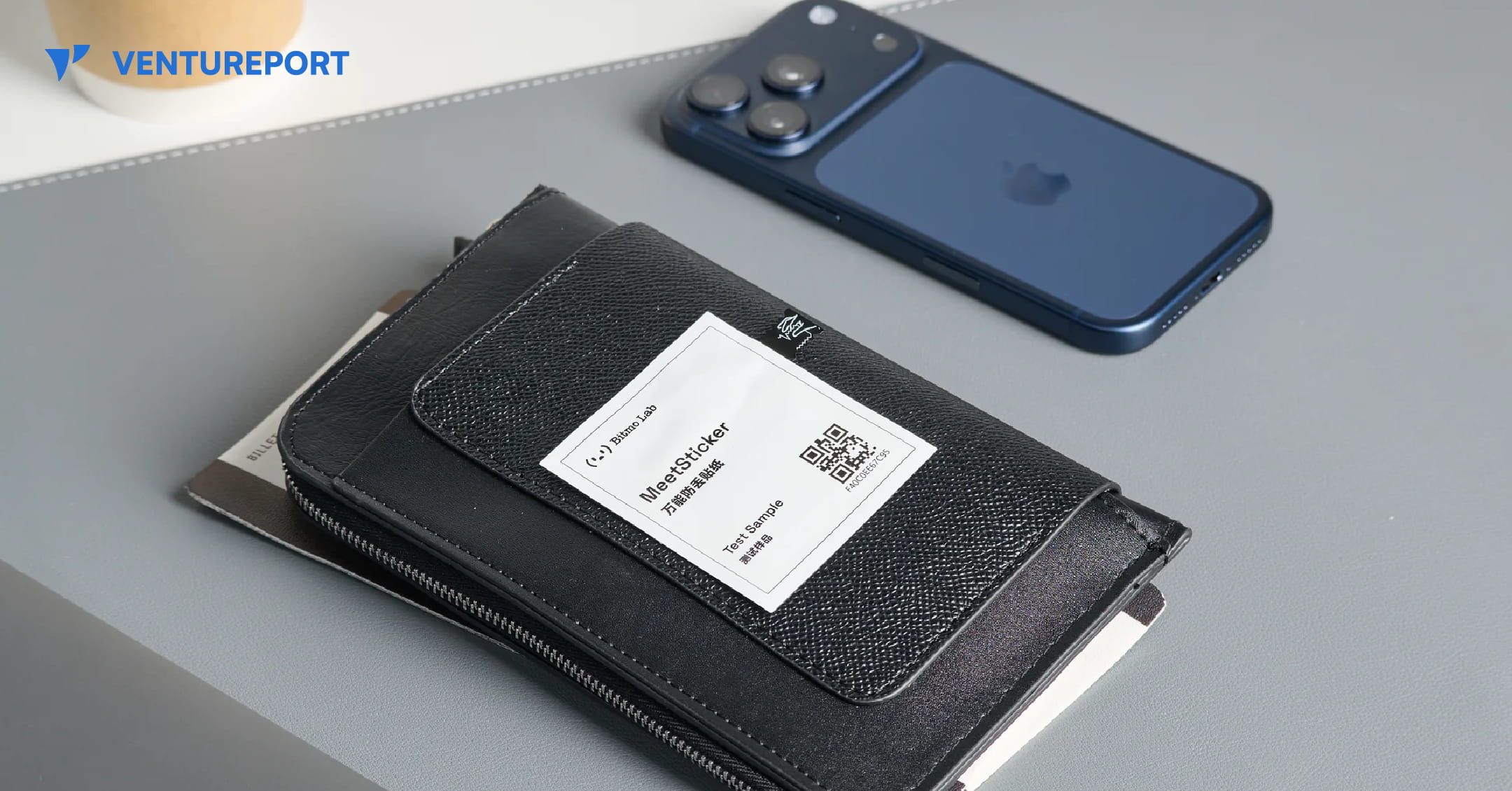
Bitmo Lab's MeetSticker tracker. PHOTO: BITMO LAB
Location trackers have become everyday accessories for keys, bags and luggage. But as personal items grow slimmer and more design-focused — from minimalist wallets to passport sleeves and specialised gear — tracking them has become less straightforward. Most trackers are built as small, rigid discs that assume the presence of space, loops or compartments. That assumption has created a growing mismatch between modern product design and the technology meant to secure it.
Hong Kong–based startup Bitmo Lab is attempting to address that gap with a device called MeetSticker. Instead of the solid plastic casing typical of most trackers, MeetSticker is engineered to be flexible and ultra-thin, measuring just 0.8 millimetres thick. The bendable design allows it to sit within narrow compartments or along curved surfaces without altering the shape of the object. Rather than attaching to an item externally, it is intended to integrate discreetly inside it.
That structural shift is the core of the product’s proposition. By removing the rigid shell that defines conventional tracking hardware, MeetSticker can be placed in items that previously had no practical way to accommodate a tracker. Bitmo Lab states that the device connects through a proprietary network and a companion application compatible with both iOS and Android, positioning it as a cross-platform solution rather than one tied to a single ecosystem.
The implications extend beyond form factor. Objects without obvious attachment points — such as compact travel accessories or specialised tools — could potentially be monitored without visible add-ons. In doing so, the device broadens the scope of tracking technology into categories where aesthetics, aerodynamics or compact design matter as much as functionality.
Before moving toward retail distribution, however, the company is focusing on validation. Bitmo Lab has launched a five-week global alpha testing programme beginning February 9. Sixty participants will receive a prototype unit and early access to the app. According to the company, the programme is designed to assess durability, usability and real-world performance before a wider commercial release. Participants who provide feedback will receive a retail unit upon launch.
Such testing is particularly relevant for flexible electronics. Unlike rigid devices, bendable hardware must withstand repeated flexing, daily handling and environmental exposure. Early user data can help refine manufacturing processes and software optimisation before scaling production.
As with other connected tracking devices, privacy considerations remain part of the equation. Bitmo Lab has stated that data collected during the alpha programme will be used strictly for testing purposes and deleted once the programme concludes.
Whether flexible trackers will redefine the category will depend on how they perform outside controlled testing environments. Still, the introduction of a near-invisible, bendable tracking device reflects a broader shift in consumer technology. As everyday products become thinner and more design-conscious, the tools built to protect them may need to adapt just as seamlessly.
Keep Reading
Can AI companions really help with our mental health?
Updated
January 8, 2026 6:35 PM

A laptop with the text "MENTAL HEALTH" displayed. PHOTO: PEXELS
As technology continues to weave itself into the fabric of our daily lives, it’s starting to play an unexpected role: supporting our mental health. AI companions—digital entities designed to hold natural, empathetic conversations—are emerging as a new frontier in emotional care. Unlike chatbots of the past, these AI companions leverage advanced algorithms and emotional intelligence to provide personalized support, making them more than just tools. They are companions in every sense of the word—always available, always listening, and always ready to offer comfort. But can AI companions truly help us feel better, or are they just another tech trend? Let’s dive into how these digital allies are reshaping mental health care and what their growing presence means for our emotional well-being.
Loneliness is often called an epidemic, with millions of people worldwide feeling isolated or disconnected. While human relationships are irreplaceable, AI companions offer a consistent and accessible alternative to combat feelings of loneliness.
These companions don’t just respond—they engage. They remember your preferences, ask follow-up questions, and adapt their conversations to your needs. Imagine having someone to talk to at any time of day, about anything on your mind, without fear of judgment. AI companions may not replace a human friend, but they can provide a sense of presence and connection that can be profoundly comforting.
In a world where reaching out to others can sometimes feel daunting, AI companions offer a simple solution: they’re always there. This consistency can help people feel less alone, fostering a sense of connection in an increasingly disconnected world.
We all experience moments of stress, sadness, or doubt, and having someone to turn to during those times can make all the difference. AI companions are designed with emotional intelligence, enabling them to recognize and respond to your feelings in real time.
Through sentiment analysis and adaptive learning, these companions can detect when you’re feeling low and tailor their responses to provide comfort. Whether it’s offering words of encouragement, suggesting self-care activities, or simply listening, they provide a safe space to process emotions.
Unlike traditional apps that focus on tracking habits or delivering generic advice, AI companions meet you where you are emotionally. This personalized approach can help users feel truly supported, even in their most challenging moments.
For many of us, expressing our thoughts and emotions openly can feel like a risk. Fear of judgment, misunderstanding, or even burdening others often holds us back. AI companions offer an alternative: a completely private, judgment-free space to share whatever is on your mind.
Talking things out—whether it’s frustrations from the day or deeper personal struggles—can be incredibly therapeutic. And with AI companions, there’s no need to worry about being misunderstood or dismissed. You can let your guard down, explore your feelings, and reflect on your experiences with total freedom.
This safe space for self-expression can be especially valuable for those who struggle to open up to others. It’s not about replacing human relationships but about having an outlet that’s always available and entirely focused on you.
Self-doubt is a common barrier to personal growth, and many of us battle negative self-talk daily. AI companions are programmed to combat this by offering positive reinforcement and encouragement.
For example, if you express doubt about your abilities, an AI companion might respond with affirmations like, “You’ve accomplished so much already—don’t forget how capable you are.” Over time, these small but meaningful interactions can help shift your mindset, replacing self-criticism with self-compassion.
This ability to mirror supportive, affirming conversations can build confidence and foster a more positive self-image. It’s a subtle but powerful way AI companions can contribute to emotional well-being.
AI companions are more than just a tech trend; they represent a new way of thinking about mental health care. By offering companionship, emotional support, safe spaces for self-expression, and tools for mindfulness, they empower users to take control of their well-being.
While they may not replace traditional methods of care, AI companions are making mental health support more accessible, immediate, and personalized. They’re a reminder that sometimes, the smallest interactions—an encouraging word, a moment of mindfulness, or a listening ear—can have the biggest impact.
As we embrace this new era of technology, one thing is clear: AI companions are not just about convenience. They’re about connection, support, and the potential to make emotional care a part of everyday life. And in a world that often feels disconnected, that’s something worth celebrating.