
Bitmo Lab is testing an ultra-thin, bendable tracker built to fit inside items traditional trackers can’t
Updated
March 17, 2026 1:02 AM
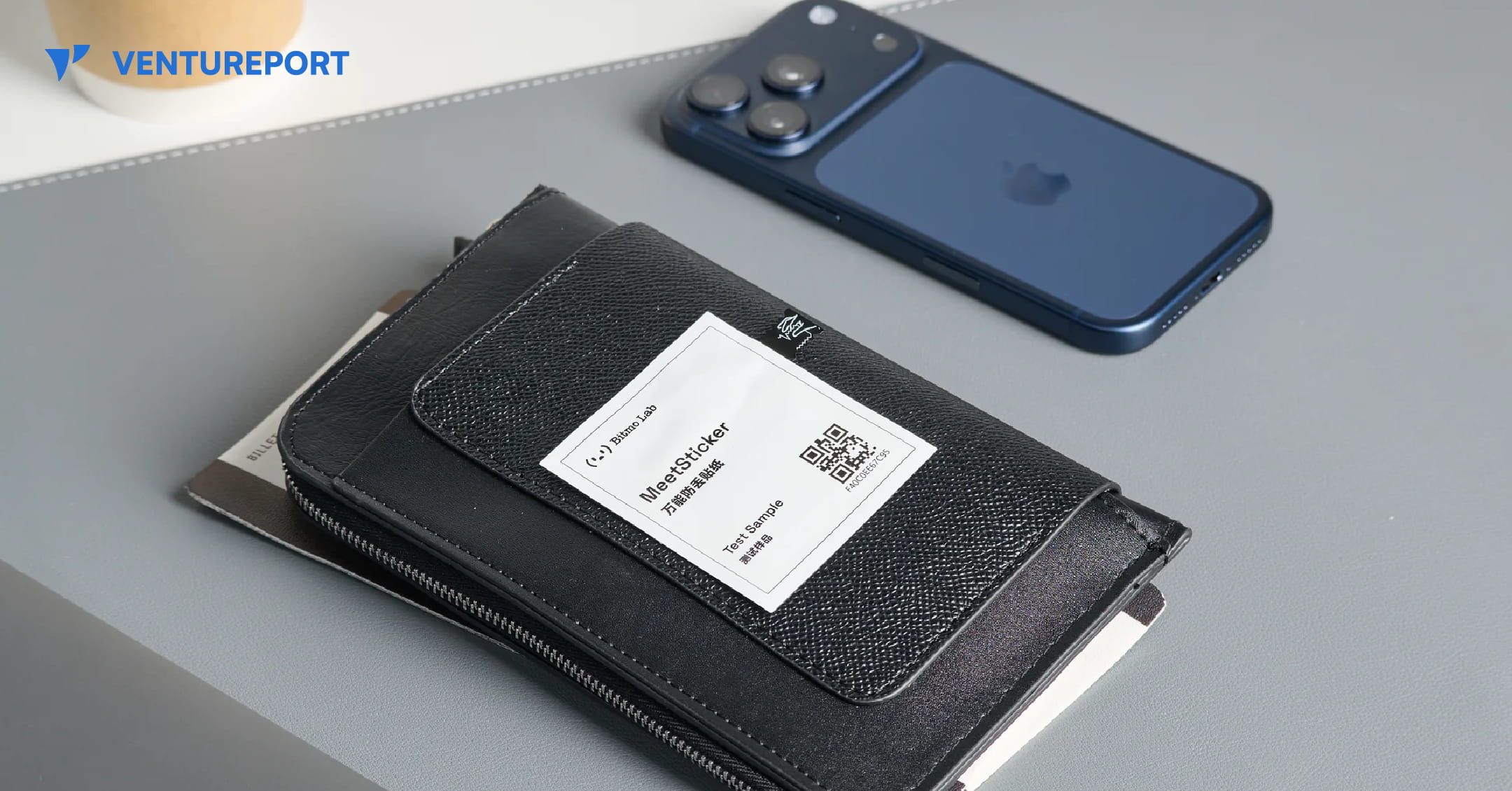
Bitmo Lab's MeetSticker tracker. PHOTO: BITMO LAB
Location trackers have become everyday accessories for keys, bags and luggage. But as personal items grow slimmer and more design-focused — from minimalist wallets to passport sleeves and specialised gear — tracking them has become less straightforward. Most trackers are built as small, rigid discs that assume the presence of space, loops or compartments. That assumption has created a growing mismatch between modern product design and the technology meant to secure it.
Hong Kong–based startup Bitmo Lab is attempting to address that gap with a device called MeetSticker. Instead of the solid plastic casing typical of most trackers, MeetSticker is engineered to be flexible and ultra-thin, measuring just 0.8 millimetres thick. The bendable design allows it to sit within narrow compartments or along curved surfaces without altering the shape of the object. Rather than attaching to an item externally, it is intended to integrate discreetly inside it.
That structural shift is the core of the product’s proposition. By removing the rigid shell that defines conventional tracking hardware, MeetSticker can be placed in items that previously had no practical way to accommodate a tracker. Bitmo Lab states that the device connects through a proprietary network and a companion application compatible with both iOS and Android, positioning it as a cross-platform solution rather than one tied to a single ecosystem.
The implications extend beyond form factor. Objects without obvious attachment points — such as compact travel accessories or specialised tools — could potentially be monitored without visible add-ons. In doing so, the device broadens the scope of tracking technology into categories where aesthetics, aerodynamics or compact design matter as much as functionality.
Before moving toward retail distribution, however, the company is focusing on validation. Bitmo Lab has launched a five-week global alpha testing programme beginning February 9. Sixty participants will receive a prototype unit and early access to the app. According to the company, the programme is designed to assess durability, usability and real-world performance before a wider commercial release. Participants who provide feedback will receive a retail unit upon launch.
Such testing is particularly relevant for flexible electronics. Unlike rigid devices, bendable hardware must withstand repeated flexing, daily handling and environmental exposure. Early user data can help refine manufacturing processes and software optimisation before scaling production.
As with other connected tracking devices, privacy considerations remain part of the equation. Bitmo Lab has stated that data collected during the alpha programme will be used strictly for testing purposes and deleted once the programme concludes.
Whether flexible trackers will redefine the category will depend on how they perform outside controlled testing environments. Still, the introduction of a near-invisible, bendable tracking device reflects a broader shift in consumer technology. As everyday products become thinner and more design-conscious, the tools built to protect them may need to adapt just as seamlessly.
Keep Reading
Structured AI interviews and human judgment combine to address the global talent shortage
Updated
March 4, 2026 4:46 PM

ManpowerGroup World Headquarters in Milwaukee. PHOTO: ADOBE STOCK
As hiring pressures mount across global markets, ManpowerGroup is turning to technology to strengthen how it connects people to work. The workforce solutions major has announced a global partnership with Hubert, a startup focused on AI-driven structured interviews. The aim is simple: make hiring faster and fairer, without removing the human touch.
ManpowerGroup has spent decades operating at the center of the global labor market. The company works with employers across industries to fill roles, manage workforce planning and build talent pipelines. With millions of placements each year, it has a clear view of how strained hiring has become. A large share of employers today report difficulty finding skilled talent. At the same time, candidates expect more transparency, quicker feedback and flexibility in how they engage with employers.
Hubert enters this picture as a specialist in structured digital interviewing. The startup has built tools that allow candidates to complete interviews online, at any time, while being assessed against consistent criteria. Instead of relying on informal screening calls or resume filters, its system focuses on standardized questions tied directly to job requirements. The idea is to bring more consistency to early-stage hiring.
The partnership brings these capabilities into ManpowerGroup’s global operations. AI-powered interviews will now support the first stage of screening, helping recruiters identify qualified candidates earlier in the process. This does not replace recruiters. Final decisions and contextual judgment remain with experienced hiring professionals. What changes is the speed and structure of the initial assessment.
For employers, this could mean earlier visibility into job-ready talent and less time spent on manual screening. For candidates, it offers more flexibility. A significant portion of interviews on Hubert’s platform are completed outside regular office hours, allowing applicants to engage when it suits them. That flexibility can make a difference in competitive labor markets where timing matters.
The collaboration is also positioned as a step toward reducing bias. By evaluating each candidate against the same transparent standards, the process becomes more consistent. While no system can remove bias entirely, structured assessments can reduce the variability that often comes with unstructured interviews.
At its core, the partnership addresses a gap many large organizations are facing. They need scale and speed, but they cannot afford to lose the human judgment that good hiring depends on. Manual processes are too slow. Fully automated systems can feel impersonal and risky. ManpowerGroup’s approach suggests a middle path, where technology handles repetition and structure and recruiters focus on potential and fit.
The move also reflects a broader shift in the workforce industry. AI is no longer being tested on the sidelines. It is being built into the foundation of hiring operations. For established players like ManpowerGroup, the challenge is not whether to adopt AI, but how to do so responsibly and at scale.
By working with Hubert, the company is signaling that the future of recruitment will likely blend structured digital tools with human expertise. In a market defined by talent shortages and rising expectations, that balance may prove critical.