
Mainland giants accelerate expansion as local players face unprecedented competition.
Updated
January 8, 2026 6:34 PM

HKTV Mall in Amoy Plaza. PHOTO: WIKIPEDIA USER -WPCPEY
Hong Kong is entering a new phase of competition as mainland platforms accelerate their expansion into the city, turning it into a frontline testing ground for Chinese companies preparing to push into global markets. With retail, logistics and food-delivery businesses all reshaped in the past year, Hong Kong has become the closest international environment where mainland firms can experiment with pricing, supply chains and customer behaviour under a familiar regulatory and cultural framework.
The shift became especially clear this week. At HKTVmall’s Vision Day on November 11, 2025, CEO Ricky Wong warned that Hong Kong’s traditional retail model is facing its toughest moment yet. He said the biggest threat is not mainland competitors like Taobao, JD.com or Pinduoduo entering Hong Kong, but the city’s longstanding dependence on physical shopping. If local retailers do not evolve, he said, they risk becoming “very easy to die of thirst in the desert”. Wong even welcomed the rise of mainland e-commerce giants, arguing that the more players enter the city, the faster consumers will shift online — a transition HKTVmall relies on for growth.
Yet his optimism is layered over a challenging reality. HKTVmall’s own numbers reflect pressure from competition and changing consumer habits. The company reported average daily GMV of HK$22.2 million during the latest shopping festival season — up 2.8% month-on-month but still down 4.3% compared year-on-year — showing that even established online platforms are struggling to maintain momentum as mainland entrants squeeze prices and widen product selection.
The city’s food-delivery market illustrates the shift even more sharply. Deliveroo, once the fastest-growing platform in Hong Kong and at one point holding more than half of the market, officially shut down in April this year after a long decline. Its trajectory mirrored the sector’s upheaval: the company surged during the pandemic but lost ground after restrictions eased, first overtaken by Foodpanda and then pressured heavily by Meituan-backed Keeta, which entered Hong Kong in 2023 and quickly seized about 30% of citywide orders.
Deliveroo’s exit and the handover of parts of its business to Foodpanda did little to stabilise the market. Keeta’s rapid expansion instead pushed Foodpanda onto the defensive, leaving two major players competing in a market shaped by mainland-style pricing and operations. Hong Kong’s delivery sector, once dominated by global firms, is increasingly defined by Chinese platforms optimizing speed and efficiency at a scale few competitors can match.
These changes are unfolding as Chinese companies shift their focus toward new global markets.
With China reducing its reliance on the US and EU and exports steadily moving toward ASEAN, Hong Kong has become a strategic launchpad. The city’s proximity, language familiarity and regulatory structure make it the nearest international setting where Chinese firms can test overseas strategies before expanding into Southeast Asia, the Middle East or Latin America. The result is a competitive intensity that local companies have rarely experienced. Retailers face price pressure they can’t match, local platforms are losing ground to mainland giants and global players are struggling to stay in the game.
Consumers benefit from lower prices, faster delivery and wider choice — but for Hong Kong businesses, the landscape has turned unforgiving. Mainland companies are not treating Hong Kong as a final destination but as the first stop in a broader global push. That positioning is reshaping the city’s entire consumer economy. As more mainland firms look outward, Hong Kong’s role as a testing ground will only deepen and the first players to feel the impact will be those operating closest to the consumer.
Keep Reading
The IT services firm strengthens its collaboration with Google Cloud to help enterprises move AI from pilot projects to production systems
Updated
February 18, 2026 8:11 PM
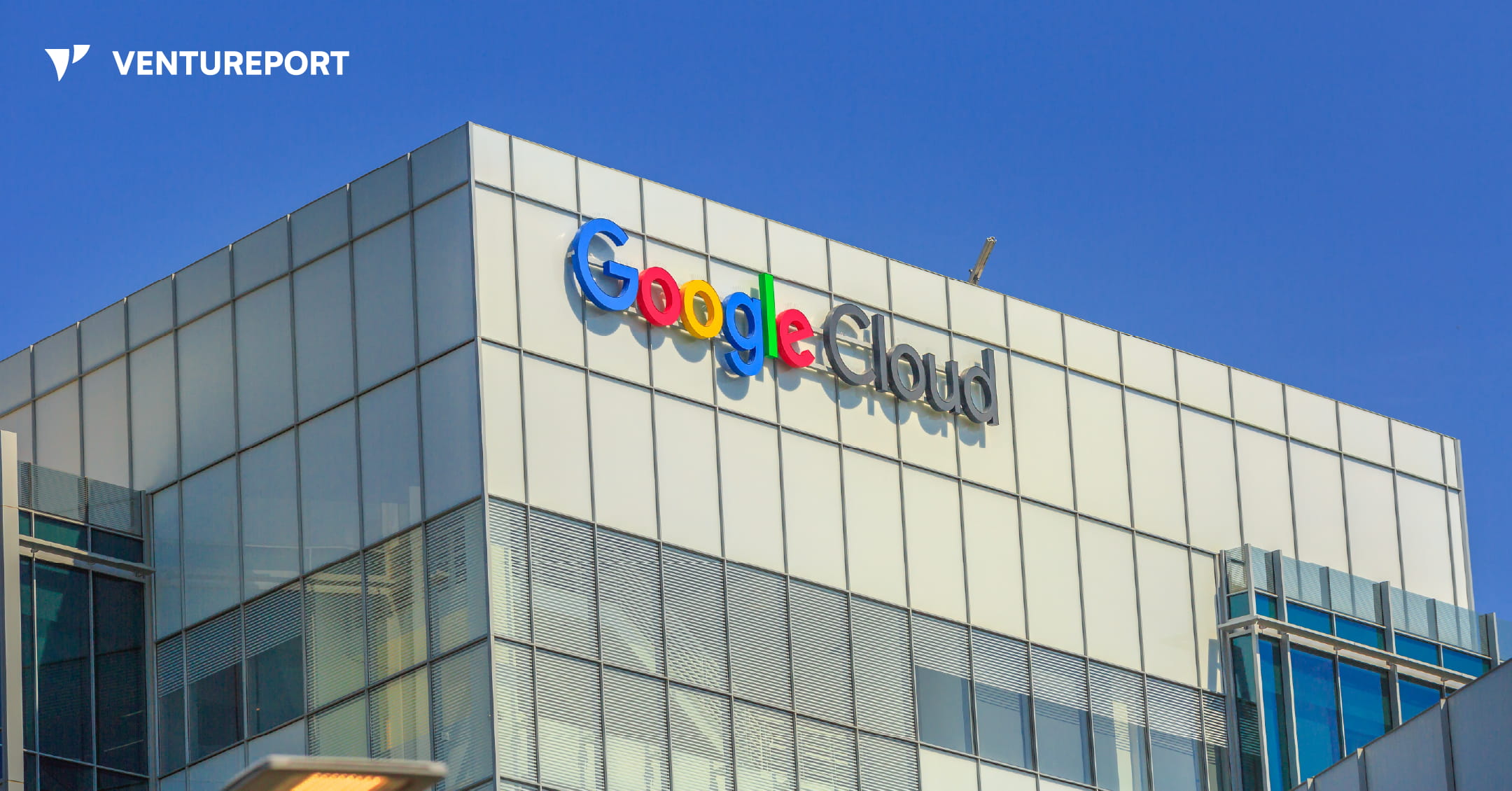
Google Cloud building. PHOTO: ADOBE STOCK
Enterprise interest in AI has moved quickly from experimentation to execution. Many organizations have tested generative tools, but turning those tools into systems that can run inside daily operations remains a separate challenge. Cognizant, an IT services firm, is expanding its partnership with Google Cloud to help enterprises move from AI pilots to fully deployed, production-ready systems.
Cognizant and Google Cloud are deepening their collaboration around Google’s Gemini Enterprise and Google Workspace. Cognizant is deploying these tools across its own workforce first, using them to support internal productivity and collaboration. The idea is simple: test and refine the systems internally, then package similar capabilities for clients.
The focus of the partnership is what Cognizant calls “agentic AI.” In practical terms, this refers to AI systems that can plan, act and complete tasks with limited human input. Instead of generating isolated outputs, these systems are designed to fit into business workflows and carry out structured tasks.
To make that workable at scale, Cognizant is building delivery infrastructure around the technology. The company is setting up a dedicated Gemini Enterprise Center of Excellence and formalizing an Agent Development Lifecycle. This framework covers the full process, from early design and blueprinting to validation and production rollout. The aim is to give enterprises a clearer path from the AI concept to a deployed system.
Cognizant also plans to introduce a bundled productivity offering that combines Gemini Enterprise with Google Workspace. The targeted use cases are operational rather than experimental. These include collaborative content creation, supplier communications and other workflow-heavy processes that can be standardized and automated.
Beyond productivity tools, Cognizant is integrating Gemini into its broader service platforms. Through Cognizant Ignition, enabled by Gemini, the company supports early-stage discovery and prototyping while helping clients strengthen their data foundations. Its Agent Foundry platform provides pre-configured and no-code capabilities for specific use cases such as AI-powered contact centers and intelligent order management. These tools are designed to reduce the amount of custom development required for each deployment.
Scaling is another element of the strategy. Cognizant, a multi-year Google Cloud Data Partner of the Year award winner, says it will rely on a global network of Gemini-trained specialists to deliver these systems. The company is also expanding work tied to Google Distributed Cloud and showcasing capabilities through its Google Experience Zones and Gen AI Studios.
For Google Cloud, the partnership reinforces its enterprise AI ecosystem. Cloud providers can offer models and infrastructure, but enterprise adoption often depends on service partners that can integrate tools into existing systems and manage ongoing operations. By aligning closely with Cognizant, Google strengthens its ability to move Gemini from platform capability to production deployment.
The announcement does not introduce a new AI model. Instead, it reflects a shift in emphasis. The core question is no longer whether AI tools exist, but how they are implemented, governed and scaled across large organizations. Cognizant’s expanded role suggests that execution frameworks, internal deployment and structured delivery models are becoming central to how enterprises approach AI.
In that sense, the partnership is less about new technology and more about operational maturity. It highlights how AI is moving from isolated pilots to managed systems embedded in business processes — a transition that will likely define the next phase of enterprise adoption.