
Mainland giants accelerate expansion as local players face unprecedented competition.
Updated
January 8, 2026 6:34 PM
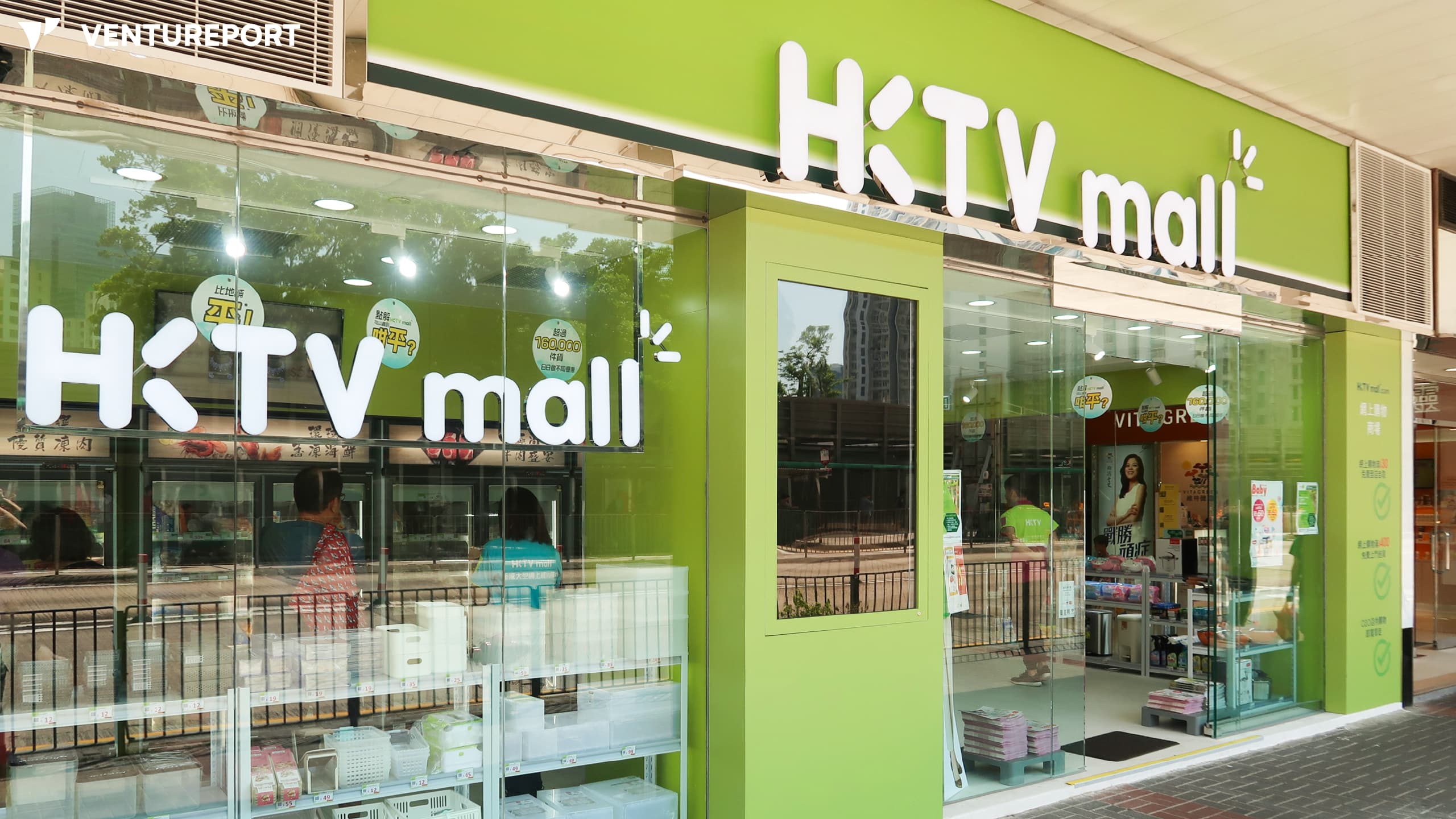
HKTV Mall in Amoy Plaza. PHOTO: WIKIPEDIA USER -WPCPEY
Hong Kong is entering a new phase of competition as mainland platforms accelerate their expansion into the city, turning it into a frontline testing ground for Chinese companies preparing to push into global markets. With retail, logistics and food-delivery businesses all reshaped in the past year, Hong Kong has become the closest international environment where mainland firms can experiment with pricing, supply chains and customer behaviour under a familiar regulatory and cultural framework.
The shift became especially clear this week. At HKTVmall’s Vision Day on November 11, 2025, CEO Ricky Wong warned that Hong Kong’s traditional retail model is facing its toughest moment yet. He said the biggest threat is not mainland competitors like Taobao, JD.com or Pinduoduo entering Hong Kong, but the city’s longstanding dependence on physical shopping. If local retailers do not evolve, he said, they risk becoming “very easy to die of thirst in the desert”. Wong even welcomed the rise of mainland e-commerce giants, arguing that the more players enter the city, the faster consumers will shift online — a transition HKTVmall relies on for growth.
Yet his optimism is layered over a challenging reality. HKTVmall’s own numbers reflect pressure from competition and changing consumer habits. The company reported average daily GMV of HK$22.2 million during the latest shopping festival season — up 2.8% month-on-month but still down 4.3% compared year-on-year — showing that even established online platforms are struggling to maintain momentum as mainland entrants squeeze prices and widen product selection.
The city’s food-delivery market illustrates the shift even more sharply. Deliveroo, once the fastest-growing platform in Hong Kong and at one point holding more than half of the market, officially shut down in April this year after a long decline. Its trajectory mirrored the sector’s upheaval: the company surged during the pandemic but lost ground after restrictions eased, first overtaken by Foodpanda and then pressured heavily by Meituan-backed Keeta, which entered Hong Kong in 2023 and quickly seized about 30% of citywide orders.
Deliveroo’s exit and the handover of parts of its business to Foodpanda did little to stabilise the market. Keeta’s rapid expansion instead pushed Foodpanda onto the defensive, leaving two major players competing in a market shaped by mainland-style pricing and operations. Hong Kong’s delivery sector, once dominated by global firms, is increasingly defined by Chinese platforms optimizing speed and efficiency at a scale few competitors can match.
These changes are unfolding as Chinese companies shift their focus toward new global markets.
With China reducing its reliance on the US and EU and exports steadily moving toward ASEAN, Hong Kong has become a strategic launchpad. The city’s proximity, language familiarity and regulatory structure make it the nearest international setting where Chinese firms can test overseas strategies before expanding into Southeast Asia, the Middle East or Latin America. The result is a competitive intensity that local companies have rarely experienced. Retailers face price pressure they can’t match, local platforms are losing ground to mainland giants and global players are struggling to stay in the game.
Consumers benefit from lower prices, faster delivery and wider choice — but for Hong Kong businesses, the landscape has turned unforgiving. Mainland companies are not treating Hong Kong as a final destination but as the first stop in a broader global push. That positioning is reshaping the city’s entire consumer economy. As more mainland firms look outward, Hong Kong’s role as a testing ground will only deepen and the first players to feel the impact will be those operating closest to the consumer.
Keep Reading
A closer look at PMMI’s FastTrack initiative and why it matters for growing manufacturing firms
Updated
February 13, 2026 10:44 AM

Cardboard boxes in a warehouse. PHOTO: UNSPLASH
Large trade shows are built for scale. But for small and medium-sized manufacturers, that scale often creates distance between what’s on display and what they can actually use. Too many options, too little time, and very few tools designed for companies that are still growing. That mismatch is what PMMI is trying to correct with its new SMB FastTrack Program at PACK EXPO East 2026.
That is the problem PMMI is trying to address with its new SMB FastTrack Program, launching at PACK EXPO East 2026 in Philadelphia.
PMMI — the Association for Packaging and Processing Technologies — is the industry body behind the PACK EXPO trade shows and a central organization in the global packaging and processing sector. Through FastTrack, it has created a program (not an app or a product) designed to help small and mid-sized companies navigate the show more efficiently and connect with solutions that fit their scale.
The idea behind SMB FastTrack is simple: reduce friction. Instead of asking smaller firms to sort through hundreds of exhibitors and sessions on their own, the program curates what is most relevant to them. Exhibitors that offer flexible pricing, right-sized machinery, or SMB-focused services are clearly identified with visual icons in both the online directory and on the show floor. That way, a small manufacturer can quickly distinguish between enterprise-only vendors and partners that are realistically accessible.
The same logic carries into education. Rather than treating all attendees the same, PACK EXPO East 2026 will include a learning track specifically built around SMB realities. These sessions focus on issues that smaller teams actually face—how to hire and train workers, use AI without over-investing, improve food safety, cut operating costs, and adopt technology in stages. The goal is not inspiration, but applicability: content that reflects real constraints, not ideal scenarios.
Planning, too, is built into the structure of the program. Through a dedicated FastTrack landing page, participants can access curated supplier lists, recommended sessions, and planning tools that help organize their time before they ever step onto the show floor. Tools like category search and sustainability finders are meant to narrow choices quickly, turning a massive event into something manageable.
Seen together, these elements point to a broader intention. PMMI is not simply adding features—it is reshaping how smaller manufacturers experience a major industry event. Instead of competing for attention in a space built for scale, SMBs are given clearer paths to the people, tools, and knowledge that match where they actually are in their growth cycle.
What makes SMB FastTrack notable is not the technology behind it, but the intention behind it. PMMI is recognizing that progress for small and mid-sized manufacturers depends less on spectacle and more on fit—solutions that are accessible, affordable, and adaptable. The program is designed to help companies move with purpose, not pressure.
In an industry where visibility often follows size, SMB FastTrack represents a structural shift. It treats small and medium-sized manufacturers not as a subset of the audience, but as a distinct group with distinct needs. By doing so, PMMI is quietly redefining what a trade show can be: not just a marketplace of innovation, but a usable platform for companies still building their next stage of growth.